Canada Bars Russian Players From 2027 World Juniors Despite Visas
The decision adds legal and operational uncertainty for organizers while limiting immediate implications for publicly traded Canadian assets.
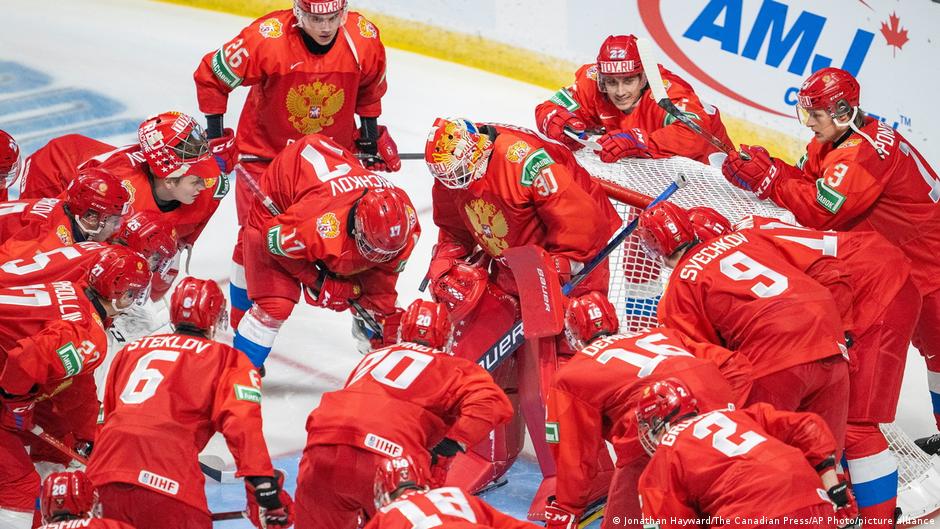
Canada will prevent Russian and Belarusian hockey players and officials from entering the country for the 2027 IIHF World Junior Championship, even if they already hold valid visas, Sports Minister Adam van Koeverden said. The move creates a direct conflict between Canadian government policy and a recent Court of Arbitration for Sport ruling requiring Russian national teams to return to international competition from 2027.
For capital-markets investors, the decision is unlikely to become a broad catalyst for Canadian equities or government bonds. Its relevance is more concentrated: the dispute raises execution risks for event organizers, broadcasters, sponsors, hospitality operators and other businesses exposed to the tournament. It also illustrates how sanctions and geopolitical policy can override legal or commercial expectations, even after international sports authorities have set competition rules.
The Canadian government has formally notified the International Ice Hockey Federation and Hockey Canada that it will not issue visas to Russians for the tournament, according to the announcement. Van Koeverden said the immigration minister would also assess cases individually and act to deny entry to Russian and Belarusian athletes and officials, regardless of whether they possess valid visas.
Canada’s position remains unchanged: as long as Russia continues its war of aggression against Ukraine, there can be no return to business as usual.
Van Koeverden said the measures were not directed against Russian and Belarusian people. He described them as an effort to prevent the governments of Russia and Belarus from using international sporting events hosted in Canada as platforms for state representation, political legitimization and propaganda. Canada’s standing position, he added, allows only individual athletes competing under neutral status to continue participating in international sporting events held in the country.
Operational Risk Moves to Tournament Organizers
The first competition affected by the CAS decision was expected to be the 2027 World Junior Championship in Canada. The tournament is scheduled to run from Dec. 26 through Jan. 5 in Edmonton and Red Deer. A draft schedule distributed by the IIHF placed Russia in Group B alongside Canada, the Czech Republic, Switzerland and Latvia.
The Canadian decision now introduces uncertainty over the lineup and format. The IIHF had already opposed the Oct. 30 CAS ruling, citing difficulties involving visas, security, logistics and last-minute changes to tournament structures. Those concerns have become more immediate because the host government has said it will block entry even where existing travel documents might otherwise permit it.
Canada’s position had been signaled before van Koeverden’s statement. Prime Minister Mark Carney said on Nov. 4 that Russian hockey players would not receive visas to participate in the 2027 tournament. The latest comments broaden the practical scope by addressing athletes and officials who may already have valid visas.
Investors should distinguish between potential effects on the event ecosystem and any impact on Canada’s wider markets. No financial estimates, sponsorship revisions, broadcast changes or ticketing forecasts were disclosed. Without such figures, there is no basis for quantifying an effect on revenue or valuations. Canadian sovereign bonds and diversified equity benchmarks are therefore more likely to remain driven by interest rates, inflation, economic growth and global risk sentiment than by this dispute.
Still, businesses directly connected to the championship may face planning costs if the participant list changes. Broadcasters could need to revise programming assumptions, while sponsors and venue-related operators may have to reassess marketing plans. Security and travel arrangements could also require adjustment. These are operational exposures rather than evidence of a confirmed financial loss.
Relegation Consequences Add Another Layer
The CAS ruling had already affected the proposed competitive structure. On Nov. 8, the Norwegian Ice Hockey Federation said Russia had been assigned 10th place under the championship’s new system. Norway, as the lowest-ranked team, would consequently be moved to Division 1A.
Canada’s refusal to admit the Russian team complicates that outcome. The available announcements do not establish whether Norway would return to the top division, whether another team would replace Russia, or whether the tournament would proceed with a revised format. Any resolution will require coordination among the IIHF, Hockey Canada, national federations and Canadian authorities.
The episode also highlights enforcement risk for organizations operating across jurisdictions. A sports arbitration decision can determine eligibility, but it cannot by itself guarantee entry into a host country. For investors assessing companies tied to international events, that distinction matters: contractual rights, competition schedules and expected audiences may remain vulnerable to immigration rules, sanctions policy and government intervention.
Van Koeverden said Canada would continue supporting Ukraine and would not resume normal relations while Russia’s full-scale war continues. For markets, the immediate takeaway is not a systemic shock but a reminder that geopolitical restrictions can persist across sectors and disrupt specific commercial plans long after organizers have begun preparing for an event.



