Drone Attack on Major Russian Refinery Raises Fuel Supply Risks
The Kirishi facility accounts for about 7% of Russian refining, putting regional fuel supplies and Surgutneftegas in investor focus.
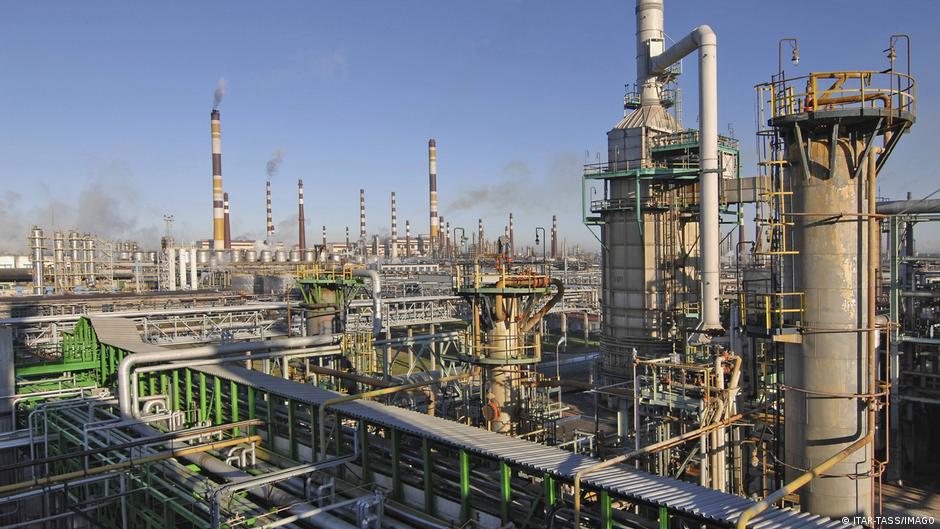
Ukrainian drones attacked the Kirishi oil refinery in Russia’s Leningrad region overnight on Monday, November 9, according to the Astra news outlet and Ukrainian monitoring channels on Telegram, which cited eyewitnesses. The facility, known as KINEF, belongs to the Surgutneftegas group and represents about 7% of Russia’s total oil-refining volume, making any prolonged disruption potentially significant for domestic fuel markets and investors assessing Russian energy-sector risk.
Leningrad region Governor Alexander Drozdenko confirmed that a drone had struck an industrial zone in the city of Kirishi, although he did not identify the enterprise that was hit. He claimed Russian air defenses had intercepted 113 drones over the region during the night. Videos published on social media showed a fire on the refinery’s grounds.
Astra reported that Kirishi residents described air-defense activity and powerful explosions near the KINEF plant. Residents also reported that an apartment building had been evacuated. Ukraine had not officially commented on the reported strikes against the facility.
Large Share of Russian Refining Capacity at Risk
KINEF is located in Kirishi, about 100 kilometers southeast of St. Petersburg, and is one of Russia’s largest oil refineries. Its scale makes the incident relevant beyond the immediate security impact. The plant has an estimated design capacity of 20 million to 21 million metric tons of crude oil annually. In recent years, it has processed about 18 million tons per year, equivalent to roughly 7% of total Russian refining.
The refinery is particularly important to fuel supplies in northwestern Russia. It also supplies aviation kerosene to St. Petersburg’s Pulkovo Airport. Any material reduction in output could therefore tighten the regional availability of refined products, depending on the extent of the damage, the duration of repairs and the ability of other plants or inventories to compensate.
KINEF’s roughly 7% share of Russian refining makes operational continuity at the plant a material issue for domestic fuel balances.
No verified assessment of damage, production losses or the refinery’s current operating status was provided in the reports. That leaves markets without the information needed to determine whether the fire was contained quickly or whether key processing units were affected. For investors, the distinction is critical: limited damage would imply a short-lived operational event, while damage to primary refining equipment could lead to a longer outage and greater pressure on fuel supply chains.
Repeated Strikes Increase the Risk Premium
The Kirishi refinery has been targeted repeatedly by Ukrainian drones in recent years. After a strike in late August 2026 damaged two primary crude-processing units, the facility completely halted oil refining. The latest reported attack therefore adds to concerns about recurring disruption at strategically important Russian energy infrastructure rather than representing an isolated incident.
Repeated outages can affect the economics of an integrated oil producer in several ways. Lower refinery throughput may reduce sales of higher-value petroleum products, complicate crude allocation and increase repair and security costs. For Surgutneftegas shareholders, the immediate questions concern whether production has stopped, which units may have been damaged and how quickly normal processing can resume.
The event also matters to bond and broader risk investors because refinery attacks can amplify uncertainty surrounding Russian fuel availability, logistics and state intervention in domestic energy markets. A sustained reduction in processing capacity could support wholesale prices for some refined products while weakening demand for crude at the affected plant. The eventual impact would depend on spare capacity elsewhere, inventories and transport links.
Sanctions Compound Operational Uncertainty
Surgutneftegas was sanctioned by the United States, the United Kingdom and the European Union in 2025, and KINEF was also named in sanctions documents. Those restrictions already complicate the investment case by limiting access to some markets, counterparties, financing channels and potentially equipment or services. Repeated physical damage introduces an additional operational layer to an already elevated sanctions risk.
Investors will now watch for official disclosures from Surgutneftegas or Russian authorities on the condition of the refinery, any suspension of processing and the expected repair timeline. Attention will also focus on regional fuel distribution and aviation-kerosene supplies to Pulkovo Airport. Until those details emerge, the incident is best viewed as an increase in uncertainty around a refinery with an unusually large role in Russia’s downstream system.
The reported strike does not by itself establish a lasting effect on company earnings, Russian fuel prices or energy-linked securities. However, KINEF’s size, its importance to northwestern Russia and its history of previous shutdowns mean that confirmation of serious damage could have consequences for refinery margins, domestic product balances and the risk premium attached to Russian energy assets.



