EU Budget Summit Ends Without Deal, Clouding Fiscal Outlook for Investors
Deep divisions over spending, borrowing and national contributions leave markets awaiting another round of negotiations in December.
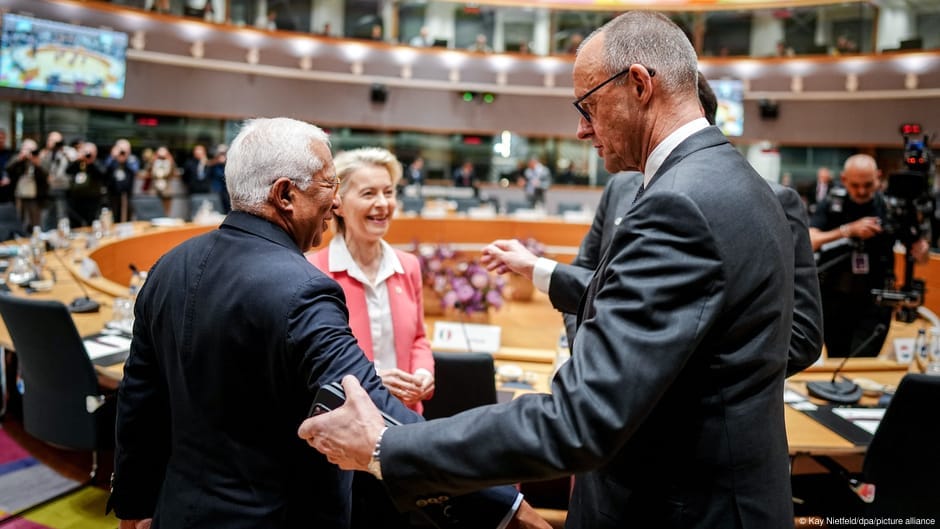
European Union leaders ended a special two-day budget summit after only one day without reaching an agreement on the bloc’s financial framework for 2028-2034, leaving investors with continued uncertainty over future EU spending, borrowing and fiscal priorities.
The talks opened in Brussels on Thursday, November 26, but leaders decided not to resume negotiations on the morning of November 27. Instead, they held a final round of discussions late on Thursday. German Chancellor Friedrich Merz said the positions of EU governments remained far apart, although he retained hope that an agreement could be reached before the end of the year.
“We understand that we will not reach a result this evening,” Merz said at a press conference.
Negotiations are expected to resume at the EU summit scheduled for December 17-18. For capital markets, the timetable makes that meeting an important fiscal event: the eventual agreement will help determine the scale and composition of EU investment, regional support and agricultural funding over seven years, as well as the bloc’s potential reliance on debt.
Spending and borrowing divide member states
Before the summit, Merz met the leaders of six net contributors that oppose higher expenditure: the Netherlands, Austria, Sweden, Finland, Denmark and Belgium. Their push for restraint contrasts with demands from Italy, Spain, France and Poland for greater support for economically weaker regions and agriculture.
Merz also criticized the seven-year budget proposed on November 21 by European Council President António Costa. The plan totals €1.78 trillion, approximately €204 billion less than the European Commission proposed in summer 2025. The German chancellor argued that spending should be reduced further.
That disagreement matters to investors because a smaller budget could constrain public investment and transfers to sectors and regions that depend on EU funding. Conversely, a larger package would require member states to accept higher contributions, different spending trade-offs or additional financing arrangements. The source article reported no specific moves in equities or bonds, but the failed summit prolongs uncertainty around those choices.
Merz opposed financing at the European level through borrowed funds. EU countries are due to pay more than €150 billion in interest on debt during the 2028-2034 period, and he warned that further increases in indebtedness could cause the bloc to lose its ability to act. His position puts the future supply of jointly backed European debt—and the fiscal capacity associated with it—at the center of the negotiations.
The chancellor also called for a fair distribution of costs and demanded that budget rebates allowing net contributors to recover part of their payments be maintained. Germany contributes about one-quarter of the entire EU budget but directly receives only around 8% of those funds, he said.
France and Italy resist deeper cuts
Italian Prime Minister Giorgia Meloni said Italy would not approve a framework under which it contributes more while receiving less. She suggested that the parties were “light-years” away from a financial agreement.
French President Emmanuel Macron described Merz’s proposal for deeper reductions as a “strategic mistake.” He nevertheless called for an agreement before year-end, saying his participation in subsequent discussions would become more difficult because France’s presidential election is scheduled for April 18.
The dispute exposes competing priorities with different implications for listed companies and sovereign borrowers. More funding for agriculture and weaker regions could support businesses exposed to infrastructure, rural investment and cohesion programs. Deeper cuts could limit that fiscal impulse, while resistance to common borrowing could reduce expectations for additional EU-level debt issuance. The final burden-sharing formula may also affect national fiscal planning among both net contributors and recipient states.
Ukraine financing adds another fiscal test
Leaders also discussed further financial assistance for Ukraine, including an additional €45 billion loan to Kyiv in 2027. That debate runs alongside negotiations over the EU’s longer-term budget and adds another demand on governments seeking to balance strategic commitments with debt-service costs and domestic spending priorities.
Merz said support for Ukraine was a task that EU countries must address collectively. He stressed that the union consists of 27 states, “not 23 or 24,” referring to the fact that the Czech Republic, Slovakia and Hungary are not participating in a €90 billion loan to Ukraine for 2026-2027. The EU had finalized that loan in April.
For investors, the December summit will therefore be watched not only for progress on the €1.78 trillion budget proposal, but also for signals about common borrowing, national contributions, rebates and Ukraine-related financing. Until leaders narrow their differences, the policy outlook remains unsettled for sectors reliant on EU programs and for fixed-income markets assessing the future balance between national and European-level issuance.



