German EV Demand Surges as Domestic Automakers Lose Ground
Electric-car registrations jumped roughly 80% in October, but Chinese manufacturers captured more of Germany’s expanding market.
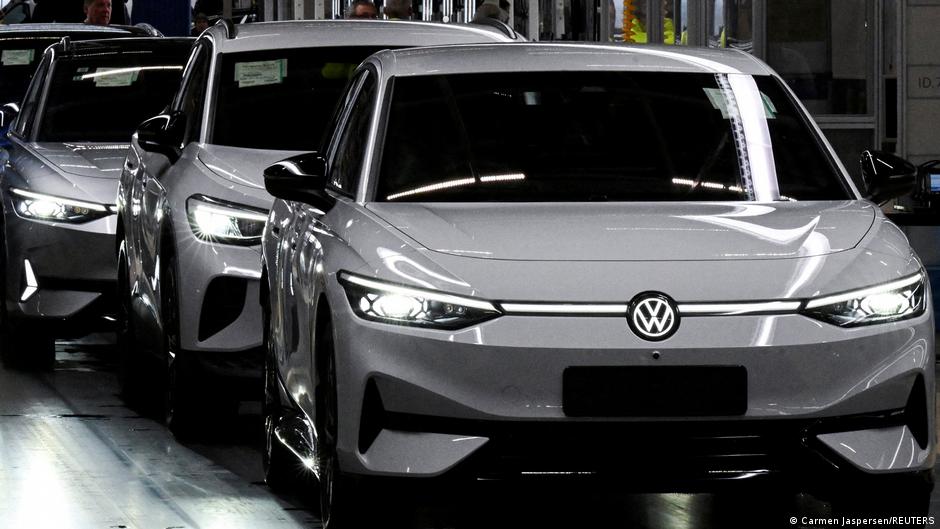
Germany’s electric-vehicle market accelerated sharply in October 2026, offering investors a striking contrast between robust consumer demand and weakening competitive positions for the country’s domestic automakers.
According to Germany’s Federal Motor Transport Authority, known as the Kraftfahrt-Bundesamt or KBA, approximately 254,500 new passenger cars were registered during the month. About 94,000 were fully electric vehicles, representing an increase of roughly 80% from the corresponding period in 2025.
The figures indicate that electric models accounted for a substantial share of new registrations in Europe’s largest automotive market. For capital-markets participants, however, the headline growth does not translate automatically into stronger earnings prospects for German manufacturers. The available data suggest that foreign groups, particularly Chinese producers, are capturing a growing portion of the expanding segment.
Chinese brands gain share in a growing market
Chinese manufacturers recorded the strongest sales growth as their share of the German market rose from 5.2% to 8.4%, according to consulting firm EY. German manufacturers, by contrast, have continued to lose share in the electric-car market from month to month.
That divergence is central to the investment implications of the October registration data. Rapid market expansion can support industry volumes, but it may offer limited protection to incumbent producers if competitors take an increasing share of those sales. For equity investors assessing German automotive groups, the figures therefore sharpen the focus on pricing power, product competitiveness and the profitability of electric-vehicle portfolios.
Germany’s EV market is expanding rapidly, but the strongest gains are going to Chinese manufacturers rather than domestic incumbents.
The trend may also complicate expectations for German automakers’ profits. A growing market usually creates opportunities to spread development and production costs across higher volumes. Yet declining market share can offset that benefit, especially when manufacturers must compete aggressively for customers in a segment shaped by government incentives.
Subsidies and fuel costs reshape demand
The shift toward electric vehicles has been supported by two major factors: high fuel prices linked to the energy crisis and a government subsidy program for electric-car purchases. The program was launched in May 2026 and made electric vehicles more financially attractive to motorists.
Demand for vehicles with internal-combustion engines, a category that also includes hybrids in the reported figures, moved in the opposite direction. The KBA recorded approximately 62,400 new registrations for those vehicles in October, a sharp decline compared with October 2025.
The split between rising battery-electric registrations and falling registrations for combustion-engine and hybrid vehicles points to a faster change in Germany’s sales mix. Investors may consequently place greater weight on how quickly individual companies can align manufacturing capacity, model ranges and capital spending with demand that is moving toward fully electric vehicles.
The subsidy program is also relevant for bond investors and creditors following the sector. Accelerating technological and production changes can require significant investment, while market-share losses may constrain the earnings available to fund that transition. The registration data do not provide company-level balance-sheet information, but they underline the competitive pressure surrounding future cash flows.
Market growth does not guarantee domestic profits
For German automotive equities, the central question is no longer simply whether consumers will adopt electric vehicles. October’s figures show that demand remains high and continues to grow. The more immediate issue is which manufacturers can convert that demand into sustainable sales and profits.
Chinese companies’ increase in market share from 5.2% to 8.4% illustrates the challenge facing domestic groups. If that trajectory continues, German manufacturers could encounter stronger pressure to defend volumes even as the overall electric-car market expands. Investors will be watching whether established brands can reverse their month-by-month share losses without undermining margins.
The October data therefore present a mixed signal for the automotive sector. They are supportive for the broader electric-vehicle market and for companies gaining share, while raising concerns about incumbent German manufacturers’ competitive standing. High fuel prices and purchase subsidies have helped create powerful demand, but the distribution of that demand increasingly matters more than the headline growth rate.
For investors today, Germany’s EV boom is best viewed as a reallocation within the auto market rather than a uniform benefit for all manufacturers. The market is growing quickly, yet the companies most closely associated with Germany’s automotive industry are not necessarily its principal beneficiaries.



