Italy Cost Protests Put Fiscal Priorities and Market Risks in Focus
A nationwide strike and demonstrations over living costs and military spending highlight political risks facing investors across Europe.
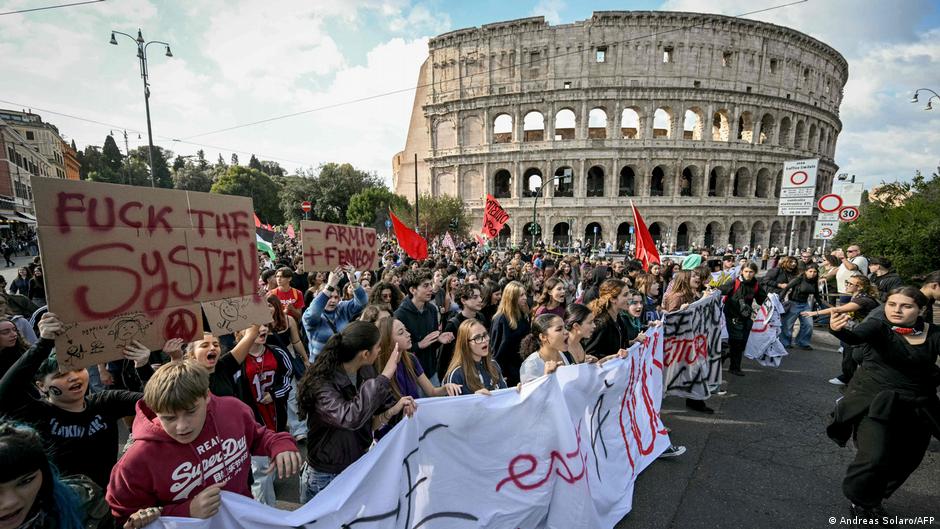
Mass protests across Italy over rising living costs and increased military expenditure have brought the country’s fiscal priorities into sharper focus for investors assessing political and economic risks in European markets.
Hundreds of thousands of people took to the streets on October 30, while a nationwide 24-hour general strike was held at the initiative of the Unione Sindacale di Base, or USB. Demonstrations took place in more than 60 Italian cities, according to national news agency ANSA.
Estimates of participation varied substantially. USB, which organized the demonstrations, said between 1 million and 1.5 million people joined the actions. Italy’s Interior Ministry put the figure at 255,000.
The disparity does not alter the central issue for markets: public frustration over household expenses and government spending choices is becoming increasingly visible. Investors in Italian equities and sovereign bonds must now consider whether that pressure could complicate budget decisions or constrain policymakers seeking to balance domestic demands with higher defense expenditure.
Household costs collide with defense priorities
Demonstrators focused particularly on more expensive apartment rents and rising fuel prices. One of the slogans used during the protests was: “We need more housing, not more bombs.”
The message places two politically sensitive spending priorities in direct competition. Measures aimed at easing housing or fuel costs could require additional public resources, while protesters are simultaneously demanding that military expenditure be restrained. For capital markets, the importance lies in how the government responds and whether any policy concessions affect Italy’s broader fiscal calculations.
“We need more housing, not more bombs.”
No specific financial-market reaction was provided in the source report. Even so, large demonstrations and a general strike can matter to investors because they draw attention to policy durability, social stability and the political room available for spending decisions. Italian shares exposed to domestic consumption, transport or public-sector activity may be especially sensitive to evidence that cost pressures are changing household behavior or disrupting economic activity. Bond investors, meanwhile, are likely to watch for any shift in fiscal commitments.
The protests were largely peaceful across Italy, ANSA reported, with exceptions in Rome and Turin. In those cities, some protesters began setting fire to rubbish bins and throwing objects at police officers toward the evening. Law enforcement responded with tear gas and water cannons.
Interior Minister Matteo Piantedosi defended the authorities’ response in a post on the social media platform X.
“The measures adopted were balanced and effective: this made it possible to protect one of citizens’ fundamental rights — the right to demonstrate peacefully — despite attempts by certain individuals to provoke disorder and violence.”
For investors, isolated clashes do not in themselves establish a broader deterioration in Italy’s operating environment. However, escalation or repeated disruption could add to short-term uncertainty, particularly if strikes affect transport, retail activity or other parts of the domestic economy. The scale and persistence of future actions will therefore be more significant than individual incidents.
A broader European pressure point
Italy’s October 30 protests formed part of a wave of demonstrations that has spread across other European countries in recent weeks. France has experienced actions in several cities that developed into property damage and clashes with police, while protests have also taken place in Belgium.
The cross-border dimension raises the relevance for European capital markets. Rising living costs are not being treated solely as an Italian political issue, and demands for changes in spending priorities could influence government agendas elsewhere. Investors assessing European equities and bonds may consequently need to monitor whether protests remain episodic or develop into sustained pressure for greater social expenditure and reduced defense commitments.
Similar demonstrations are due to take place in more than 30 German cities on October 31. The Gen-Z regelt movement, whose name means “Generation Z decides,” has called for the actions. Tens of thousands of mainly young people are expected to participate.
German demonstrators are set to express dissatisfaction with the rising cost of living and the potential return of military conscription, while calling for increased education spending. Experts expect the demonstrations in Germany to proceed largely without disorder.
The events leave investors with several areas to follow: the duration of labor disruption, the possibility of new household-support demands, the political debate over military budgets and the extent to which protests spread across the region. Until governments announce concrete policy changes, the principal market implication is heightened scrutiny of European fiscal trade-offs rather than a measurable shift in valuations directly attributable to the demonstrations.
For Italy, the immediate test is whether the mobilization fades after the general strike or becomes a sustained challenge to existing spending plans. That distinction will determine whether the protests remain a political headline or develop into a more consequential factor for Italian assets.



