Kamysevakha Strike Death Toll Reaches 72 as Investors Assess War Risk
The confirmed toll from the Russian airstrike highlights persistent geopolitical risks affecting Ukrainian assets and regional markets.
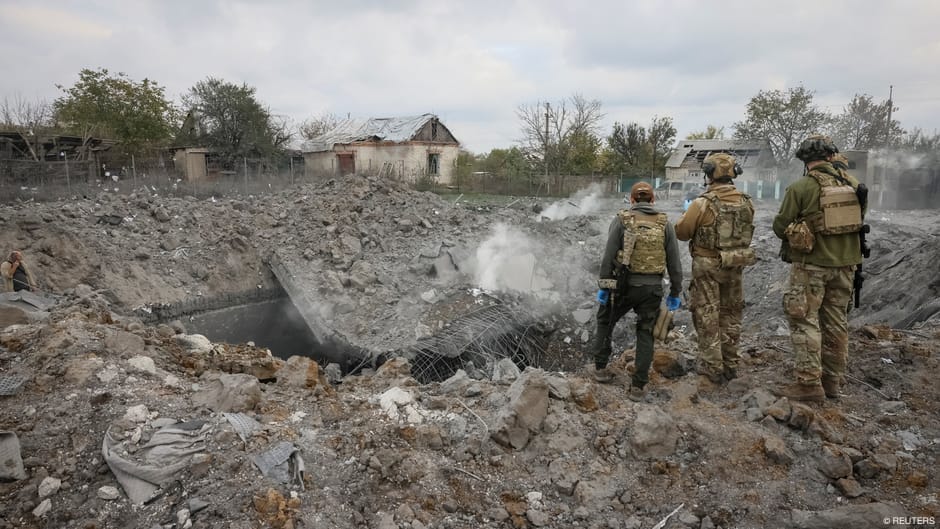
Ukrainian rescue workers have completed a two-week search through the rubble of a humanitarian aid center in Kamysevakha, in the Zaporizhzhia region, confirming that 72 people were killed in a Russian airstrike. Four people remain missing, while four injured survivors are still receiving hospital treatment.
The scale of the casualties makes the November 2 strike one of the deadliest attacks on a single civilian site since Russia began its full-scale war against Ukraine. For investors, the episode underscores the continuing security risks surrounding Ukrainian sovereign debt, reconstruction-linked assets and companies with operational exposure to the country or neighboring markets.
No specific reaction in equities or bonds was reported in connection with the completion of the rescue operation. Nevertheless, attacks of this magnitude can reinforce the geopolitical risk premium already embedded in Ukrainian assets and influence expectations about government financing needs, reconstruction costs and the duration of international support.
Rescue operation confirms rising toll
Rescuers recovered 58 bodies from the ruins of the building struck by an aerial bomb. One person later died in hospital, and the deaths of another 13 people were established through DNA testing, according to Ukrainian Interior Minister Ivan Vyhovskyi. The dead included two rescue workers and four police officers.
The Zaporizhzhia regional military administration said four people were still classified as missing when the search and debris-removal operation ended on Monday, November 16.
The attack took place on the morning of November 2 at a disused school in Kamysevakha where humanitarian assistance was being distributed. Ukrainian Prime Minister Serhiy Koretskyi said Russian forces dropped aerial bombs on the building. After people moved into a shelter, he said, Russian forces also struck that location, using nine aerial bombs.
The humanitarian distribution had been announced officially in advance, according to Ukrainian authorities. The strike occurred while aid was being handed out, contributing to the high number of casualties.
Russia has not commented on the attack. The United Nations condemned the actions of the Russian military, while its monitoring mission in Ukraine raised concerns about compliance with international humanitarian law.
“Either the Russian armed forces knew that humanitarian aid was being distributed there, or they failed to take the most basic steps to determine what was happening in the settlement they intended to attack,” said Danielle Bell, head of the UN Human Rights Monitoring Mission in Ukraine.
Bell said that under either scenario, the strike appeared to violate the most fundamental principles of international humanitarian law.
Repeated attacks compound operational risks
The search-and-rescue effort continued for two weeks despite further attacks on the settlement. Local authorities said Kamysevakha was shelled 11 additional times during that period, with nine strikes hitting the debris-removal site directly. Three police officers and four rescue workers were injured in the repeated attacks.
The sustained threat illustrates the operational difficulties facing emergency services, aid organizations and future reconstruction projects in frontline regions. For capital markets, those conditions can translate into higher insurance costs, longer project timelines and greater dependence on public guarantees or multilateral financing.
The attack has been compared by some media organizations with Russia’s bombing of the Mariupol Drama Theatre in March 2022, although no confirmed casualty figure is available for that earlier strike. Based on the number of civilians killed at one site, Ukrainian reporting described the Kamysevakha attack as among the deadliest of the full-scale war.
Implications for investors
The confirmed death toll does not by itself establish a new direction for Ukrainian equities or bonds, but it adds to the evidence that military risk remains acute even around civilian and humanitarian infrastructure. That risk affects assessments of Ukraine’s fiscal outlook because prolonged hostilities increase demands on defense, emergency response and social spending while delaying the restoration of productive assets.
Investors in Ukrainian sovereign and quasi-sovereign debt will continue to weigh battlefield developments alongside external financial assistance and the government’s ability to fund essential services. Companies considering reconstruction or infrastructure exposure must similarly account for physical security, workforce safety and the possibility of repeated strikes at project locations.
The broader regional impact is likely to remain concentrated in risk pricing rather than in an identifiable single-session market move. The Kamysevakha toll nevertheless provides a stark reminder that geopolitical headlines can quickly alter assumptions about reconstruction schedules, credit conditions and capital deployment in Ukraine.



