Khodorkovsky Urges Europe to Encourage a Split in Russia’s Elite
The opposition figure said offering influential Russians a personal exit could aid political change and reduce long-term instability.
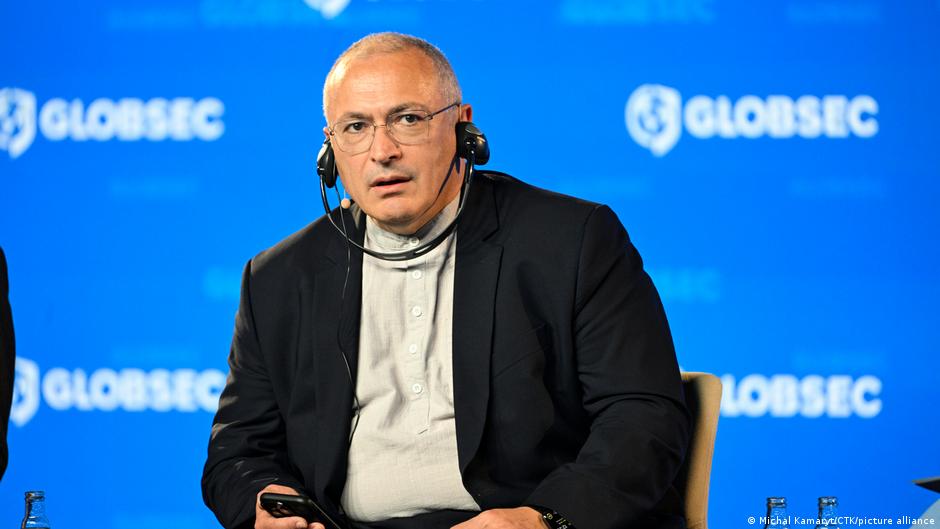
European governments should offer influential members of Russia’s elite an alternative to continued support for President Vladimir Putin, according to opposition figure Mikhail Khodorkovsky, who argued that creating credible personal exit routes could help divide the political establishment surrounding the Kremlin.
Speaking at a conference of the Russian Anti-War Committee in Brussels on Tuesday, Nov. 3, Khodorkovsky said powerful Russians remain aligned with Putin partly because they are not convinced that their position would improve under a different political order. He also pointed to the personal security system built by the Russian president when asked whether domestic actors could remove him from power.
“If we are talking about a split among the elites, then we need to demonstrate opportunities for a personal exit,” Khodorkovsky said.
Such an exit could still involve losses for those concerned, he added. Khodorkovsky described Europe’s failure to establish such options by the fifth year of the war as a serious mistake. He did not specify the terms that European countries should offer during his remarks in Brussels.
He has previously written that a declaration of disagreement would not be sufficient for people who had cooperated with the Russian authorities. As examples of meaningful action, he cited donations to Ukraine and testimony to investigators examining crimes committed by the regime.
Political transition carries market risks
For capital markets, Khodorkovsky’s argument highlights the uncertainty surrounding any eventual change of power in Russia. Investors assessing Russian-linked assets, sanctions exposure or the wider regional risk premium would need to distinguish between an orderly transition and scenarios involving violent confrontation or territorial fragmentation.
Khodorkovsky warned that attempts to prosecute people connected to the war or restrict their rights could provoke armed resistance inside Russia. He said millions of Russians are linked to the conflict because they or their relatives have fought, worked at military enterprises or supported the political order established by the authorities.
Some of those people are accustomed to handling weapons and could be prepared to resist measures directed against them, he said. “And we must understand that when we talk about lustration, contributions and trials of war criminals, we are talking about a new war,” Khodorkovsky told the conference.
His warning is relevant to investors because the character of a post-Putin settlement could determine whether political change reduces or intensifies geopolitical risk. A negotiated and gradual transition could provide a different trajectory from one marked by internal conflict, although Khodorkovsky offered no timetable for political change and made no forecast for sanctions, Russian securities or the ruble.
He contrasted efforts to impose a preferred transformation by force with national reconciliation and gradual democratization. In his assessment, armed confrontation inside Russia would produce another authoritarian system and delay the prospect of democratic change for an additional political generation.
Khodorkovsky issued a similar warning about the possible breakup of the Russian Federation. Such an outcome would be paid for in blood, he said, urging policymakers to consider not only their desired end state but also the methods used to reach it.
Institutional de-escalation as a lower-risk path
Instead, Khodorkovsky proposed focusing on what he called “institutional de-escalation”: reducing the threat of war by changing the structure of power in Russia. In his view, even a shift from one-person rule to collective leadership could lower the likelihood of war.
A parliamentary model and greater federalization would reduce that probability further, he argued. From a markets perspective, the proposal frames institutional design as a potential component of geopolitical risk reduction. Any credible decline in the likelihood of war could ultimately affect investor assessments of European equities, defense-related spending, sovereign bonds and companies with exposure to the region. However, the conference remarks did not outline a concrete reform process or identify immediate policy measures capable of producing those outcomes.
The comments also underline the competing considerations facing European policymakers. Measures intended to preserve accountability for wartime conduct could collide with efforts to encourage defections from the existing Russian establishment. Conversely, offering routes out for members of the elite could create political and legal questions about the costs they should bear and the actions required to demonstrate a genuine break with the authorities.
For investors today, the immediate significance lies less in a specific trade than in the range of transition risks being discussed. Khodorkovsky’s remarks suggest that the durability of elite support for Putin depends not only on loyalty or coercion but also on the absence of a credible alternative. Whether Europe develops such an alternative could influence the shape and stability of any future political transition.
The Russian Anti-War Committee’s two-day conference is being held in Brussels on Nov. 3-4 and is devoted to scenarios for ending Russia’s war against Ukraine. Its program also includes discussions of sanctions, nuclear risks and the possibility of putting Putin on trial.



