Kyiv Seeks Unified European Position Ahead of Russia Negotiations
Ukraine is preparing an allied meeting aimed at strengthening Europe’s role in talks while securing new air-defense and energy support.
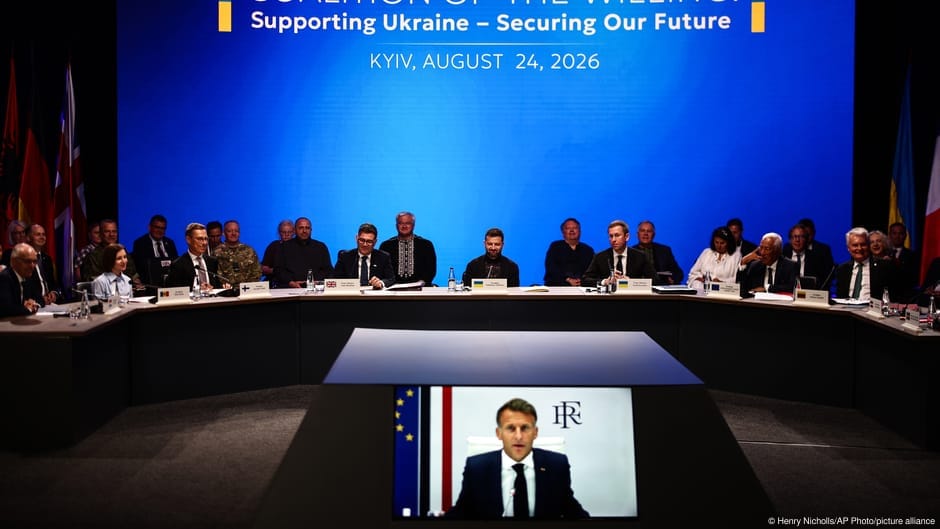
Kyiv is preparing a meeting of the countries supporting Ukraine in an effort to establish a unified European position for potential negotiations with Russia, Ukrainian President Volodymyr Zelensky said in a video address published on Sunday, November 15.
For capital markets, the initiative puts renewed attention on the diplomatic outlook, the durability of European military assistance and the fiscal costs of supporting Ukraine. Investors in European equities, sovereign bonds, currencies and energy markets are likely to assess whether the meeting produces concrete commitments or remains primarily a political signal. Zelensky did not announce any agreement on negotiations, and no immediate market reaction was cited.
Zelensky described the forthcoming meeting of the so-called coalition of the willing as potentially historic, arguing that it could define a strong European negotiating position. He said the existing prospective trilateral format involving Ukraine, the United States and Russia should be expanded and made significantly stronger through European participation.
“We can define a 100 percent strong European position for negotiations,” Zelensky said.
The Ukrainian president did not clarify whether he was referring to the coalition’s next expected meeting, scheduled for November 19 in Berlin, or to preparations for a separate summit.
Defense commitments remain central for investors
The coalition comprises 37 countries, mainly European states and governments providing military assistance to Ukraine as it resists Russia’s full-scale invasion. France, Britain and Germany are regarded as the group’s informal leaders.
The involvement of Europe’s largest economies matters to investors because any stronger role in the negotiating process could be accompanied by further defense spending, procurement commitments or financial assistance. Those possibilities can affect expectations for government borrowing and budget priorities, while also shaping the outlook for European defense companies and suppliers. The source provided no new spending totals, financing plans or procurement volumes.
Zelensky said Kyiv was also reviewing the work of other coalitions created to support Ukraine. The objective, he said, was to determine which groups were fulfilling their assigned tasks and which remained empty in practical terms. Kyiv would work to give those initiatives greater substance, he added.
The coalitions established after the start of Russia’s full-scale war include both formal agreements among Kyiv’s allies and informal groupings or initiatives without clearly defined operating rules. Their effectiveness has varied.
The IT coalition, organized within the Ukraine Defense Contact Group, known as the Ramstein format, was established to support Ukraine in cybersecurity and digital technologies and remains active. By contrast, the so-called tank coalition cited in media coverage did not exist as a formal organization in practice, even though Ukrainian representatives also used the term at the time.
For markets, Kyiv’s review could help distinguish political branding from initiatives capable of generating contracts, funding flows or deliveries. Clearer commitments would offer more useful signals for defense-sector order books and European fiscal projections than coalition announcements lacking defined mandates.
Energy resilience and air defense shape near-term risks
Zelensky also said Kyiv had reached an agreement with European Commission President Ursula von der Leyen on additional energy support. The assistance is intended for cities and communities currently facing the greatest difficulties and is expected to include additional generators, other equipment and financing to bolster resilience.
Energy infrastructure remains a material economic risk for Ukraine and its partners. Additional equipment and funding could help limit disruptions for households, local authorities and businesses, although Zelensky did not specify the value, timing or source of the assistance. For investors, the implementation details will be important when assessing reconstruction needs, pressure on European support budgets and the operating environment for companies exposed to Ukraine.
The Ukrainian leader also highlighted an upcoming meeting of allies in the Ramstein format. Kyiv expects that gathering to approve new supplies of air-defense missiles. Zelensky said the meeting should produce results and send a strong signal to Russia that Ukraine would not be left without support.
Ukraine’s priorities are air defense, with partners urged to concentrate on missiles for Patriot and NASAMS systems, Zelensky said. No quantities, delivery schedules or financial terms were disclosed.
The market significance of the coming meetings will therefore depend less on diplomatic language than on measurable outcomes: whether Europe secures a coherent role in negotiations, whether allies authorize additional missile deliveries, and whether energy assistance arrives with defined financing. Until those details emerge, investors face a mixture of diplomatic optionality and continuing geopolitical risk rather than a confirmed change in the trajectory of the war.



