Lithuania Seeks EU Terror Listing for Russian Military Intelligence
The proposal could deepen geopolitical risk for European investors by raising the prospect of tighter sanctions and security measures.
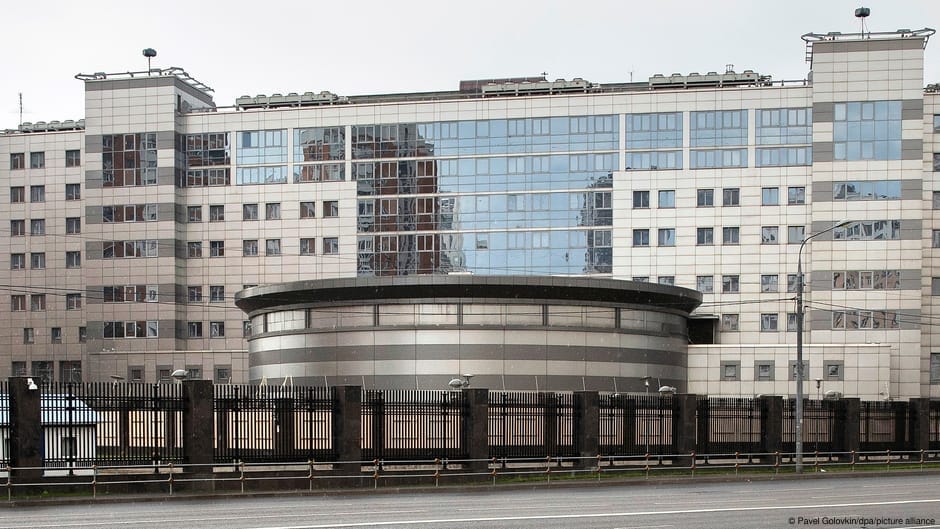
Lithuanian Foreign Minister Kęstutis Budrys has called on the European Union to designate the Main Directorate of the General Staff of the Russian Armed Forces as a terrorist organization, arguing that Russian military intelligence is conducting operations that threaten European societies and decision-makers.
Budrys made the proposal in an interview with the German newspaper Die Welt published on Wednesday, November 25. He said Lithuania’s push was not connected to the country’s forthcoming presidency of the Council of the European Union.
The Lithuanian minister accused the Russian service of “terrorizing” European societies, policymakers and private individuals. He compared it with Iran’s Islamic Revolutionary Guard Corps, an elite military and political formation that, according to the source article, was designated a terrorist organization by the EU in early 2026.
“We must make it clear to Russia that its actions against us are no longer merely ‘hybrid warfare,’ but rather ‘unconventional warfare,’ and that such actions may well cross the threshold provided for in Article 5 of the North Atlantic Treaty,” Budrys said.
Investors Face a Broader European Risk Premium
The initiative has not yet produced an EU-wide designation, and the source article provides no specific reaction in equity, bond or currency markets. For investors, however, the proposal adds to a widening set of geopolitical risks surrounding European security, sanctions policy and relations with Moscow.
A terrorist designation could become relevant to capital markets if it leads to additional financial restrictions, tougher compliance obligations or wider enforcement against organizations and individuals alleged to have links with Russian security structures. The precise market effect would depend on the legal measures attached to any designation and whether all EU member states support the proposal.
European defense, cybersecurity, energy and transport companies are among the sectors most directly exposed to changes in regional security policy. Banks and other financial institutions could also face higher screening and compliance demands if the EU expands restrictions involving Russian state bodies or associated entities. No such measures were detailed in Budrys’s remarks.
For sovereign bond investors, the debate reinforces the importance of defense spending and fiscal policy across the EU and NATO. A further deterioration in the security environment could increase pressure on European governments to allocate more resources to border protection, military procurement and critical-infrastructure resilience. Those considerations may influence national borrowing needs and the relative risk premiums attached to countries near Russia, although the source reported no immediate change in bond pricing.
Estonian Border Closure Adds to Security Concerns
Budrys’s demand followed an announcement by Estonia on November 15 that it would close all border crossings with Russia beginning the following month. Estonian authorities accused Russian intelligence services of attempting to cause an explosion and fire at the premises of Threod Systems, a company that manufactures drones and electro-optical intelligence and surveillance systems.
On the same day, Budrys supported Estonia and accused Russia of “state terrorism.” In a post on the social media platform X, he said Europe should stop relying on euphemisms and seriously consider designating the GRU and other Russian intelligence and security structures involved in sabotage operations as terrorist organizations.
He also called for stronger support for Ukraine, greater pressure on Moscow and tangible consequences for those who order and execute such attacks. His comments frame the proposed designation as part of a broader effort to raise the political and economic cost of alleged Russian operations in Europe.
What Markets Will Watch Next
The immediate question for investors is whether Budrys’s proposal gains support from other EU governments and advances into a formal legislative or sanctions process. Any resulting asset freezes, transaction prohibitions or restrictions on counterparties could affect companies with direct or indirect Russian exposure.
Markets will also assess whether the dispute prompts additional border controls, infrastructure spending or security measures affecting trade and logistics in northeastern Europe. Companies operating across the Baltic region may need to account for potential delays, higher insurance costs and more extensive due diligence if tensions continue to rise.
Budrys’s reference to NATO’s Article 5 carries particular significance because the provision treats an armed attack against one member as an attack against all. He did not say that the alliance had determined the threshold had been crossed. His argument was that unconventional operations could, under some circumstances, reach that level.
For now, the proposal represents political pressure rather than a completed policy change. Its market importance lies in the possibility that European governments may increasingly treat alleged sabotage and intelligence operations as matters requiring sanctions, security investment and coordinated financial enforcement rather than only diplomatic condemnation.



