Macron’s Ukraine Appeal Highlights Europe’s Growing Fiscal Divide
France’s president warned against limiting support for Kyiv as Poland and Bulgaria cited budget constraints on further financing.
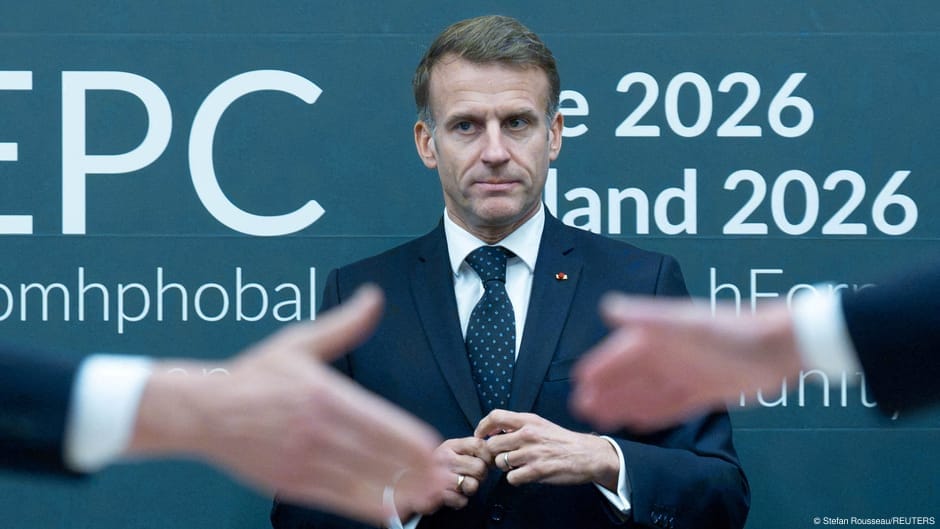
French President Emmanuel Macron has criticized opponents of continued support for Ukraine, exposing a widening divide between Europe’s security ambitions and the fiscal constraints facing some of its governments.
In a post on X published on Saturday, November 14, Macron argued that allowing Russia to impose its will by force on one European country would weaken the entire region. His intervention followed decisions by Poland and Bulgaria to signal limits on additional financial assistance for Kyiv, citing budget deficits and domestic defense costs.
“Those who call for limiting aid to Ukraine, in essence, want to force it into an unjust peace, make it vulnerable in the long term — and therefore make all of Europe vulnerable,” Macron wrote.
Macron described that position as defeatist and “a direct path to the next war.” For investors, the dispute underscores the tension between Europe’s commitment to long-term defense spending and pressure on national budgets. That tension has implications for sovereign bonds, defense equities and the wider assessment of fiscal risk across European markets.
Security commitments meet budget constraints
Macron said the war in Ukraine was the central subject at the ninth European Political Community summit on November 12 and at an informal meeting of European Union heads of state and government in Dublin on November 13.
According to the French president, leaders agreed on two priorities: helping Ukraine through the winter and continuing joint work with Kyiv toward what he called a just and lasting peace. He said Europe must play the most active possible role because the continent’s security depends on the outcome.
The political commitment comes as governments face competing demands on public finances. Higher defense expenditure can support European arms manufacturers and other security-related companies, but additional borrowing or spending may also intensify scrutiny of national deficits. The source article did not report specific moves in equities or bonds following Macron’s comments, leaving investors to assess the policy signals rather than an identified immediate market reaction.
Polish Prime Minister Donald Tusk said in Dublin on November 13 that Poland would suspend contributions to the PURL program, under which European countries purchase American weapons for Ukraine. Tusk cited Poland’s large budget deficit and Warsaw’s already high defense expenditure.
“We have helped and continue to help Ukraine very seriously,” Tusk said. He added that Poland would not provide additional funds given its financial capacity and its own defense and security expenses, which he described as among the highest in Europe.
The decision illustrates a key issue for capital markets: European governments do not have equal fiscal room to finance common security objectives. Countries carrying heavier deficits or substantial domestic defense bills may be less able to make further contributions without cutting other spending, raising taxes or increasing borrowing.
NATO stance adds a long-term defense signal
Macron separately said Ukraine deserves a place in NATO, describing it as possessing Europe’s strongest conventionally armed military. In his view, Kyiv and the alliance together play a key role in Europe’s security architecture.
He also called for European leaders to go further by clearly setting out their vision of the postwar order, including to Russia, and defining what they expect from the United States regarding Europe’s long-term security.
That message points to a durable shift in European defense policy rather than a temporary response to the conflict. For defense-sector investors, a sustained focus on military readiness could reinforce expectations of long procurement cycles and continued demand. For bondholders, however, the central question is how governments will finance those commitments while complying with fiscal rules and managing existing deficits.
Bulgaria offered another example of those constraints. Bulgarian Prime Minister Rumen Radev said in Dublin that his country was currently unable to provide financial assistance to Ukraine when commenting on discussions about a new loan for Kyiv. He noted that the European Union had opened an excessive deficit procedure concerning Bulgaria.
Radev said Bulgarian authorities would consider participation only if funds were directed toward humanitarian assistance, energy supplies and medical needs, rather than weapons purchases.
The contrasting positions leave investors with a fragmented European policy picture. Macron is pressing for continued military and political backing, while Poland and Bulgaria are emphasizing national fiscal limits. The immediate market significance lies less in a single announcement than in the emerging allocation debate: which countries will provide funding, how much will be financed through borrowing, and whether joint European mechanisms can distribute the burden without adding disproportionate pressure to more vulnerable sovereign balance sheets.
Until those questions are resolved, European defense companies may continue to benefit from the strategic emphasis on security, while sovereign bond investors are likely to differentiate more closely between governments according to deficits, borrowing needs and their capacity to absorb further defense commitments.



