Market Reactions to Russia's Controversial Venice Biennale Pavilion Highlight Investor Concerns
Protests at Russia's Venice Biennale pavilion underscore geopolitical risks facing investors amid ongoing Ukraine conflict.
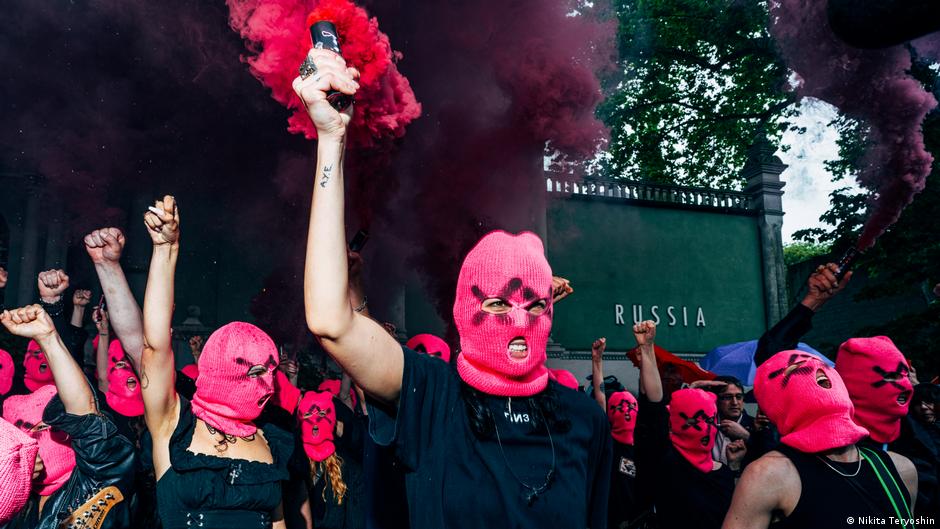
The participation of Russia in the 2024 Venice Biennale, an internationally renowned contemporary art exhibition, has sparked intense protests and controversy, raising concerns among capital market participants about geopolitical risks and their potential impact on investments connected to Russia.
Protests and Political Statements at the Russian Pavilion
On May 6, feminist punk group Pussy Riot and Ukrainian activist organization Femen staged a demonstration in front of the Russian pavilion in Venice. The protesters called for Russia to be represented by political prisoners holding pro-Ukrainian views, rather than government-backed artists. They ignited colored smoke bombs and displayed placards with slogans such as "Russian art is blood," "Enjoy the show – ignore the war," and "Art on display, graves below." The activists also draped Ukrainian flags and masks on statues by the pavilion.
“Every Russian artwork shown this year stands on an invisible pedestal: Ukrainian blood. You won’t find this in the catalog. But it is the only material truly holding up this pavilion,” said Femen leader Inna Shevchenko.
Pussy Riot member Nadezhda Tolokonnikova emphasized that many of Russia’s best citizens are either imprisoned for anti-regime and pro-Ukrainian actions or killed, while Europe opens its doors to officials loyal to the Kremlin. She called for the Russian pavilion to be represented by artists jailed for their anti-war stance.
Market Implications and Investor Sentiment
Russia's reentry into the Venice Biennale for the first time since its full-scale invasion of Ukraine has drawn sharp criticism from the European Union and Ukraine. The EU Commission has warned that Russia’s participation violates EU sanctions legislation, adding to the existing sanction-driven uncertainty affecting Russian equities and bonds.
The pavilion was intentionally opened only from May 6 to 8 for invited guests, featuring a continuous sound performance titled "Tree Rooted in the Sky." It will be closed to the public from May 9, the official opening of the Biennale. Moreover, the jury excluded Russia and Israel from award competition and subsequently resigned amid controversies surrounding their pavilions.
These developments highlight the elevated geopolitical and reputational risks facing Russian state-linked entities. The pavilion is operated by Smart Art, a company founded by daughters of high-ranking Russian officials: Ekaterina Vinokurova, daughter of Foreign Minister Sergey Lavrov, and Anastasia Karneeva, daughter of a former general and deputy director of defense conglomerate Rostec. This close government association may further compound investor concerns over governance and sanction exposure.
Equity investors remain cautious as sanction risks and reputational issues continue to weigh on Russian assets. Fixed income markets also reflect heightened credit risk premiums on Russian sovereign and corporate debt. The Venice Biennale episode reinforces how soft power and cultural diplomacy interlink with broader political risks that can influence asset valuations and capital flows.
Outlook for Investors
Given ongoing conflicts and international sanctions, investors should monitor geopolitical developments closely, particularly events amplifying Russia’s global isolation or triggering further sanctions. Cultural flashpoints like the Venice Biennale can serve as bellwethers for shifts in political risk sentiment that ripple into capital markets.
Portfolio managers with exposure to Russian equities, bonds, or parent companies linked to government officials should assess their risk tolerance and potential impacts on valuations. Diversification and risk mitigation strategies remain paramount amid this complex and volatile environment.