Meloni Presses EU on Ukraine Talks as Investors Weigh Policy Risk
Italy’s prime minister says Europe must appoint a clear representative for peace talks, putting EU coordination in focus for markets.
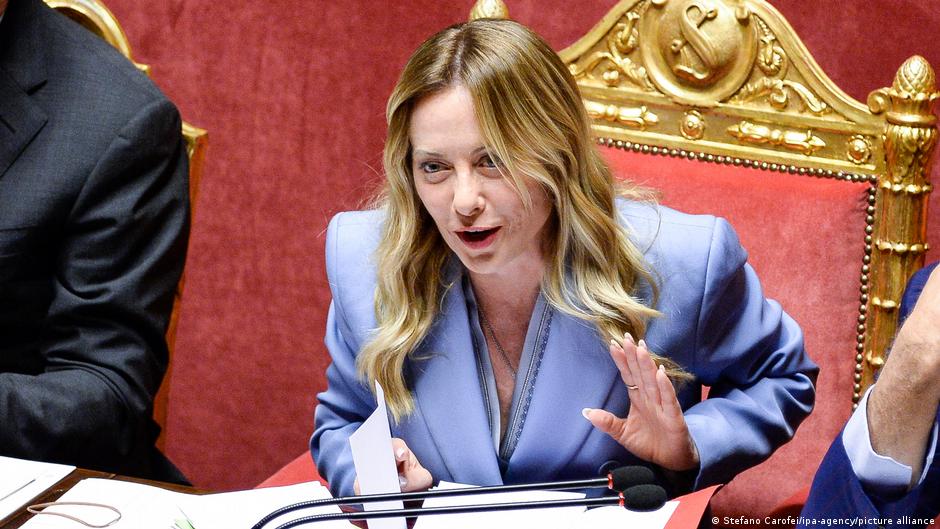
Italian Prime Minister Giorgia Meloni has called on the European Union to decide who will represent the bloc in negotiations aimed at ending the war in Ukraine, criticizing what she described as uncoordinated conduct by EU leaders.
For capital markets, the dispute highlights the political uncertainty surrounding Europe’s role in the peace process. Investors assessing European equities and sovereign bonds are watching whether the bloc can establish a coherent negotiating position ahead of a new round of US-mediated talks between Russia and Ukraine.
In a letter to European Council President António Costa, cited by dpa on Thursday, November 5, Meloni demanded clarity over both the identity and authority of any EU representative at future negotiations.
“I continue to insist that it be decided once and for all who exactly will sit at the negotiating table on behalf of the European Union and with what mandate,” Meloni wrote.
Her intervention does not itself establish a new negotiating framework, but it raises the prospect of a formal EU decision over the coming weeks. That timetable gives investors two political milestones to monitor: an informal European Council meeting in Dublin on November 13 and a Brussels summit scheduled for December 17-18.
EU coordination becomes a market variable
Meloni argued that uncoordinated behavior within the EU would be unhelpful both in relations with allies and in dealing with those who must be persuaded to end what she called a “senseless aggression.” AFP quoted her as saying that the image of a Europe acting in a disorderly fashion serves only the interests of those who want the war to continue.
The comments place intra-European diplomacy alongside the broader geopolitical risks already considered by investors. A unified mandate could make the EU’s position easier for markets to interpret, while continued disagreement could leave investors with less visibility over Europe’s objectives, its relationship with Washington and the potential path toward de-escalation.
No specific market reaction was reported in the source account. The immediate relevance for equity and bond investors therefore lies in prospective policy risk rather than a documented move in asset prices. The political process could affect perceptions of European cohesion at a time when negotiations concern postwar security, de-escalation and humanitarian measures.
Meloni proposed that EU leaders discuss representation at the informal Dublin meeting. In her view, that would allow the European Council to make a formal decision at the Brussels summit on who should speak for the bloc in negotiations over peace in Ukraine.
The distinction between preliminary discussion and a formal mandate matters. Until member states agree on a representative and define that person’s authority, investors may have difficulty judging how much weight any individual European initiative carries. A settled structure would not guarantee progress in negotiations, but it could reduce one source of institutional ambiguity.
Separate diplomatic initiatives draw criticism
Meloni has previously criticized initiatives by individual European leaders that she believes dilute the EU’s common position on Russia’s war in Ukraine. Rome specifically objected to a telephone conversation involving Finnish President Alexander Stubb, Norwegian Prime Minister Jonas Gahr Støre and Russian President Vladimir Putin.
Her criticism points to a wider question over whether diplomacy should be conducted through a single European channel or through multiple national contacts. From a capital-markets perspective, the issue is less about the format alone than about whether those contacts produce consistent signals. Divergent messages can make geopolitical scenarios harder to price, particularly when investors are evaluating the likelihood and timing of de-escalation.
Meloni’s demand also comes before another round of talks between Russia and Ukraine, mediated by the United States, scheduled for November 10-11 in Abu Dhabi. US presidential special envoy Steve Witkoff said the meeting would address “postwar security, de-escalation, humanitarian initiatives and the next steps toward peace.”
The Abu Dhabi talks place the EU representation debate on a compressed calendar. The negotiations are due to take place before the informal European Council gathering in Dublin, meaning the United States will continue its mediation while EU governments are still considering who should formally speak for the bloc.
For investors, the next signals will come from whether the Dublin meeting produces political convergence and whether the December summit delivers the formal decision sought by Meloni. Until then, European assets remain exposed to the broader uncertainty of the war as well as questions about the EU’s ability to coordinate its diplomatic role.
Any movement toward a clearer mandate may improve visibility around the European policy process, while renewed disagreements could reinforce concerns about fragmented decision-making. The key issue for markets is not simply who receives the mandate, but whether member states recognize that representative’s authority and communicate a consistent position to allies, Russia and Ukraine.



