Missile Attack in Russia’s Oryol Puts Key Optoelectronics Plant in Focus
Reported damage at the Proton factory highlights operational and supply-chain risks surrounding Russia’s strategically important defense industry.
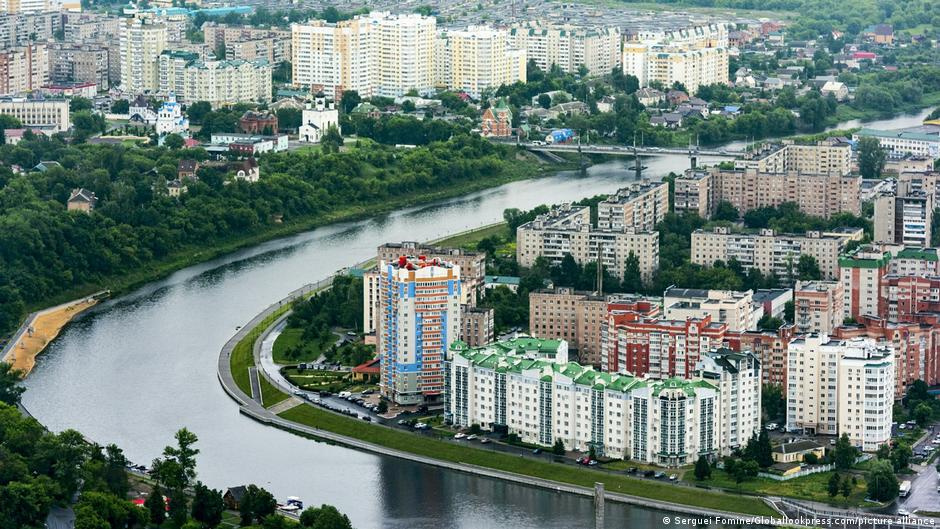
Russia’s city of Oryol came under what regional authorities described as a massive missile attack overnight into Saturday, January 7, with reports indicating that a major fire may have broken out at the Proton optoelectronics plant.
Oryol regional governor Andrei Klychkov confirmed the attack and said that production facilities belonging to an enterprise in the city’s Sovetsky district had been partially damaged. He did not identify the company, provide details about the extent of the disruption or disclose whether anyone had been injured.
“Production premises of an enterprise in the Sovetsky district were partially damaged,” Klychkov said.
Emergency services were working at the scene, according to the governor. The Proton plant is located in the same district, making it the likely facility identified through open-source analysis, although the regional authorities did not officially name it.
Strategic manufacturer faces renewed disruption risk
ASTRA reported, based on its analysis of open-source intelligence, that the strike caused a large fire at Proton. The plant is described as one of Russia’s most important manufacturers of optoelectronic equipment, placing the reported incident within a strategically sensitive segment of the country’s industrial base.
Ukrainian OSINT channels Exile+ and Supernova+ have said that Proton products are used in several Russian weapons systems. These reportedly include S-71 Kover air-launched cruise missiles, 9M723 Iskander-M ballistic missiles and Pantsir-S1 surface-to-air missile and artillery systems.
The factory has previously been targeted repeatedly in Ukrainian attacks. The latest reported incident therefore adds to an established pattern of operational risk for industrial sites linked to Russian military production, rather than representing an isolated disruption.
What the attack means for capital markets
For investors, the immediate significance lies less in a confirmed market-price move than in the possibility of additional strain across Russia’s defense manufacturing supply chain. The available reports do not quantify the damage, identify affected production lines or indicate how long operations could be disrupted. Without those details, the financial impact on Proton, its customers and connected suppliers cannot yet be reliably assessed.
Nevertheless, optoelectronic components can occupy important positions within complex weapons-production networks. If the reported fire damaged specialized machinery, inventories or production areas, the effects could extend beyond the plant itself to manufacturers dependent on its output. The degree of exposure would depend on available stocks, alternative suppliers and the time required to repair or replace equipment—none of which was disclosed in the source material.
Equity investors assessing Russian industrial and defense-linked companies may therefore focus on whether subsequent official statements clarify the scale of the damage and identify counterparties exposed to Proton. Listed companies with direct or indirect ties to military procurement can face higher operational uncertainty when attacks affect specialized facilities, even where ownership structures and individual supply contracts are not transparent.
Bond investors may view the event through a broader sovereign and corporate risk lens. Repeated attacks on production assets located inside Russia can raise concerns about capital expenditure, insurance availability, security costs and the resilience of industrial cash flows. Any meaningful credit effect, however, would require evidence of lasting production losses, additional funding needs or weakened support from customers or the state.
Investors await confirmation of damage
The central unanswered question is whether Proton’s operations suffered temporary physical damage or a more substantial interruption. Klychkov’s statement confirmed partial damage to an unnamed enterprise’s production premises, while ASTRA’s OSINT assessment linked a large fire to Proton. Those accounts are broadly consistent on the location of an industrial incident but stop short of providing a verified estimate of losses.
Investors will also be watching for signs of wider disruption among Russian defense suppliers and for any indication that repeated strikes are forcing companies to disperse production, increase inventories or spend more heavily on plant protection. Such measures could support operational resilience but would also increase costs and complicate capital allocation.
Until authorities or the enterprise disclose more information, the market implications remain primarily risk-based. The attack underscores the vulnerability of strategically important manufacturing assets and introduces fresh uncertainty around a plant whose products are reportedly incorporated into several prominent Russian missile and air-defense systems.



