Putin Signals Conditional Ukraine Talks but Rejects Front-Line Freeze
The Kremlin’s stance leaves investors without a clear path to de-escalation as continued attacks sustain geopolitical risk across European markets.
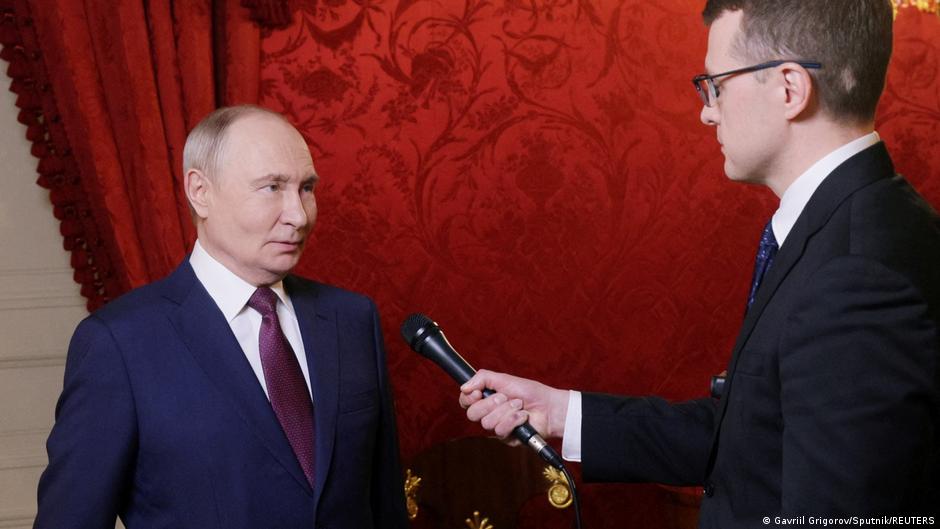
Russian President Vladimir Putin said Moscow was prepared to resume talks with Kyiv through US mediation, but rejected freezing hostilities along the current front line, leaving investors with no clear signal that the war is approaching a durable settlement.
In an interview with Pavel Zarubin, a journalist for Russia’s state-owned VGTRK media group, published on Thursday, October 22, Putin said he had agreed during a meeting with US special envoy Steven Witkoff to renew dialogue with Ukraine under Washington’s mediation.
“The purpose of these negotiations will be to discuss the security of Ukraine and Russia after peace agreements are reached, in their final form, rather than as a result of suspending hostilities for some short period,” Putin said. “We are ready to resume these contacts to achieve this goal.”
Moscow has not said at what level it would be represented in any renewed talks. Ukrainian President Volodymyr Zelensky has said he is ready for a three-way meeting with Putin and US President Donald Trump to discuss ending the war. The Kremlin has repeatedly rejected that format or attached conditions that Kyiv did not consider serious, including a proposal that Zelensky travel to Moscow.
Previous meetings between a delegation selected by Putin and Ukrainian representatives produced no tangible progress toward ending the conflict. Hours after Putin met Witkoff, Kremlin foreign-policy aide Yuri Ushakov also said Russia was “completely dissatisfied” with proposals brought by Trump’s negotiators.
Limited relief for geopolitical risk
For capital markets, the combination of renewed diplomatic language and unresolved territorial demands offers little basis for pricing a near-term peace settlement. A credible ceasefire could reduce the geopolitical premium embedded in European energy, defense and sovereign-risk assessments. Putin’s rejection of a front-line freeze, however, indicates that the central dispute remains intact.
The uncertainty matters for investors exposed to European equities, regional currencies and government bonds. The war continues to influence expectations for defense spending, energy security and fiscal policy across Europe. Without verifiable progress toward a ceasefire, portfolio managers have limited reason to unwind positions built around persistent geopolitical tension.
Asked about Zelensky’s statement that Ukraine was prepared to freeze hostilities along the current line of contact, Putin replied that the occupied land was “not their territory” but “the territory of historical Russia.” His answer underscored the gap between Ukraine’s proposed framework and Moscow’s territorial claims.
Media reports previously said Trump supported freezing the conflict along the front line running through the Donbas in 2025, before meeting Putin in Anchorage. That approach conflicts with Putin’s publicly stated demand that Ukraine surrender the entire Donbas region to Russia without a fight.
The mismatch between the negotiating positions reduces the immediate significance of Putin’s willingness to resume contacts. From an investor perspective, talks alone would not remove the risks affecting commodity flows, European budgets or companies with operations and supply chains exposed to the region. Markets would need evidence of an enforceable agreement and a sustained reduction in attacks before treating diplomacy as a material change in the outlook.
Attacks continue despite diplomatic messaging
Putin also claimed that Russia “does not want to fight” Ukraine and placed responsibility for the continuation of hostilities on Kyiv. He described Russians and Ukrainians as a closely related people and asserted that recent genetic research showed they were one people. He did not explain how genetics could affect national sovereignty.
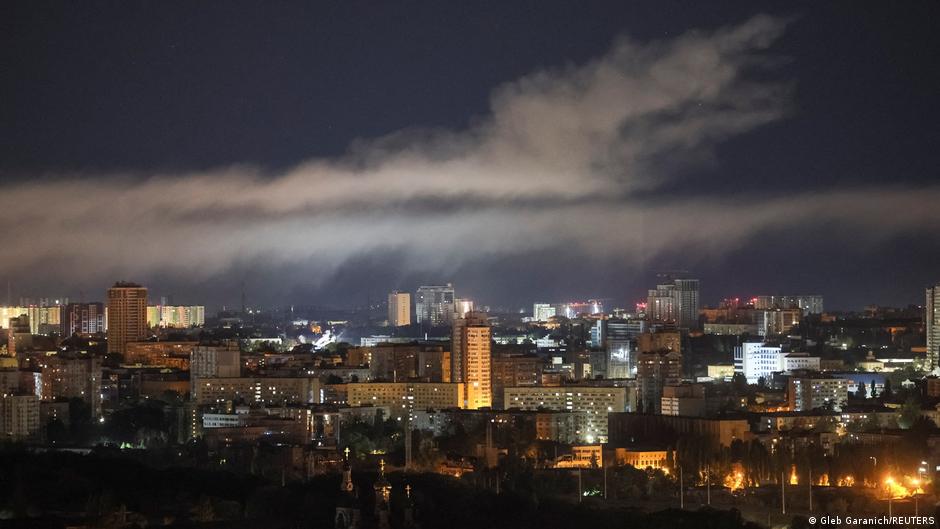
The intensity of Russian attacks on Ukraine did not decline after Putin’s meeting with Witkoff. On the day Zarubin’s interview was published, Ukrainian authorities reported Russian strikes on civilian sites, including a clothing market in Lozova in the Kharkiv region, Kyiv’s historic center, and roads and bridges in several regions. Two people were killed and 34 wounded in the strike on Lozova.
The continuing attacks stand in contrast to the Kremlin’s stated readiness for negotiations and reinforce the difficulty of converting diplomatic contacts into lower market risk. Investors assessing European stocks and bonds are therefore likely to focus less on the announcement of talks than on measurable developments: the level of representation, agreement on territorial issues, a reduction in military activity and credible security guarantees.
Until those conditions emerge, the conflict remains a source of volatility rather than a resolved catalyst. Defense-related equities may continue to reflect expectations of sustained European military expenditure, while energy-sensitive industries and regional sovereign debt remain exposed to shifts in the security outlook. Putin’s remarks open a diplomatic channel, but his rejection of the proposed freeze leaves the core market-moving uncertainty unchanged.