Russia and Ukraine Agree to Bring Europe Into Next Peace Talks
The expanded negotiations could address postwar European security and territorial issues, with investors watching for shifts in geopolitical risk.
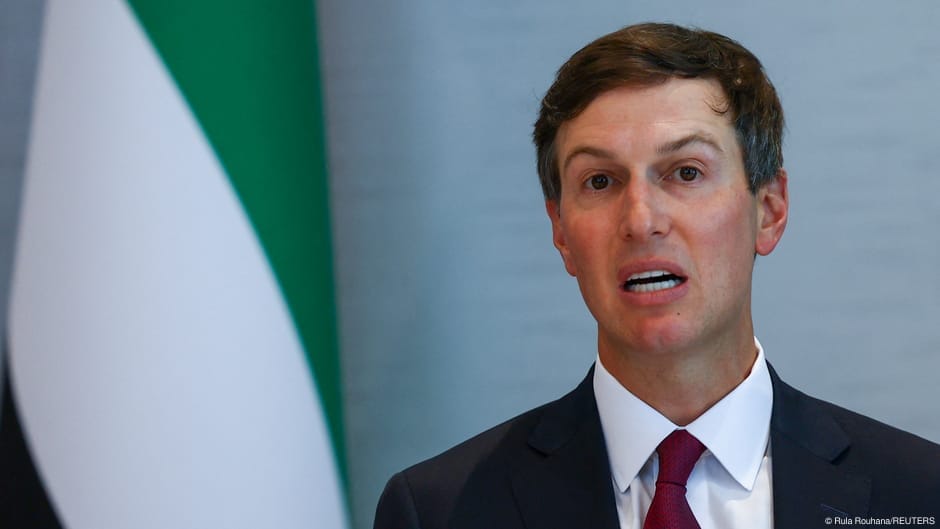
Russia and Ukraine have agreed to include European countries in the next round of peace talks after three days of negotiations in several formats, US presidential envoy Jared Kushner said. The diplomatic development could become a significant signal for capital markets assessing the war’s effect on European security, regional investment and geopolitical risk.
Kushner, who is also US President Donald Trump’s son-in-law, announced the agreement on X during the night of Friday, November 13. The talks took place from November 10 through November 12 and involved Russian, Ukrainian, US and European officials at different stages.
For investors, the decision to broaden the negotiating format may matter because it places territorial questions within a wider discussion of Europe’s postwar security architecture. However, Kushner’s statement did not announce a ceasefire, a final settlement or agreed terms for ending the war. Any market assessment must therefore distinguish diplomatic progress from a binding political agreement.
European security moves onto the negotiating agenda
Russian and Ukrainian delegations discussed possible conditions for ending Russia’s war against Ukraine in Abu Dhabi on November 10 and 11, with the United States acting as mediator. Kushner and Steve Witkoff, another envoy for the US president, then travelled to Moscow for negotiations with Russian President Vladimir Putin.
On November 12, the US negotiators flew to Dublin and met Ukrainian President Volodymyr Zelensky. They later held consultations with national security advisers representing Ukraine, Germany, Italy, France, Ireland, Poland and the European Union.
Kushner said the intensive diplomacy produced significant progress in understanding the concerns of both Russia and Ukraine. He also said the participants had identified possible solutions and established a path forward.
“Both sides have now agreed to expand the next round of talks to include European partners,” Kushner said.
According to the envoy, including European partners will allow negotiators to consider the broader structure of postwar European security alongside territorial issues between Ukraine and Russia. Kushner also said US representatives agreed with Zelensky that no wider European security agreements would be concluded without taking Ukraine’s security concerns into account.
The wider format raises the potential relevance of the talks for European governments that have carried much of the region’s fiscal, military and humanitarian response to the war. For equity and bond investors, the eventual design of any security framework could influence perceptions of sovereign risk, public spending requirements and the outlook for businesses exposed to Central and Eastern Europe.
Investors await evidence of a durable settlement
The announcement may draw attention across European equities, sovereign bonds and currencies because geopolitical uncertainty can affect risk premiums and capital allocation. A credible reduction in conflict risk could alter investor assumptions surrounding regional trade, infrastructure, energy security and reconstruction. Conversely, talks that fail to produce enforceable commitments could leave current risk calculations largely unchanged.
No specific reaction in stocks, bonds, foreign exchange or commodities was detailed in the announcement. Kushner also did not provide a timetable for the expanded round, identify its venue or outline the concessions under consideration. Those omissions limit the immediate conclusions that investors can draw from the diplomatic progress.
Market participants are therefore likely to focus on the next concrete milestones: whether the enlarged negotiations take place, which European parties participate directly, and whether the discussions lead to measurable steps toward ending hostilities. The treatment of territorial disputes and security guarantees will be particularly important because both issues could determine whether an agreement is viewed as durable.
Another potential signal came from Kushner’s announcement that preparations were under way for what he described as the largest prisoner-of-war exchange of the conflict. He said thousands of people could return home as a result. While the exchange is primarily a humanitarian measure, its implementation could also serve as evidence that the parties are capable of reaching and executing negotiated arrangements.
The three-day diplomatic sequence has expanded the range of governments engaged in the process and clarified that European security will form part of the next phase. For investors, that represents a development worth monitoring, but not yet a basis for assuming that the war is close to an end. The implications for equities, bonds and regional risk premiums will depend on whether the stated progress becomes a sustained negotiating process and, ultimately, an enforceable settlement.



