Stalin-Era Memorial Events Put Russia’s Political Risk Back in Focus
The Return of the Names commemoration reached 101 cities worldwide as investors continued to weigh Russia’s governance and institutional risks.
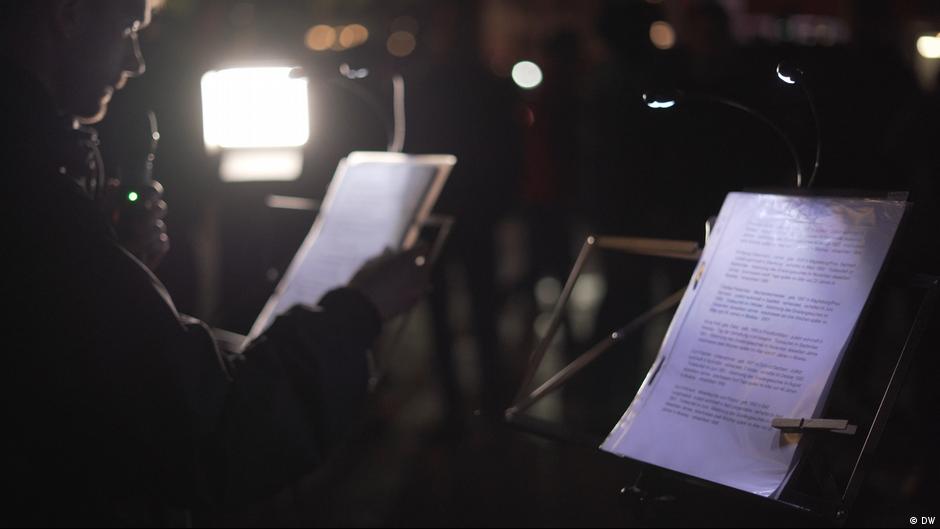
The annual Return of the Names commemoration for victims of Stalin-era repression was held in several countries on Thursday, October 29, ahead of Russia’s Day of Remembrance of the Victims of Political Repression. The event’s website listed 101 cities where ceremonies took place this year, either on October 29 or earlier.
The commemorations do not constitute a direct market-moving event, and the available reports cited no immediate reaction in equities, sovereign bonds or currencies. For investors, however, the restrictions surrounding the event in Russia add to a broader assessment of political, governance and institutional risk. Those considerations can influence required returns, risk premiums and decisions about long-term capital allocation, even when they produce no identifiable trading response on the day.
Germany accounted for 15 participating cities, according to the published list. Events were held in Berlin, Munich, Hamburg, Cologne, Bonn, Düsseldorf, Bremen and Bielefeld, among other locations. In Paris, a ceremony organized by Memorial France took place beside a monument to Parisians killed in the First World War on Boulevard de Ménilmontant, RFI reported.
Domestic restrictions highlight governance concerns
Russian authorities have not approved Return of the Names gatherings since 2020, citing measures intended to combat the coronavirus. Pressure on independent historical-memory initiatives intensified after the liquidation of the International Memorial Society in 2021, according to RFI. The commemoration nevertheless continued abroad, while people inside Russia kept finding ways to honor those who died.
“The event did not disappear: it continued in other countries, while people in Russia still find ways to commemorate the dead,” RFI said.
The Insider, an investigative online publication, reported that independent commemorations for victims of repression were held in Russia this year for the first time since Memorial was banned. Events took place in the Irkutsk region, Kirov and Veliky Novgorod. Similar gatherings were planned for October 30 in St. Petersburg, Kopeysk in the Chelyabinsk region and Tolyatti in the Samara region.
In Moscow, diplomats from Sweden, the Czech Republic, the Netherlands, Poland and other countries visited the Solovetsky Stone on Lubyanka Square. RusNews reported that nobody from the United States Embassy attended this year.
For capital-markets participants, the relevance lies less in the ceremonies themselves than in what the constraints on public commemoration may indicate about the operating environment. Restrictions on civil society can become part of investors’ qualitative analysis of institutional predictability, legal protections and the scope for abrupt policy changes. Such factors are particularly important for holders of long-duration assets, whose valuations depend on confidence in the durability of rules and institutions.
No direct price signal, but a persistent risk factor
The source reports provided no evidence that the events affected Russian shares, bonds or other financial instruments. Any attempt to assign a specific price movement to the commemorations would therefore go beyond the available facts. The investment significance is instead cumulative: international participation in the event and continued restrictions within Russia reinforce an established divergence between Moscow and several European governments over civil liberties and historical memory.
That divergence may matter to investors already evaluating political isolation and governance risk. Equity investors typically consider whether institutional conditions could affect corporate oversight, foreign ownership or access to capital. Bond investors focus on policy credibility, enforcement and the possibility that political developments could alter repayment channels or market access. The Return of the Names events add context to those assessments, but they provide neither a standalone trading catalyst nor new financial data.
International Memorial first organized Return of the Names in 2007. On October 29 of that year, participants gathered at the Solovetsky Stone on Moscow’s Lubyanka Square and read aloud the names of people executed or otherwise repressed by the Soviet state.
The reading of names has since taken place both in person and remotely, with organizers also providing online broadcasts of the events. The commemoration’s website said Return of the Names was held in 150 cities in 2025, compared with the 101 cities listed for this year.
For investors today, the latest ceremonies offer no immediate earnings, monetary-policy or sovereign-funding signal. They do, however, underscore the non-financial risks that remain relevant when assessing Russian exposure. Markets can absorb such developments without a visible daily move, while still incorporating governance uncertainty into valuations, liquidity assumptions and the premium demanded for holding affected assets.



