Trump Questions FBI Claim North Korea Stole $6.3 Billion From Binance
The dispute over attribution adds uncertainty for crypto investors as Binance works to reimburse customers after the record theft.
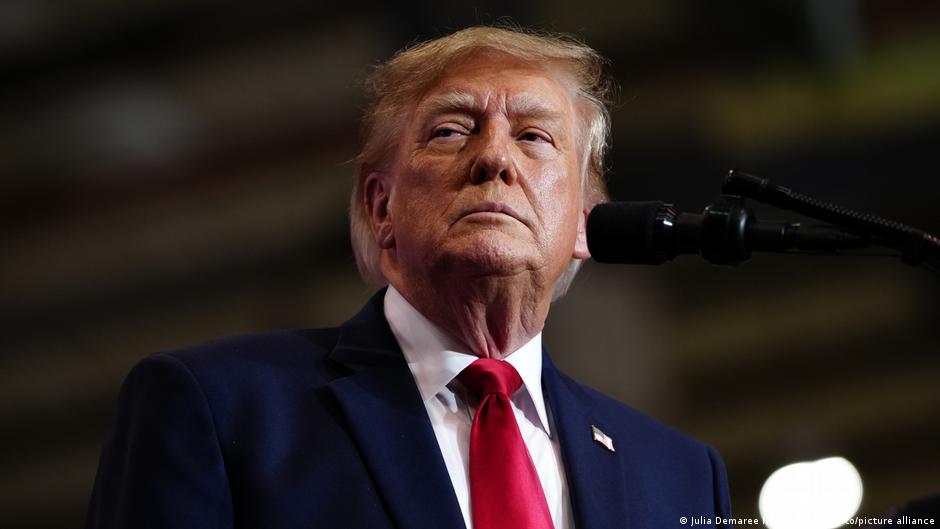
US President Donald Trump has questioned the Federal Bureau of Investigation’s conclusion that North Korean hackers were responsible for the theft of about $6.3 billion in cryptoassets from Binance customers, introducing a layer of political uncertainty into an incident already carrying significant implications for digital-asset markets.
The FBI said on Saturday, October 31, that North Korea was behind the October 29 attack on Binance, described as the world’s largest cryptocurrency exchange. The stolen assets were worth more than €5.6 billion. The bureau attributed the theft to TraderTraitor, a North Korean hacking group that US authorities have associated with cryptocurrency operations.
Trump challenged that assessment on November 1 while answering reporters’ questions at his Mar-a-Lago estate in Florida.
“We are looking into it now. We do not know whether it is connected to North Korea, but if it is, we will discuss this issue with North Korea,” Trump said.
The president’s caution leaves investors with competing signals from two branches of the US government. The FBI has publicly identified a suspected perpetrator and issued operational guidance to crypto companies, while the White House has stopped short of accepting that attribution. For markets, the distinction matters because a confirmed state-linked attack could raise the prospect of diplomatic measures, sanctions enforcement and tighter scrutiny of digital-asset transactions.
FBI Urges Crypto Firms to Block Linked Wallets
According to the FBI, TraderTraitor members typically convert stolen funds into Ethereum, or ETH, before laundering the assets, including through instant cryptocurrency exchange services. The agency called on companies handling cryptoasset transactions to block transfers involving wallets linked to the group and published a list of those wallets in its press release.
That request places exchanges, trading venues and other crypto service providers at the center of the response. Blocking identified wallets may help restrict the movement of stolen assets, but it also underscores the compliance and counterparty risks facing investors in a market where funds can move rapidly across platforms and tokens.
Ethereum is particularly relevant because the FBI said the group generally uses ETH as part of its conversion and laundering process. The source article did not report price movements in ETH or other cryptocurrencies following the announcement. Investors will nevertheless be watching transaction monitoring, exchange liquidity and any expansion of wallet restrictions for signs of broader market disruption.
Binance Says Customers Have Recovered 90%
Binance said on October 31 that it had reimbursed customers for 90% of the funds stolen in the attack. According to the company, losses involving BTC, ETH, USDT, BNB, SOL, USDC, XRP, USD1, RLUSD and ZEC were fully covered.
The remaining 10% consists of tokens outside the 10 largest assets. Binance said those tokens have lower liquidity, meaning that acquiring enough of them to compensate customers in full will take more time. That difference highlights a key risk for investors: major cryptocurrencies and stablecoins generally offer deeper trading pools, while smaller tokens can be harder to source in size without affecting execution.
The reimbursement reduces the immediate loss borne by most affected customers, but it does not eliminate the financial implications for Binance itself. Replacing stolen assets on this scale requires substantial resources and may sharpen investor attention on exchange reserves, custody practices and the capacity of centralized platforms to absorb extreme operational losses.
Various estimates put Binance’s global registered user base at more than 300 million. In 2024, the company said it had more than $160 billion in assets under management. Those figures illustrate why the breach has relevance beyond individual token holders: an incident at a platform of this size can influence confidence in crypto custody, trading infrastructure and the wider digital-asset ecosystem.
What Investors Are Watching
The source article did not provide a reported reaction in equities, government bonds or listed crypto-related securities. The immediate capital-markets focus is therefore likely to remain on second-order risks rather than a documented cross-asset move. These include potential regulatory action, sanctions compliance costs, cybersecurity spending and the effect of the incident on confidence in centralized exchanges.
For equity investors, the episode may renew scrutiny of publicly traded companies with exposure to crypto trading, custody or blockchain infrastructure. Bond investors may focus less on the tokens themselves and more on whether the event leads to geopolitical escalation or changes in enforcement policy. Digital-asset investors face the most direct questions, particularly around exchange concentration, wallet screening and liquidity in smaller tokens.
Trump’s refusal to endorse the FBI’s attribution means the geopolitical consequences remain unresolved. Until the administration completes its review, markets must weigh the bureau’s specific identification of TraderTraitor against the president’s statement that a North Korean connection has not yet been established to his satisfaction.



