UK, Dutch Ukraine Aid Packages Put Credit and Defense Markets in Focus
London’s £10 billion package and new Dutch commitments combine military support with financing for reconstruction and trade.
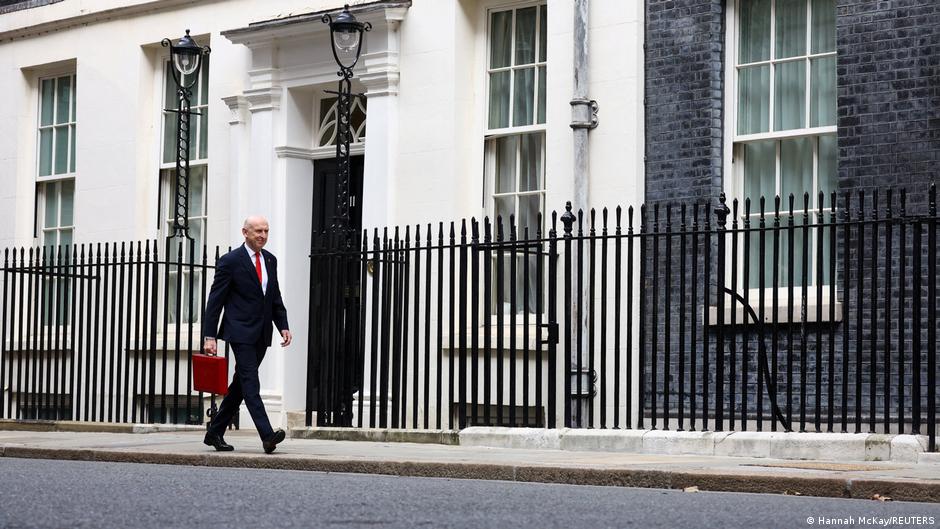
Britain and the Netherlands have announced substantial new assistance for Ukraine, putting defense suppliers, export-credit channels and reconstruction-related industries back on investors’ radar as Kyiv prepares for another winter of war.
London will provide an additional £10 billion, equivalent to about €12 billion, to Ukraine, British finance minister John Healey told the House of Commons. The package combines loans, export-finance guarantees and £500 million in emergency military assistance for the coming winter.
For capital markets, the composition matters as much as the headline amount. Loans and export guarantees can mobilize financing beyond direct government spending, potentially supporting British companies supplying eligible goods and services. At the same time, the commitment adds to the United Kingdom’s fiscal exposure to Ukraine and may be assessed by sovereign-bond investors alongside the government’s other spending priorities.
Defense and export financing take center stage
A British government spokesperson quoted by Reuters said the £500 million emergency military allocation was intended to close urgent gaps in Ukraine’s air defenses. That focus may reinforce demand expectations across the defense supply chain, although the announcement did not identify contractors, procurement schedules or individual orders.
Healey said he and British Prime Minister Andy Burnham spoke with Ukrainian President Volodymyr Zelensky before the parliamentary announcement. According to Healey, Zelensky responded to the news of the additional £10 billion by saying, “You made my day.”
Zelensky separately described the British financial and military assistance on Telegram as a “really powerful and timely step.” He said the measure came when Moscow “must see and feel that Ukraine will not be left alone with the problems that Russia is so eager to scale up.”
“Every step to strengthen Ukraine brings Russia closer to understanding that it needs to end this war,” Zelensky said.
The Ukrainian leader added that sanctions policy was another subject discussed with Burnham. He said Britain would continue to maintain a principled position on sanctions, calling it an important example for the rest of the world.
Sanctions remain relevant for investors because they affect commodity trading, cross-border payments, shipping, insurance and the compliance costs of companies with exposure to Russia. The source reported no immediate moves in equities, bonds, currencies or commodities following the announcements, leaving investors to assess the packages primarily through their likely fiscal, procurement and geopolitical effects.
The diplomatic backdrop remains tense. On October 27, Russia’s Foreign Ministry said Moscow was adding seven representatives of British defense plants to its entry-ban list in response to what it called London’s hostile anti-Russian course.
Dutch funding targets drones, energy and reconstruction
The Netherlands also expanded its support. Following a meeting with Zelensky in The Hague on October 28, Dutch Prime Minister Rob Jetten announced €500 million in military assistance for Ukraine during the coming winter. Reuters reported that the funding was expected to support deliveries of drones and other materials needed to strengthen Ukrainian defenses.
The Dutch government will additionally provide €1.2 billion in nonmilitary assistance over the next three years. Of that amount, €380 million is designated for reconstruction in 2027, followed by €410 million in each of 2028 and 2029.
Part of the funding will go to programs that help Dutch companies invest in Ukraine’s reconstruction. Other resources are intended for urgent repairs to Ukrainian energy infrastructure and purchases of machine tools for industry. These allocations may create longer-term opportunities for engineering, energy-equipment, industrial-technology and software companies, but the announcement did not name beneficiaries or specify contract values.
The multiyear structure may be particularly relevant to investors evaluating future order pipelines. Government-supported reconstruction funds can reduce some financing risks for participating companies, while export guarantees may make projects more bankable. However, execution risks remain elevated because of the war, damage to infrastructure and uncertainty over the timing and security of individual projects.
Zelensky also said on X that he and Jetten met Ukrainian and Dutch companies working in defense, energy and software on October 28. Following those discussions, their teams were tasked with developing a special air-defense project called Bliksem.
What investors will watch next
Markets will now look for implementation details: how much of the British package represents new lending, the terms and maturity of any loans, the scope of export guarantees and the identity of companies receiving procurement or reconstruction contracts. Investors will also monitor whether the spending changes borrowing requirements or budget projections in Britain and the Netherlands.
For defense equities, the immediate question is whether the commitments translate into identifiable orders for air-defense systems, drones and related components. For industrial and energy companies, the Dutch reconstruction allocations offer a longer-dated theme centered on grid repairs, manufacturing equipment and rebuilding. Sovereign-debt investors, meanwhile, will weigh the strategic benefits of supporting Ukraine against the additional fiscal commitments embedded in multiyear aid.
The announcements therefore present a mixed capital-markets picture: near-term support for defense demand, potential financing opportunities for exporters and a longer-term reconstruction pipeline, balanced against fiscal costs and persistent geopolitical risk.



