US Weighs Lifting Sanctions on Russian Fund as Diesel Deal Advances
A potential reprieve for Russia’s sovereign investment fund could facilitate diesel shipments and reshape energy-market risk for investors.
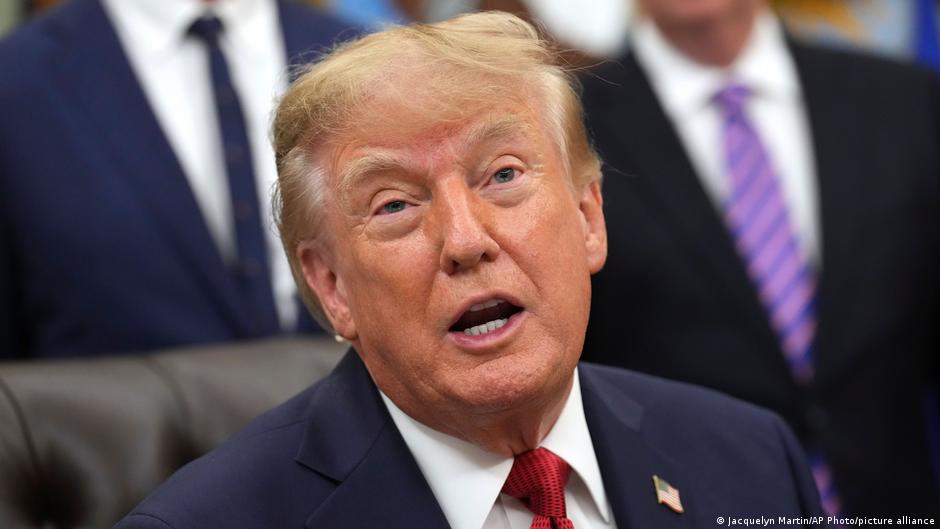
The Trump administration is considering lifting sanctions on the Russian Direct Investment Fund, or RDIF, as Moscow seeks to involve the sovereign investment vehicle in supplying Russian diesel fuel to the United States, The New York Times reported on Tuesday, October 27.
The possibility introduces a new variable for energy and capital markets: whether a limited sanctions adjustment could unlock additional Russian fuel exports, ease pressure on diesel prices and signal a broader shift in Washington’s approach to financial restrictions on Moscow. No decision has been announced, and the report did not describe any immediate reaction in equities or bonds.
According to people familiar with US-Russian negotiations, Moscow is pressing for sanctions on RDIF to be removed so the fund can participate in diesel deliveries to the United States. During the Biden administration, US authorities described RDIF as President Vladimir Putin’s “slush fund.”
“Consideration of further sanctions relief for Russia, which has not previously been reported, shows how the Kremlin is using the recent wave of diplomacy surrounding the war in Ukraine to advance an agenda that appears to have little to do with securing peace,” the newspaper said.
One source said the US Treasury Department is reviewing RDIF’s request through its standard delisting procedures. Under that process, the Russian fund would have to demonstrate that the grounds on which the sanctions were imposed no longer apply.
Energy Supply Expectations Move to the Foreground
For investors, the most immediate issue is the potential effect on refined-product supply. President Donald Trump said on Truth Social on October 9 that he had held “very successful” talks with Putin and that they had reached an agreement covering Russian diesel shipments to the United States and the global market.
Trump said Russia would immediately supply more than 300,000 tonnes of diesel to US and global markets, followed by another 500,000 tonnes during November and 1 million tonnes shortly afterward. Depending on the condition of Russian oil refineries, Moscow would then provide an additional 3 million tonnes of fuel within a short period, he said.
The announced volumes could affect expectations for diesel availability if the deliveries proceed as described. That would be relevant to fuel distributors, refiners, transport companies and other businesses with significant exposure to energy costs. It could also influence inflation expectations, a key input for government-bond pricing and interest-rate forecasts, although the source article provided no evidence of a measurable market move.
Trump said Russian energy supplies, combined with what he called US “full control” of the Strait of Hormuz, would cause diesel prices for Americans and consumers worldwide to fall rapidly and substantially. His statement framed the arrangement as an intervention in global fuel supply rather than solely as a bilateral commercial agreement.
On the same day, the US Treasury Department announced that the Office of Foreign Assets Control, acting at the president’s direction, was immediately issuing a temporary general license permitting Russian diesel supplies to the global market. Putin later formally confirmed the telephone conversation with Trump and the agreements concerning Russian petroleum-product deliveries to world markets.
Sanctions Review Carries a Wider Policy Signal
RDIF was established in 2011 to attract foreign investment into Russia. Its projects have included Sputnik V, Russia’s vaccine developed during the COVID-19 pandemic. The Biden administration sanctioned the fund four days after Russia began its full-scale invasion of Ukraine.
At the time, the US Treasury said that while RDIF was formally a sovereign investment fund, it was widely viewed as Putin’s “slush fund” and as a prominent example of the kleptocracy associated with Russia’s system of government.
The fund is led by Kirill Dmitriev, a key participant in Russian-US negotiations, including discussions concerning the war in Ukraine. Dmitriev has promoted Kremlin proposals for potential joint business projects between Russia and the United States and has met repeatedly with representatives of the current US administration.
A delisting would therefore have significance beyond the mechanics of diesel trading. Investors would likely examine whether it represents a narrowly tailored measure needed to execute fuel shipments or an indication that Washington may consider additional sanctions relief. The distinction matters for assessments of Russian asset accessibility, counterparty risk and the prospects for renewed cross-border investment.
For now, the Treasury review remains a procedural consideration rather than a completed policy change. The temporary license for diesel exports provides an immediate legal channel for supply, while RDIF’s separate application could determine whether the fund gains a formal role in those transactions. Until the administration announces a final decision and shipments are confirmed, the principal market effect is likely to remain concentrated in expectations around energy supply, sanctions policy and geopolitical risk.



