White House Talks on Oleshky Truce Put Geopolitical Risk in Focus
Melania Trump will meet Russian and Ukrainian representatives as investors assess whether humanitarian diplomacy can reduce regional risk.
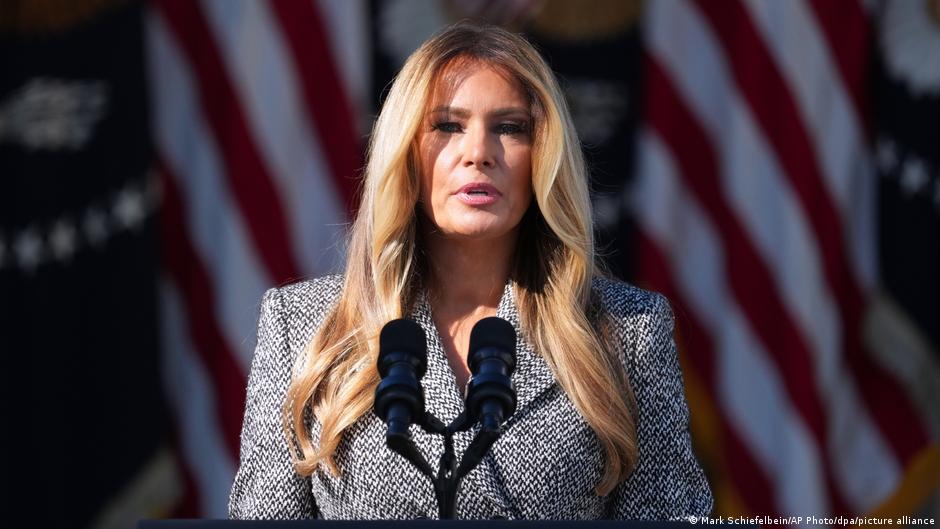
U.S. first lady Melania Trump is set to meet representatives of Ukraine and Russia at the White House to discuss a ceasefire in the Russian-occupied city of Oleshky, known in Russian as Alyoshky, in Ukraine’s Kherson region. She will also deliver a statement on the results of a humanitarian mission conducted in the city.
The planned engagement offers investors a limited but potentially relevant signal of continued communication between Kyiv and Moscow. It does not amount to a broader peace initiative, and no new agreement has been announced. Still, capital markets are likely to monitor whether the talks produce evidence that narrowly defined humanitarian arrangements can be negotiated and implemented despite the continuing conflict.
The White House announced the initiative on its official website on Tuesday, November 3. According to the announcement, Trump will make her formal statement about the humanitarian mission on Thursday, November 5, at 11 a.m. Eastern Time. The White House did not specify whether her meeting with the Ukrainian and Russian representatives would take place on the same day.
Investors Look for Signals Beyond the Humanitarian Track
For equity and bond investors, the immediate significance lies less in the direct economic impact of the Oleshky ceasefire than in what the talks may indicate about the capacity for practical coordination. Any durable reduction in geopolitical risk could eventually affect European risk assets, sovereign borrowing conditions, energy markets and companies exposed to Ukraine or the wider region. The available information, however, does not establish that the discussions will extend beyond the local humanitarian mission.
There was no market-reaction data included in the announcement, and investors have little basis for treating the meeting as a decisive diplomatic breakthrough. The ceasefire was geographically limited and had already expired before the White House disclosed the forthcoming statement. Markets will therefore be watching the wording of Trump’s remarks, the composition of the discussions and any indication that the parties are considering further localized agreements.
According to the RBC-Ukraine news agency, the Ukrainian delegation traveling to the White House will include Davyd Arakhamia, head of the Servant of the People parliamentary faction, and Dmytro Lubinets, the Ukrainian parliament’s commissioner for human rights. Russia will be represented by Kirill Dmitriev, a special representative of Russian President Vladimir Putin, and ombudsman Yana Lantratova.
The participation of political and human-rights officials underscores the humanitarian character of the initiative. For markets, that distinction matters: humanitarian negotiations can lower immediate risks for civilians and demonstrate functioning channels of communication, but they do not necessarily imply progress on military, territorial or sanctions-related issues that would carry more direct consequences for asset prices.
The White House engagement may provide evidence of workable communication, but the disclosed agenda remains focused on a local ceasefire and humanitarian relief.
Ceasefire Enabled Civilian Evacuations and Aid Deliveries
The ceasefire in Oleshky and surrounding areas began early on October 27 and ended at 10:59 p.m. on November 1. It resulted from arrangements reached by the parties with the involvement of Melania Trump. Both Moscow and Kyiv have described the first lady as a key intermediary in organizing the cessation of hostilities.
During the humanitarian operation, hundreds of civilians were evacuated from the city. Humanitarian supplies were also delivered to Oleshky. Those concrete outcomes will form the basis of Trump’s official statement, according to the White House notice.
The operation’s completion provides a measurable humanitarian result, even though the ceasefire was temporary. Investors assessing the development will likely distinguish between the successful execution of a short, localized arrangement and the much higher threshold required for a broader de-escalation capable of changing regional economic expectations.
European equities with sensitivity to energy costs, defense spending and regional trade can respond to shifts in perceptions surrounding the war, while government bonds may reflect changes in demand for safer assets. Ukrainian assets and securities linked to reconstruction prospects are especially sensitive to diplomatic developments. Yet the White House meeting, based on the disclosed agenda, offers no specific commitments involving sanctions, reconstruction funding, energy infrastructure or sovereign debt.
That leaves the November 5 statement as the next point of attention. Investors will be looking for confirmation of the humanitarian mission’s results, clarity on whether the Russian and Ukrainian representatives met together or separately, and any suggestion that the Oleshky framework could be repeated elsewhere. Without such indications, the event is more likely to be viewed as a humanitarian diplomatic milestone than as a catalyst for an immediate repricing of geopolitical risk.



