Zelensky Sees Stronger Ukraine Support After Democrats’ Congress Win
Kyiv expects expanded US weapons deliveries and financial assistance, with potential implications for geopolitical risk and European markets.
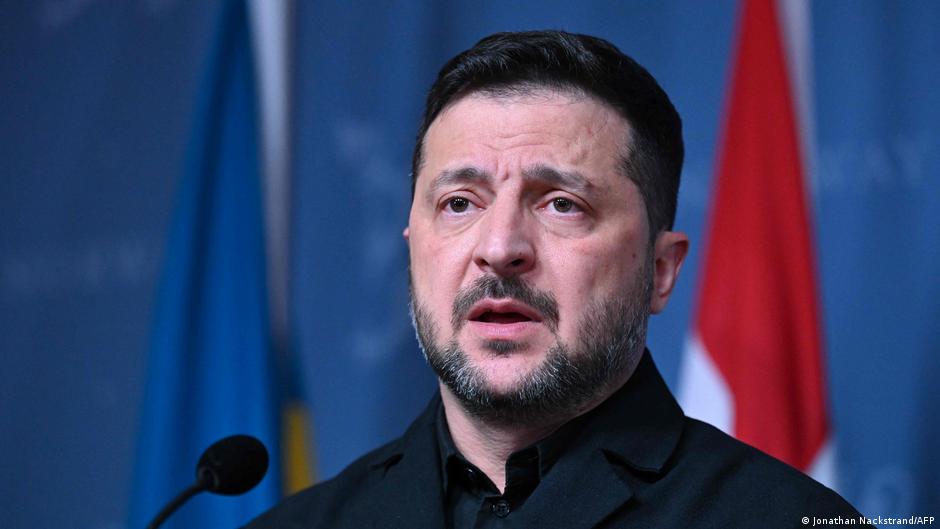
Ukrainian President Volodymyr Zelensky said he expects Washington to provide greater support to Kyiv following the Democratic Party’s victory in the US midterm elections, placing renewed attention on the fiscal and geopolitical consequences of American assistance to Ukraine.
In an interview with German broadcaster ZDF on Wednesday, November 4, Zelensky said the election result could strengthen Ukraine’s prospects of receiving additional weapons and financial aid from the United States. For investors, the central question is whether the new congressional balance will translate into larger or more durable funding commitments, potentially affecting government spending expectations, defense-sector demand and geopolitical risk premiums across European assets.
Zelensky said Democrats had secured majorities in both the US Senate and House of Representatives. He described the party as supporting a “renewal of ties between the United States and Europe,” an approach that could reinforce transatlantic coordination on Ukraine and reduce uncertainty over Washington’s future engagement.
Funding Outlook Returns to Investor Focus
Any substantial congressional commitment would carry implications beyond the immediate military and humanitarian response. Continued financial assistance could add to US budgetary obligations, while sustained weapons deliveries would support demand across the defense industry and its supply chain. The source article did not provide figures for proposed aid, identify specific weapons systems or report movements in equities, bonds, currencies or commodities.
That absence of detail leaves markets to focus on the direction of policy rather than the scale of spending. Defense contractors and related industrial companies could remain sensitive to signals about procurement and replenishment orders. Government bond investors, meanwhile, may assess whether further assistance would be material relative to broader federal borrowing needs and other spending priorities.
European markets also have a direct stake in the policy outlook. Zelensky compared the support he wants from Congress with the financial aid and weapons supplies already being provided by European countries. Stronger coordination between Washington and Europe could improve the predictability of assistance, although the war and its associated security, energy and fiscal risks would remain significant for regional investors.
Congressional backing for substantial financial assistance and weapons deliveries would be a positive factor, Zelensky said.
The Ukrainian president added that such support, if demonstrated by the United States in the same way as by European countries, could influence Russian President Vladimir Putin. From a capital-markets perspective, any development perceived as changing Moscow’s calculations could affect assessments of the conflict’s duration and the risk premium attached to European equities, sovereign debt and currencies.
However, Zelensky’s comments represent an expectation about future US policy rather than a confirmed spending package. The article gave no timetable for congressional action and did not describe legislation authorizing new assistance. Investors would therefore need to distinguish political statements from appropriations, procurement contracts and actual disbursements before drawing firm conclusions about corporate earnings or sovereign funding requirements.
Humanitarian Diplomacy Remains Part of the Agenda
On the same day, the official website of the Ukrainian president published a decree awarding US first lady Melania Trump the national Order of Princess Olga, First Class. The honor recognized her role in securing an agreement on a temporary ceasefire in the Russian-occupied city of Oleshky, known in Russian as Alyoshki, in Ukraine’s Kherson region.
The decree cited Melania Trump’s “significant personal contribution” to humanitarian support for Ukraine, as well as her work defending human rights and supporting charitable causes. The source also said that the wife of US President Donald Trump had repeatedly spoken in support of Ukrainian children.
The award underscores the humanitarian and diplomatic channels operating alongside discussions of military and financial assistance. Although the decree has no direct market impact, it highlights the breadth of Kyiv’s engagement with Washington and the importance Ukraine places on maintaining support across US political institutions and prominent public figures.
For investors, the immediate focus remains on whether Zelensky’s anticipated increase in US backing produces concrete congressional measures. The size, duration and structure of any future package would determine its relevance for defense equities, government borrowing and European risk assets. Until those details emerge, the election result is best viewed as a potentially supportive policy signal rather than evidence of a measurable change in capital flows.



