Drone Strikes on Russian Industrial Sites Trigger Market Concerns Over Supply Chain Disruptions
Recent drone attacks on key Russian chemical and oil facilities raise investor apprehension about operational risks and regional stability.

Multiple drone strikes across Russian regions including Tula, Yaroslavl, and Smolensk have ignited fires at critical industrial enterprises, signaling heightened security risks that may affect capital market sentiment.
Market Impact of Escalating Drone Attacks on Russian Industry
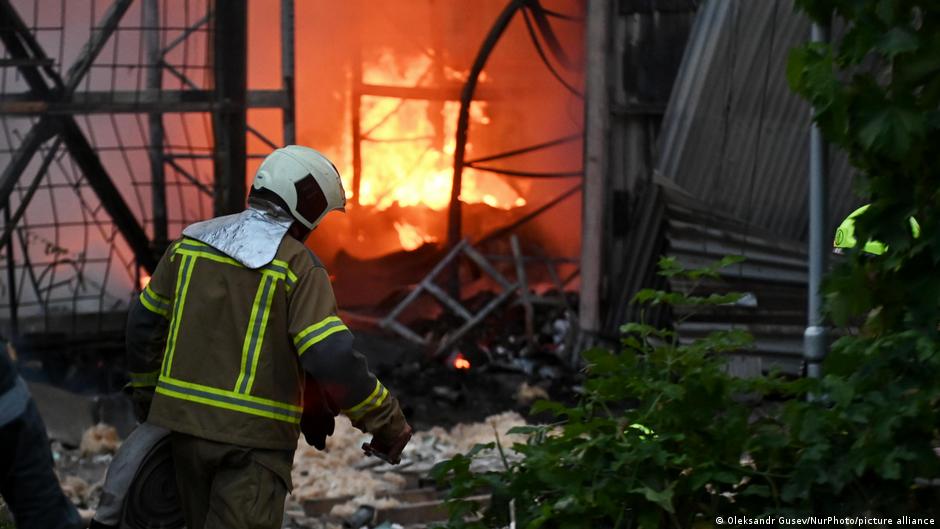
On the night of June 14, drone attacks targeted strategic facilities in several Russian oblasts, notably hitting the Azot chemical plant in Novomoskovsk, Tula region. The plant is a major producer of nitrogen fertilizers and also manufactures chemicals such as acetic and nitric acids, which are essential for producing explosive compounds octogen and hexogen. This connection underscores the dual-use nature of the facility and adds geopolitical sensitivity to its operational status.
"Fragments of Ukrainian drones fell on the territory of a major chemical producer, and emergency response teams are actively managing the situation," stated the governor of Tula region.
Simultaneously, anti-air defenses in Oryol region reportedly intercepted four drones, averting casualties or infrastructure damage. However, local reports indicate that one drone struck a residential building in Oryol, causing fires across multiple floors—a development raising concerns about civilian risk and potential regulatory repercussions.
Additional fires were reported in Smolensk’s Vyazma city and at oil storage facilities near Rybinsk in Yaroslavl oblast, with smoke plumes visible in resident videos. These incidents contribute to uncertainty in regional supply chains, particularly for chemical and energy sectors.
Authorities have responded by imposing transportation restrictions on ground routes toward Moscow and limiting operations at airports in Tambov, Kaluga, Nizhny Novgorod, and Yaroslavl due to drone threat assessments. This disruption to logistics and transportation networks could have ripple effects across markets reliant on stable supply routes.
Notably, earlier drone strikes extended to Tatarstan, affecting the large-scale petrochemical plant "Nizhnekamskneftekhim" and the Taneco oil refinery, intensifying concerns about Russia's industrial resilience amidst ongoing conflict dynamics.
Market participants are closely monitoring these developments as the targeted attacks on chemical and energy infrastructure introduce operational risks that may influence equity valuations and sovereign bond yields. Investors are advised to consider the implications of heightened regional instability on asset liquidity and risk premiums.