Spain's Ceuta Migrant Crisis Triggers Market Uncertainty Amid Political Tensions
The influx of tens of thousands of migrants into Spanish enclave Ceuta and ensuing government response stir investor concerns over regional stability and border security.
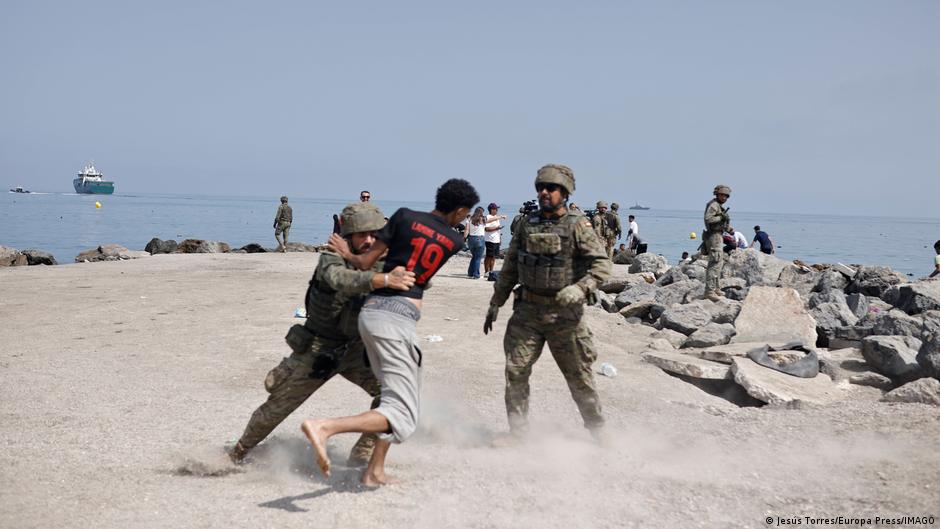
Spain faces a significant political and humanitarian challenge as thousands of migrants crossed into its North African enclave of Ceuta, an event Prime Minister Pedro Sánchez has labeled an "attack" on Spanish sovereignty. This sudden surge of nearly 60,000 migrants, mostly from neighboring Morocco, has intensified geopolitical tensions affecting European border security and investor sentiment in regional markets.
Market Implications of the Ceuta Migrant Influx
Ceuta, a strategic Spanish exclave on the African continent with a population around 85,000, has been overwhelmed by a previously unprecedented wave of illegal crossings. Local authorities estimate that tens of thousands have entered Ceuta over recent days, prompting Madrid to deploy military forces for order restoration—the first such action since 2021.
In the short term, this crisis has raised concerns among investors regarding political stability in Spain and the potential for broader impacts on the European Union's border policies. The European Commission has indicated that none of the migrants have reached mainland Europe yet, but the strain on border control mechanisms is evident. Italy's unilateral suspension of the Schengen free movement agreement with Spain further underscores the tensions within the EU, signaling potential disruptions in cross-border trade and mobility that could ripple across European markets.
"The temporary suspension of the Schengen agreement with Spain is a necessary measure to safeguard security and protect European borders," stated Italy's Foreign Minister Antonio Tajani.
Equities in Spanish sectors sensitive to government policy and social stability, such as banking and real estate, may experience volatility as markets digest the political risks. Additionally, Spanish sovereign bonds could see increased yields reflecting elevated uncertainty over government capacity to manage the situation without broader social disruption.
Social Unrest and Investor Confidence
Public reaction within Ceuta has been immediate and pronounced. Residents have staged protests accusing the government of losing control, with widespread fear leading to shop closures and restrictions on movement. The local unrest raises questions over the sustainability of the current administration’s approach to migration and border security, potentially influencing Spain’s fiscal outlook.
Prime Minister Sánchez’s firm characterization of the migrant influx as a violation of Spain’s territorial integrity reflects the heightened political stakes. Meanwhile, tens of thousands of migrants have voluntarily returned to Morocco, suggesting a partial de-escalation. Foreign Minister José Manuel Albares announced that the crisis was effectively contained as of July 31, which may help stabilize market perceptions going forward.
However, the episode highlights vulnerabilities for investors considering exposure to Iberian assets amid shifting migration dynamics and EU border tensions. Continued monitoring of Spain’s political response, EU coordination, and potential escalations is essential for assessing risk and opportunity in the region’s capital markets.
In conclusion, while immediate humanitarian and security issues dominate headlines, the ripple effects on Spain’s market stability and European border policy coherence present a complex scenario for investors to navigate.