European Security Charter Puts Defence and Hybrid Risks in Investor Focus
Nearly 40 European countries have endorsed common security principles that could influence defence spending and regional risk premiums.
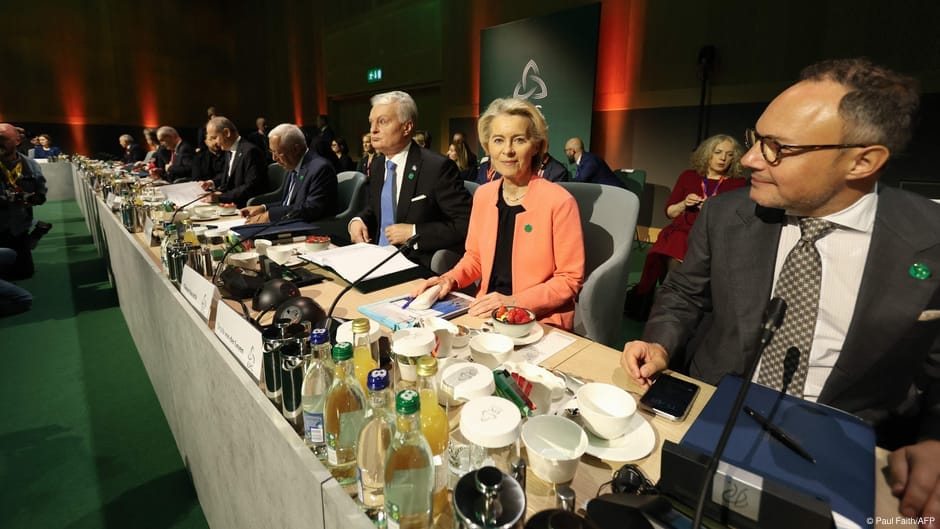
Nearly 40 European countries have agreed on a security charter that places greater responsibility for Europe’s security on the continent’s governments, a development likely to keep defence expenditure, cybersecurity investment and geopolitical risk firmly on investors’ agendas.
Germany, Ukraine, the United Kingdom, Spain and 35 other European countries approved the charter at a European Political Community summit in Dublin on Thursday, November 12. The French-led initiative sets out what the participants described as the “key principles” of European security.
The document consolidates existing foundations of the regional security system while extending its scope to newer challenges, including hybrid threats. For capital markets, the initiative provides another policy signal that European security commitments are broadening beyond conventional military capabilities to encompass digital resilience, intelligence, communications and the protection of critical infrastructure.
Hybrid threats widen the investment implications
The signatories condemned what they called Moscow’s intensifying hybrid campaigns “in the strongest possible terms.” They also expressed their intention to counter those threats and combat interference in the information environment.
Although the charter does not set out spending targets or financing commitments, its scope may be relevant to companies operating in defence technology, cybersecurity, secure communications and infrastructure protection. Investors will be watching whether the political declaration is followed by national procurement programmes, additional European funding or changes to budget priorities.
The charter also addresses counterterrorism, drug trafficking and the illegal smuggling of migrants. That broader remit could bring border security, surveillance systems and law-enforcement technology into the policy discussion alongside traditional defence contractors.
“European countries are taking greater responsibility for security in Europe,” the participating states said, adding that this would have a positive effect on global and transatlantic security.
For equity markets, the immediate significance lies less in the declaration itself than in the potential direction of future public spending. Defence and security companies may see a more durable demand environment if governments translate the principles into contracts. Other sectors, however, could face pressure if higher security expenditure competes with infrastructure, social programmes or tax relief within constrained national budgets.
Bond investors will likewise focus on how any additional commitments are financed. The charter does not introduce common borrowing, fiscal rules or quantified expenditure, leaving sovereign-debt implications dependent on subsequent decisions by individual governments and European institutions. Countries with less budgetary flexibility could face more scrutiny if security spending rises without matching revenue or reductions elsewhere.
NATO reference underscores transatlantic continuity
Journalists who reviewed the charter said it is based on the United Nations Charter, the North Atlantic Treaty underpinning NATO and the Treaty on European Union. The inclusion of NATO signals that the initiative is intended to reinforce existing institutions rather than establish an entirely separate European security framework.
British Prime Minister Andy Burnham stressed the importance of NATO’s inclusion, saying the alliance would need to “ensure a stable situation” in Europe after the war in Ukraine. A draft of the charter also states that “any issue concerning European security must be resolved together with Europeans,” according to AFP.
That language may matter to markets because it places European governments at the centre of decisions about the continent’s postwar security order. A more coordinated framework could eventually reduce uncertainty if it produces clearer responsibilities and more predictable policy. In the shorter term, however, the continuing war and the focus on hybrid campaigns underline the persistence of geopolitical risks affecting energy security, supply chains, currencies and regional assets.
The charter comes as the architecture of European security has also featured in recent Russia-Ukraine negotiations on a peace settlement. Those discussions covered both the conditions for establishing a ceasefire and the future security structure of Europe.
At talks in Abu Dhabi, US presidential special envoy Jared Kushner supported the creation of a “new” European security architecture. The Dublin charter therefore arrives amid a wider debate over how security guarantees, European responsibility and transatlantic institutions might fit together after the war.
Markets await implementation
Investors have not yet been given the details needed to price a specific fiscal or corporate impact. The charter contains principles rather than numerical commitments, and the source material reports no immediate reaction in equities, bonds or currencies.
The next market-relevant signals will be found in national budgets, defence procurement plans, cybersecurity mandates and any joint European financing proposals. Investors will also monitor whether the initiative changes expectations for NATO-related expenditure or affects negotiations over a ceasefire and longer-term settlement in Ukraine.
Until implementation becomes clearer, the charter is best read as a political indication of policy direction. It reinforces the likelihood that security will remain a structural theme for European capital allocation, while leaving open the central questions for markets: how much governments will spend, which industries will benefit and how the resulting commitments will affect sovereign borrowing and regional risk premiums.



