German Russia Threat Poll Sharpens Energy and Defense Risk for Investors
Public concern over Russia and divided support for renewed energy imports highlight persistent policy risks for German markets.
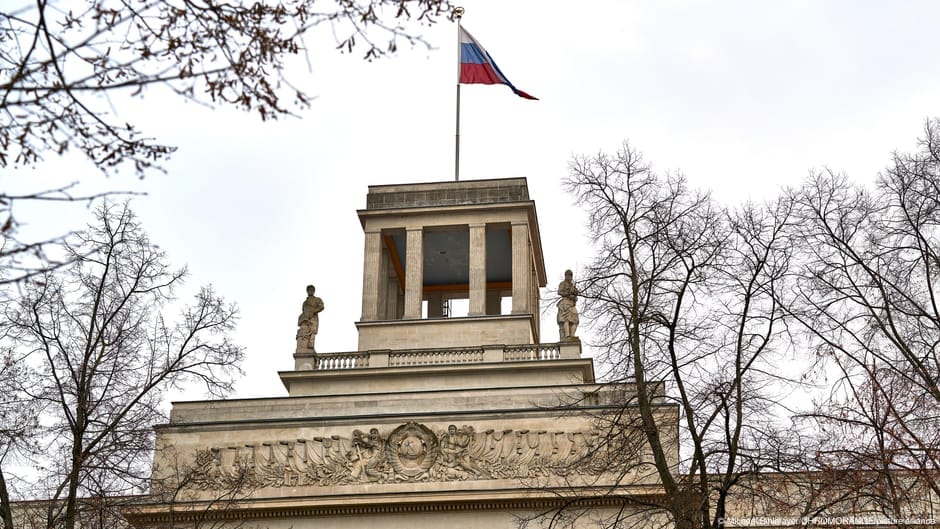
A clear majority of German voters regard Russia as a threat to their country, while opinion remains almost evenly divided over whether Germany should resume imports of Russian oil and gas, according to a new Ipsos survey reported by Der Spiegel on Monday, November 16.
The findings matter for investors because they expose the political constraints surrounding two market-sensitive issues: Germany’s security spending and its future energy relationship with Russia. More than 60% of respondents agreed that Russia poses a threat to Germany, while 24% rejected that view. The survey was conducted from November 5 to 8 among 2,019 German citizens eligible to vote and has a margin of error of up to 2.2 percentage points.
The poll does not provide evidence of a specific reaction in equities or bonds. It does, however, offer investors a measure of public support for policies that could influence defense procurement, industrial energy costs, fiscal priorities and Germany’s risk premium over time.
Energy question divides German voters
Respondents were nearly evenly split on the possible resumption of Russian oil and gas supplies. Some 44% opposed the idea, 42% supported it and 14% were undecided.
That narrow gap highlights an unresolved political trade-off with direct relevance for German industry. Any debate over restoring Russian energy flows would affect expectations for energy-intensive companies, while continued resistance would keep attention on alternative supplies, infrastructure and the cost of securing them. The survey establishes the public divide but does not indicate that a policy change is imminent.
Some 44% opposed renewing Russian oil and gas supplies, while 42% supported the idea and 14% remained undecided.
Views of Russia varied sharply by political affiliation. More than 80% of voters supporting the conservative Christian Democratic Union and Christian Social Union bloc, the Social Democratic Party or Alliance 90/The Greens regarded Russia as a threat. Among voters for The Left, 54% shared that assessment.
Only 26% of supporters of the far-right Alternative for Germany, or AfD, said Russia posed a danger. Among AfD voters, 39% said they completely disagreed with that proposition and another 21% said they tended to disagree. Voters for the left-populist BSW, the Alliance for Social Justice and a Reasonable Economy founded by Sahra Wagenknecht, showed a similar distribution of views.
Both AfD and BSW are known for pro-Russian narratives. Even so, almost 40% of their supporters agreed that Russia bears responsibility for the war against Ukraine. Across the full sample, 55% completely agreed with that statement and a further 18% tended to agree.
Security concerns reinforce defense and fiscal focus
German intelligence services have warned in recent months that Russia could begin testing NATO’s resolve and cohesion by 2030 through targeted operations on alliance territory. Against that backdrop, 43% of those surveyed said reports that war could break out between Russia and Germany within the next four years caused them concern.
Women expressed greater anxiety than men, with 50% of female respondents concerned compared with 37% of male respondents. The differences were also pronounced by age: 54% of people aged 18 to 29 reported fears of war, versus 35% among those aged 60 to 75.
For capital markets, sustained public concern may strengthen the political case for defense and security expenditure, potentially supporting companies exposed to military procurement and related infrastructure. For sovereign bond investors, the corresponding question is how additional commitments would interact with Germany’s wider spending priorities and fiscal framework. The survey itself offers no spending estimate and does not establish the direction of future budgets.
Regional differences add another layer to the policy outlook. In western Germany, 65% of respondents regarded Russia as a threat regardless of political preference, compared with 53% in the east. That divide may complicate efforts to build national consensus on sanctions, energy policy and defense measures, particularly where those choices have visible effects on household bills or industrial competitiveness.
Investor implications remain policy-dependent
The poll points to broad backing for a cautious stance toward Moscow, but it also shows that voters remain divided on the economic question of Russian energy. Investors assessing German equities must therefore weigh possible support for defense-related sectors against continuing uncertainty for manufacturers sensitive to energy prices.
Bond markets face a different balance: greater security concerns can increase pressure for public spending, while political fragmentation may slow or reshape the policies through which that spending is delivered. The most immediate takeaway is not a confirmed market move, but a clearer map of the domestic pressures likely to influence Germany’s energy, defense and fiscal debates.



