Israel Coalition Mandate Puts Political Risk in Focus for Investors
Gadi Eisenkot will have 28 days to build a coalition, with Arab parties holding pivotal votes after an inconclusive election.
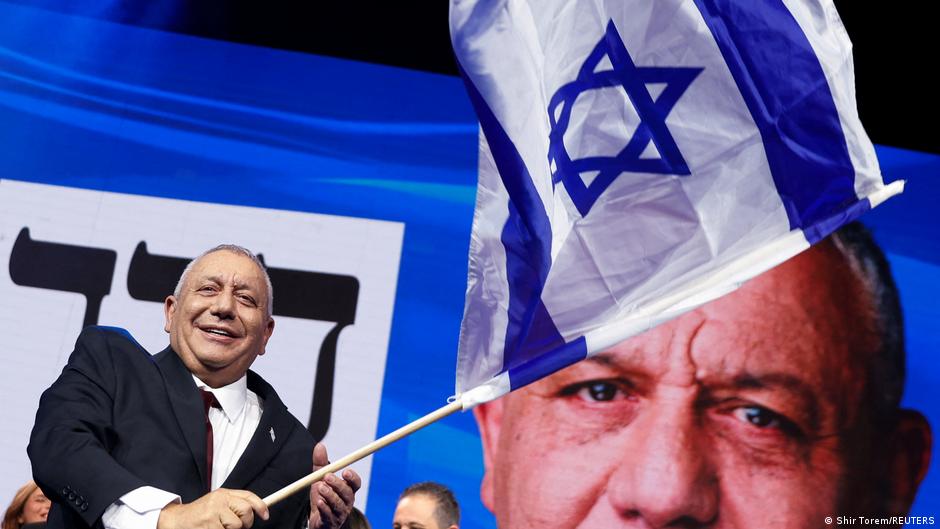
Israeli President Isaac Herzog is set to ask opposition leader Gadi Eisenkot to form a new government after the country’s latest election, opening a coalition-building period that will keep political risk in focus for investors in Israeli equities and bonds.
Herzog will formally give the mandate to Eisenkot, leader of the opposition Yashad party, at the presidential residence in Jerusalem on the evening of Sunday, November 8, according to an announcement from the president’s office on Saturday, November 7.
Eisenkot will then have 28 days to assemble a governing coalition. The president may extend that period by another 14 days if necessary. Receiving the mandate does not automatically make Eisenkot Israel’s next prime minister, and the outcome will depend heavily on negotiations with other parties.
For capital markets, the process creates a defined but potentially prolonged window of uncertainty. Investors will be watching whether talks produce a stable parliamentary majority, whether the mandate passes to another politician, or whether Israel faces another election. The source article provides no figures for immediate moves in Israeli shares, government bonds or the currency.
Arab parties hold pivotal coalition votes
Herzog’s decision followed extensive consultations with politicians and party leaders about their preferred candidate for prime minister. Eisenkot received 67 recommendations, compared with 46 for incumbent Prime Minister Benjamin Netanyahu, according to The Times of Israel.
No political force secured the 61 seats required for a majority in the Knesset in the October 27 parliamentary election. The governing far-right coalition led by Netanyahu’s Likud party lost its majority and won 53 seats. A four-party alliance headed by Eisenkot’s Yashad holds 48 seats.
Two Arab parties, which secured a record combined 19 seats, are therefore positioned to play a decisive role in coalition formation. Eisenkot, a former chief of staff of the Israel Defense Forces, has previously refused to form an alliance with Arab parties. Any change in that position could determine whether he can convert presidential backing into a durable government.
For investors, the central question is whether the fragmented result can produce a stable 61-seat coalition without triggering another election.
Netanyahu previously called for a national unity government intended to prevent parties representing Israel’s Arab citizens, who have citizenship and voting rights, from participating in the country’s government.
If Eisenkot fails to form a government within the allotted period, the mandate may be transferred to another politician, including Netanyahu as leader of Likud. If a second candidate also fails, new elections could be called. That sequence matters for asset pricing because it could extend uncertainty over fiscal priorities, security policy and Israel’s relations with Western governments.
Security policy remains a market consideration
Eisenkot entered politics in 2022. After the Hamas attack on Israel, he joined Netanyahu’s war cabinet for a period before returning to the opposition. He has sharply criticized the incumbent prime minister’s style of government and the conduct of the military operation in the Gaza Strip.
He has also condemned violence by Israeli settlers against Palestinians in the occupied West Bank. Eisenkot believes that violence has contributed to strained relations between Israel and Western countries. For international investors, diplomatic relations are relevant to assessments of geopolitical risk, foreign capital flows and the longer-term operating environment for Israeli companies.
Eisenkot’s standing is shaped by his military background and personal tragedy. His 25-year-old son was killed in fighting in Gaza in December 2023, and two of his nephews were subsequently killed. One of his main election promises was the establishment of an independent state commission to investigate the security failures of October 7, 2023.
The opposition leader is also associated with the Israeli military strategy known as the “Dahiya doctrine.” It calls for an asymmetric and disproportionately large response to security threats, including the destruction of civilian infrastructure in areas used by an adversary to launch attacks on Israel. Eisenkot employed the doctrine against Hezbollah in Lebanon during the 2006 Lebanon war.
The next market-relevant milestone is the formal presentation of the mandate, followed by evidence that Eisenkot can bridge the gap between his 48-seat alliance and the 61 votes needed to govern. A coalition supported by the Arab parties could represent a significant political shift, while failure would return attention to Netanyahu or another national election. Until the parliamentary arithmetic is resolved, investors must weigh the prospect of political change against the risk of continued instability.



