Italian PM Meloni’s Response to Solovyov’s Insults Sparks Political Support Amid Market Uncertainty
Political tensions rise following Russian TV host’s offensive remarks against Italy’s Prime Minister Giorgia Meloni, triggering government solidarity.
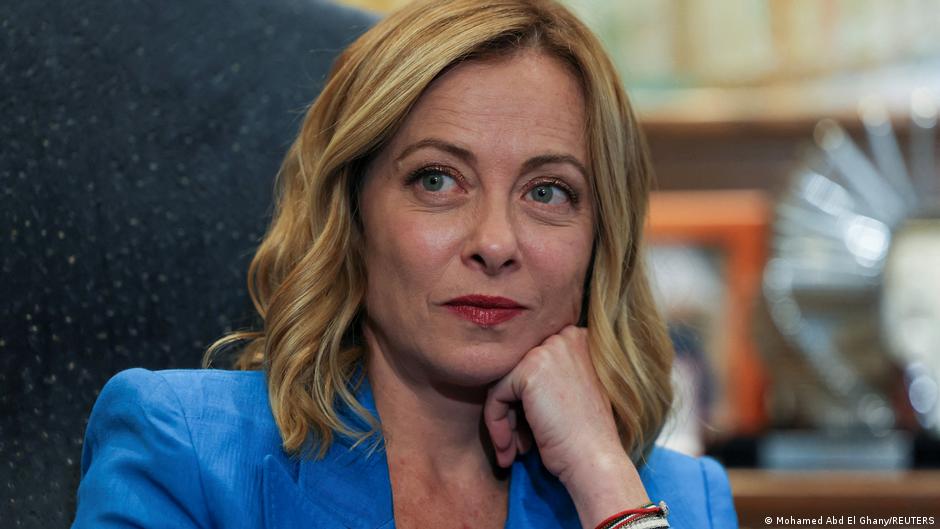
Italian Prime Minister Giorgia Meloni publicly addressed aggressive propaganda by Russian media following offensive remarks made by Russian television host Vladimir Solovyov. The incident has garnered significant attention in Italy, eliciting broad political support for Meloni and raising concerns about geopolitical tensions that could influence investor sentiment toward Italian equities and bonds.
Political Backdrop and Market Sensitivities
On the evening of April 21, Giorgia Meloni posted on social media condemning what she called "diligent propagandists of the regime," responding to widespread coverage in Italian media regarding Solovyov’s highly disparaging comments. The Russian presenter called Meloni a "fascist creature who betrayed her voters" and "a disgrace to humanity," alleging her loyalty shifts and diminishing her political credibility.
Meloni’s statement underscored Italy’s political independence: "Unlike others, we are not dependent on anyone; we have no masters and take no orders. Our only guide is Italy’s interests, and we will proudly follow it despite protests from propagandists worldwide." Although Meloni did not directly reference Solovyov’s remarks, her post served as a clear rebuttal to Russian media attacks.
"We have no masters and take no orders. Our only guide is Italy’s interests." — Giorgia Meloni
Earlier that day, Italian Foreign Minister Antonio Tajani summoned the Russian ambassador in Rome, Alexey Paramonov, to formally protest Solovyov’s offensive statements. The diplomatic move signaled Italy’s official disapproval and heightened geopolitical tensions between Rome and Moscow.
Implications for Investors and Market Reaction
The public dispute comes at a sensitive time for Italy’s capital markets, which have been navigating post-pandemic recovery amid broader European geopolitical uncertainty. Market participants are closely monitoring political stability as it directly affects investor confidence in Italian government bonds and stock markets.
The unity expressed by Italy’s political leadership—including support from President Sergio Mattarella, former Prime Minister Giuseppe Conte, and parliamentary figures—aims to project domestic stability and resilience. Mattarella described Solovyov’s comments as "vulgar," while Conte labeled them "indescribable," reflecting broad bipartisan condemnation.
However, heightened rhetoric between Italy and Russia may increase volatility in Italian assets, particularly if further diplomatic escalations occur. Investors tend to reassess risk premia on Italian government bonds (BTPs) when political tensions escalate, potentially driving yield spreads wider versus safer Eurozone peers. Equity markets may also react negatively if investors fear disruption to Italy’s economic and trade relations.
Market analysts suggest that while the immediate impact on Italian capital markets may be modest, the situation warrants close monitoring amid the ongoing geopolitical backdrop. Investors in Italian equities and fixed income should consider the potential for increased volatility stemming from political disputes intertwined with broader East-West tensions.
Domestic Political Support Bolsters Stability
Meloni’s political allies, including leaders from various parties such as the Democratic Party’s Elly Schlein and the parliamentary commission overseeing state broadcaster RAI, have publicly supported the Prime Minister. This cross-party consensus may help mitigate investor concerns about political fragmentation in Italy.
As Italy continues to assert its independent foreign policy path, its capital markets will remain sensitive to geopolitical narratives and diplomatic developments. The recent episode involving Russian media insults and Italy’s government response underscores the complex intersection of politics and market dynamics in the current global environment.
Investors should remain vigilant of evolving geopolitical risks affecting Italy, balancing political developments with economic fundamentals when making capital allocation decisions.