Lukashenko Orders Belarus Army Checks as Border Risks Stay in Focus
Belarus plans further military readiness inspections up to mobilization level, adding another geopolitical risk point for regional investors.
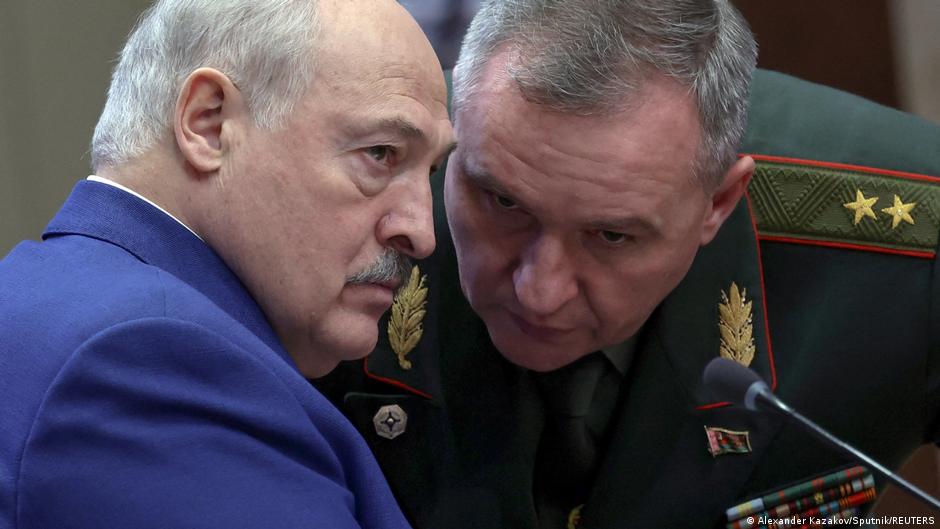
Belarusian ruler Alexander Lukashenko said the country will continue inspections of its armed forces, including checks of mobilization readiness, in a statement that adds to the security watch list for investors tracking Eastern Europe, defense-sensitive assets and regional sovereign risk.
Speaking to journalists on Friday, September 11, at the Obuz-Lesnovsky combined-arms training ground in the Brest region, Lukashenko said it was time to “shake up” the entire army. His remarks were reported by the state agency BelTA.
“I have already said it in plain language: the army must be shaken up, the time has come. The whole army. We will check everyone. Up to mobilization,” Lukashenko said.
For markets, the comments do not by themselves signal an immediate shift in Belarus’s formal military posture. But they arrive against a backdrop in which investors have repeatedly had to price risks around the war in Ukraine, Russian force movements, sanctions exposure and possible spillover into neighboring states. Belarus has remained closely aligned with Moscow during the conflict, and any public reference to mobilization readiness is likely to be read through that lens by regional analysts.
Lukashenko said inspections had already taken place in tank and motorized rifle units and were now under way in an artillery brigade. He said the authorities were “preparing for war so that there is none” and stressed that “all armed forces will be checked.”
He also linked the inspection program to what he called lessons from the “special military operation,” the term used by Russian authorities for the war in Ukraine. “Everything must be as in battle. This is how our troops must be trained,” Lukashenko said, adding that the entire armed forces would be shaken up.
Market Implications Remain Geopolitical Rather Than Immediate
The direct investable universe tied to Belarus is limited for many global funds because of sanctions, political risk and restricted market access. Even so, developments in Minsk matter for broader capital markets through several channels: risk premiums in nearby sovereign debt, investor demand for regional safe havens, defense sector sentiment, energy and logistics assumptions, and currency positioning around Central and Eastern Europe.
Belarus’s border geography gives the remarks added significance. The Brest region lies near Poland and Ukraine, placing any large-scale military activity in a sensitive corridor for NATO, Ukrainian security planning and cross-border logistics. For equity markets, that kind of geopolitical signal can affect companies with exposure to regional transport, insurance, energy, defense procurement and agricultural trade routes, even when the initial statement is military rather than economic.
Bond investors may also treat the remarks as another data point in assessing regional risk. Higher perceived security risk can influence spreads for countries seen as exposed to escalation or disruption, particularly if military activity raises concerns about border incidents, sanctions enforcement or the rerouting of trade flows. The source text does not provide any market pricing data, and there was no claim of a new economic measure attached to Lukashenko’s statement.
Lukashenko separately said that his youngest son, 22-year-old Nikolai, is serving in the army. According to Lukashenko, Nikolai received a diploma this summer through a joint biotechnology program run by Peking University and Belarusian State University. He said Defense Minister Viktor Khrenin had called him up and that Nikolai was serving “as required, like everyone else,” as a lieutenant. Lukashenko did not say where his son is serving, but described it as “the most difficult unit.” He added that Nikolai continues to study biotechnology in his free time.
Ukraine Has Warned About Belarusian Border Activity
The military inspections follow earlier warnings from Kyiv about Belarusian activity near the Ukrainian border. In spring 2025, Ukrainian President Volodymyr Zelensky said Belarus had begun building roads and preparing artillery positions near the border with Ukraine.
At the time, Zelensky said Ukraine believed Russia would again try to pull Belarus into its war. He linked Belarus’s actions to the regrouping of Russian forces, which he said Russia’s military command was carrying out to compensate for a shortage of personnel.
At the beginning of the summer, Zelensky also said Lukashenko had one week to remove drone relay equipment from two Belarusian regions bordering Ukraine. According to Zelensky, those relays were being used to help guide Russian drone strikes against Ukraine. “If he does not do it, we will,” Zelensky said at the time. Several days later, the Ukrainian president said the relays were no longer working.
Those prior statements help explain why investors may not view the latest Belarusian army checks in isolation. The key market question is whether the inspections remain a domestic readiness exercise or become part of a broader escalation cycle involving Russia, Ukraine and border infrastructure. The article’s source does not report any new Ukrainian response to Lukashenko’s September 11 comments.
For investors today, the practical takeaway is one of monitoring rather than repricing on a single headline. Belarus remains a high-risk geopolitical node with limited direct market liquidity, but its actions can affect sentiment across a wider regional map. Any evidence of actual mobilization steps, changes in Russian deployments, disruption near Ukraine’s northern border, or renewed sanctions measures would be more material for equities, bonds and currencies than the announcement of inspections alone.
Until then, Lukashenko’s language adds to the persistent geopolitical premium surrounding Eastern Europe. It reinforces the need for investors to track military signaling alongside traditional macro indicators, especially in markets where security developments can move faster than economic data.