Russia to Join G20 Energy Talks as Markets Watch Security Risks
A Russian representative is expected at next week’s G20 energy ministers’ meeting in Houston, adding a geopolitical focus for energy investors.
A Russian representative will attend next week’s meeting of G20 energy ministers in Houston, a U.S. administration official told Reuters, putting Moscow back in the room at a moment when energy security remains a central concern for governments and markets.
The meeting is scheduled for September 14-16 in the U.S. city of Houston. It will bring together energy officials from the Group of 20 under the theme of “energy abundance,” according to the Russian-language source report, which cited Reuters. The identity of the Russian participant has not yet been disclosed.
For investors, the development matters less as a diplomatic gesture than as a signal about how major energy-consuming and energy-producing economies are managing geopolitical risk. Oil, gas and shipping markets have spent years pricing the consequences of Russia’s war in Ukraine, sanctions policy, and supply-chain disruptions linked to conflict in the Middle East. A Russian presence at a U.S.-hosted G20 energy gathering may therefore be read by traders as another data point in the balance between confrontation, sanctions enforcement and practical energy coordination.
Energy Security Returns to the Market Agenda
The Houston meeting is expected to include U.S. Energy Secretary Chris Wright, U.S. Interior Secretary Doug Burgum and Jarrod Eigen, a representative of President Donald Trump’s administration. Representatives from the energy sector in Europe and Asia are also expected to attend.
Although the stated theme is energy abundance, the meeting will take place against a more fragile backdrop. Many countries remain concerned about energy security because of Russia’s war in Ukraine and tensions involving the United States and Iran. Those concerns have direct implications for capital markets, particularly for energy equities, sovereign debt, inflation expectations and currencies tied to commodity flows.
Energy investors are likely to watch whether the meeting produces any sign of coordination on supply resilience, infrastructure security or market access. Even without a formal policy announcement, the optics of participation can influence expectations. In oil markets, marginal shifts in perceived geopolitical risk can affect futures pricing, while in bond markets, energy-driven inflation risks can shape views on central bank policy and longer-term yields.
The key market question is whether diplomacy lowers the risk premium or simply underscores how exposed global energy flows remain to conflict.
The security backdrop has also been complicated by advances by the Tehran-backed Houthis in Yemen. On September 10, the Houthis seized the port city of Mocha on Yemen’s western coast and strengthened their positions near the Bab el-Mandeb Strait, the southern outlet of the Red Sea. That waterway is strategically important for global trade and energy shipments. Any added disruption risk around the Red Sea can feed into freight costs, insurance premiums and the valuation of companies exposed to maritime logistics.
For equity markets, that means the G20 energy meeting comes as investors continue to differentiate between potential beneficiaries of sustained energy uncertainty and companies vulnerable to higher input costs. Energy producers, oilfield services firms, liquefied natural gas infrastructure operators and defense-linked names may draw attention when geopolitical risk rises. By contrast, airlines, chemicals, manufacturers and consumer-facing companies can face pressure if fuel prices or transport costs move higher.
Russian Participation Tests Sanctions Politics
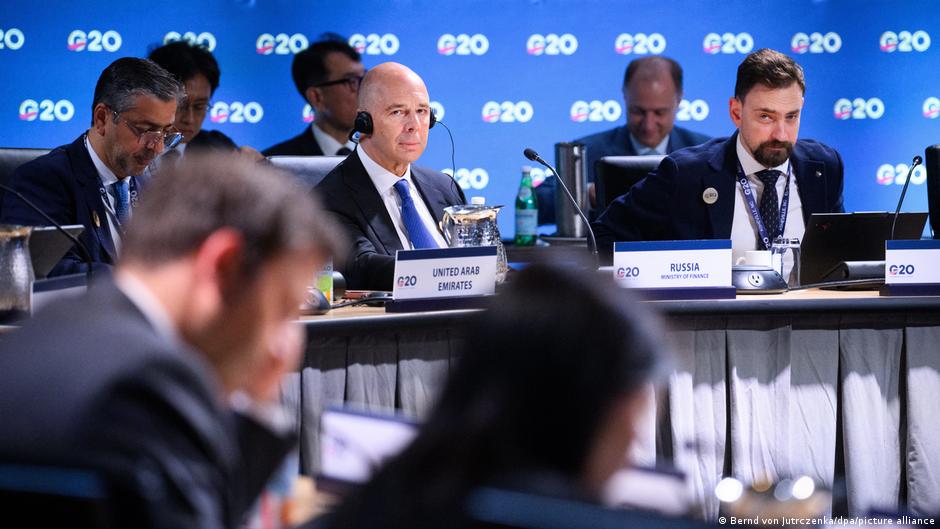
The expected Russian participation in Houston follows another notable G20 appearance. Russian Finance Minister Anton Siluanov attended the meeting of G20 finance ministers and central bank governors held August 31 and September 1 in Asheville, the first such participation by Russia’s finance minister since the start of the war in Ukraine. Previously, he had been represented at such events by secretaries.
According to U.S. media reports cited in the source article, Siluanov discussed President Donald Trump’s peace plan, proposed in November 2025, with U.S. Treasury Secretary Scott Bessent. The discussions also covered the impossibility of easing sanctions before the end of the war.
That sanctions point is central for investors. Any perception that sanctions could be tightened, maintained or eventually relaxed affects the valuation of Russian-linked assets, European industrial exposure, energy supply routes and global commodity flows. The report states that sanctions relief is not possible before the war ends, which keeps the current framework intact for market participants assessing access, compliance risk and future supply scenarios.
Siluanov’s appearance drew criticism from Europeans. German Finance Minister and Vice Chancellor Lars Klingbeil called the fact that Siluanov was received at such an event an “alarming signal.” In conversations with colleagues from other European countries, Klingbeil threatened to boycott the traditional group photo of summit participants if Siluanov appeared in it. According to Klingbeil, representatives of other European countries joined his position, and the photo was ultimately taken without the Russian minister.
That episode illustrates the political constraint around any market interpretation of Russian participation. Investors may be tempted to view high-level attendance as a possible thaw, but the European reaction suggests that diplomatic access does not necessarily translate into policy easing. For bond markets, that distinction matters: energy-price shocks can complicate inflation trajectories, while sanctions stability or escalation can influence risk appetite across European debt and emerging-market assets.
The Houston meeting also comes at a time when energy policy increasingly intersects with fiscal and monetary policy. Higher or more volatile energy prices can sustain inflation pressures, affect government subsidy costs and influence central bank messaging. Even where energy prices remain contained, the threat of disruption can lead investors to demand higher compensation for risk in affected sectors and regions.
For now, the factual signal is narrow: a Russian representative is expected to attend the G20 energy ministers’ meeting in Houston, while the participant’s identity remains unknown. The market implications are broader but conditional. Investors will be watching whether the gathering produces language on energy security, supply abundance or infrastructure resilience, and whether Russia’s presence changes the tone of discussions without changing the sanctions reality.
In today’s trading context, the event is unlikely to be treated as a standalone catalyst unless it produces concrete policy signals. But it reinforces a familiar market theme: energy security remains one of the principal channels through which geopolitics moves prices, from oil futures and energy shares to inflation-linked bonds and risk assets across Europe, Asia and the United States.