Merz Threatens EU Financial Vetoes Over €45 Billion Ukraine Gap
Germany’s chancellor is pressing every EU member to contribute as investors assess the implications for budgets, bonds and regional risk.
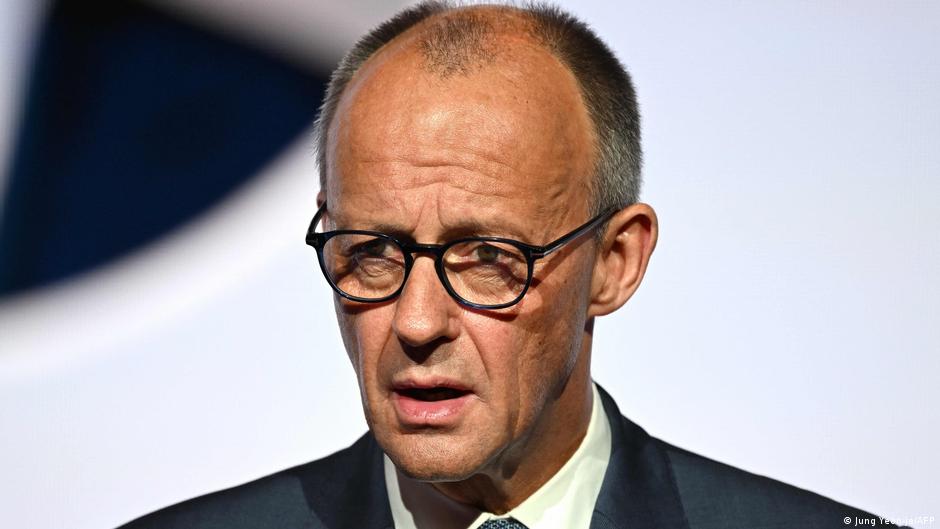
German Chancellor Friedrich Merz has urged every European Union member state to make a “fair contribution” toward closing a multibillion-euro gap in financial assistance for Ukraine, linking agreement on the package to progress on other EU decisions with budgetary consequences.
In a letter to European Council President António Costa, Merz argued that a collective commitment to supporting Ukraine was a prerequisite for resolving the financing shortfall and discussing other matters carrying financial implications. The letter, reported by dpa on Monday, November 9, concerns €45 billion that Ukraine is expected to require from the EU in the coming year.
“Support for Ukraine is a question of our indivisible European security, and this principle must also apply to the sharing of the burden of this support,” Merz wrote.
For capital markets, the dispute puts renewed attention on EU fiscal coordination and the division of liabilities among member states. The source report did not describe an immediate reaction in equities or bonds, but investors will be watching whether the disagreement delays budget decisions, increases national funding requirements or leads to a jointly backed financing structure.
Funding negotiations move toward Dublin summit
Merz asked Costa to make the issue a priority at an informal EU summit scheduled for November 13 in Dublin. He is also pressing for a durable, multiyear solution for Ukraine as part of negotiations over the EU’s 2028-2034 budget.
The European Commission previously estimated the shortfall in assistance for Ukraine next year at €70 billion, with €45 billion expected to be covered by the EU. The bloc agreed last year to provide Kyiv with a €90 billion loan for 2026 and 2027. That decision had been blocked for an extended period by Hungary’s previous government, but the country’s new prime minister, Péter Magyar, lifted the blockade. Kyiv received the first tranche under the loan on June 25.
Those funds are now considered insufficient. In October, Ukrainian President Volodymyr Zelensky asked partners for an additional €70 billion so that Ukraine could continue defending itself against Russian aggression. EU heads of state and government subsequently instructed the European Commission to develop a proposal for meeting the financing need.
The design of that proposal will matter to sovereign-debt investors. Funding routed through the EU budget, national contributions or new common borrowing would distribute costs differently across the bloc. Each route could have distinct implications for government issuance, fiscal headroom and perceptions of political cohesion, even though the source provided no details on the financing instruments under consideration.
Opposition raises execution risk
Securing unanimous or broad political support may be difficult. Bulgarian President Rumen Radev and Slovak Prime Minister Robert Fico have already said they do not intend to participate in providing new EU financial assistance to Ukraine. Contributions from Hungary and the Czech Republic are also uncertain.
Merz is due to meet Magyar in Berlin on November 10, with assistance for Kyiv expected to be among the main topics. Hungary’s earlier removal of its blockade on the €90 billion loan provides an important precedent, but Merz’s warning indicates that Germany wants a clearer and more evenly distributed commitment for the next package.
The chancellor’s attempt to tie Ukraine funding to other financial decisions raises the possibility of wider bargaining across EU policy. For investors, the central issue is whether such leverage accelerates a compromise or creates delays affecting unrelated budget files. Prolonged negotiations could add political uncertainty around future EU spending, national contributions and the 2028-2034 financial framework.
Germany seeks broader burden sharing
Germany is Ukraine’s largest donor among EU countries by a wide margin. The German government estimated its support for Ukraine at €100 billion as of June 30, 2026. The Kiel Institute for the World Economy, however, assessed that €36 billion of that amount had been spent inside Germany, while another €22 billion represented future commitments.
That breakdown is relevant when assessing the fiscal effect of headline support figures. Spending within Germany can have a different economic and market impact from direct transfers abroad, while future commitments may affect later budgets rather than current cash requirements.
Merz’s intervention therefore combines a security argument with a fiscal one: Germany wants other member states to share the burden before the bloc advances additional decisions with financial consequences. The immediate test will be whether EU leaders can bridge the €45 billion requirement at the Dublin meeting and establish a credible path toward longer-term support.
Until the structure is clearer, investors are likely to focus less on the aggregate pledge than on who ultimately funds it, whether common EU borrowing is considered, and how quickly political resistance can be resolved. Those details will determine how the package feeds into sovereign issuance, budget pressures and the risk premium attached to European policy coordination.



