Pentagon Strategist’s NATO Exit Adds Risk for European Markets
Elbridge Colby’s criticism of Ukrainian strikes highlights transatlantic divisions that could influence defense stocks, bonds and investor sentiment.
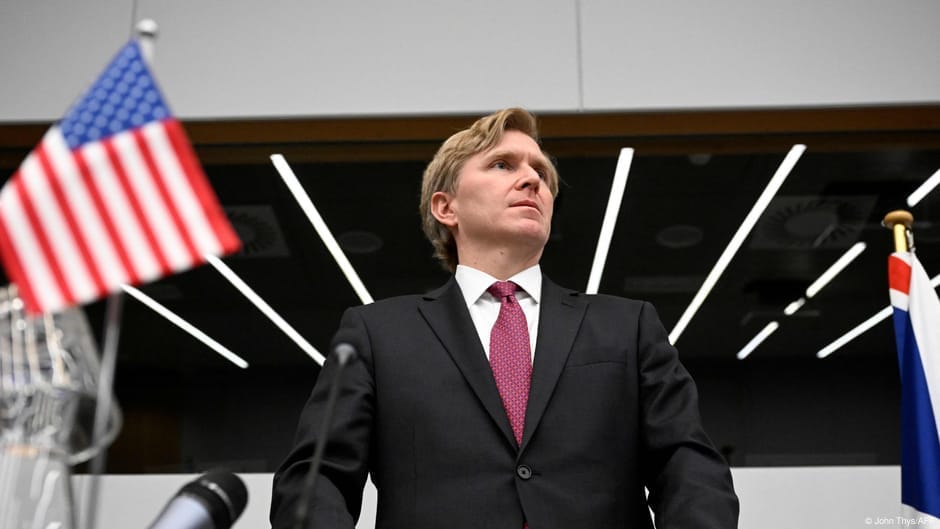
A senior Pentagon strategist’s early departure from NATO talks on Ukraine has exposed renewed tensions between Washington and European allies, creating another geopolitical variable for investors assessing defense equities, sovereign bonds and regional risk.
Elbridge Colby, the Pentagon’s undersecretary for policy, left the 37th meeting of the Ukraine Defense Contact Group at NATO headquarters in Brussels on November 17 after criticizing Kyiv for conducting strikes deep inside Russian territory, The Telegraph reported on Wednesday, November 18.
According to the report, Colby told participants that the attacks did not have significant military value. He departed before a classified briefing by Ukrainian Defense Minister Yevhen Khmara, leaving US representation for the remainder of the meeting to Matthew Whitaker, Washington’s permanent representative to NATO.
The episode matters to capital markets because it raises questions about the durability and coordination of Western support for Ukraine. Any widening gap between the United States and Europe could alter expectations for defense procurement, government borrowing and reconstruction financing. Investors are also likely to watch whether European governments respond by assuming a larger share of military and financial assistance to Kyiv.
Policy split puts defense spending in focus
German sources cited by the newspaper expressed concern that the administration of US President Donald Trump had effectively aligned itself with Russia rather than Ukraine and Kyiv’s European supporters. Colby’s comments reportedly surprised German, British and other European officials attending the meeting.
Those officials consider Ukraine’s long-range strikes militarily effective and believe they destabilize the government of Russian President Vladimir Putin, according to The Telegraph. The disagreement therefore appears to concern more than tactics: it reflects competing assessments of how pressure on Moscow should be applied and what risks Western governments are prepared to accept.
The dispute places the future balance of US and European support for Kyiv back at the center of the investment outlook.
For equity investors, the immediate issue is whether political friction accelerates Europe’s drive to expand its own defense capacity. A greater European burden could support the longer-term order outlook for regional aerospace, weapons and military-technology companies. At the same time, uncertainty over US policy could increase volatility across the sector, particularly for businesses whose valuations depend on sustained multinational procurement programs.
Bond markets face a related calculation. Additional defense commitments and continued assistance to Ukraine may require European governments to increase spending at a time when fiscal constraints remain an important consideration. Plans for Ukraine’s eventual reconstruction could create further long-term financing needs, with implications for sovereign issuance, development funding and private capital participation.
Departure timing draws scrutiny
It was claimed that Colby had to leave the meeting early to catch a flight from a nearby airport. After departing the talks, however, he held a press conference in the atrium of NATO headquarters at about 5 p.m. local time, or 7 p.m. Moscow time, before traveling to the airport.
His absence from the classified Ukrainian briefing may reinforce investor attention on the degree of coordination inside NATO. Markets generally treat alliance cohesion as an important component of European security, particularly when measuring geopolitical risk premiums affecting currencies, energy assets and the debt of countries close to the conflict.
The report did not describe a specific reaction in equity, bond or currency markets. Investors will therefore be looking to upcoming political meetings for evidence that the disagreement represents a broader policy shift rather than an isolated exchange.
Berlin meeting becomes the next signal
On Thursday, November 19, British Prime Minister Andy Burnham is scheduled to co-chair a meeting of the “coalition of the willing” in Berlin alongside the French president and the German chancellor. About 20 heads of state and government, primarily from European countries, are expected to discuss further support for Kyiv.
The gathering will also address plans for Ukraine’s postwar reconstruction. That agenda has direct relevance for investors because rebuilding the country would require substantial coordination among governments and private-sector participants across infrastructure, construction, energy and finance. The source article did not provide funding estimates or details of proposed financial mechanisms.
For markets, the key signals from Berlin will be the level of European commitment, the clarity of any financing plans and whether participants demonstrate unity despite the concerns raised in Brussels. Stronger European coordination could improve visibility for defense and reconstruction-related companies, while sharper transatlantic divisions could add to risk premiums and complicate expectations for future government spending.
The Brussels episode does not by itself establish a change in US policy. It does, however, underline the uncertainty surrounding the next phase of Western support for Ukraine. That uncertainty leaves investors balancing potential increases in European defense and reconstruction expenditure against the wider financial risks created by a less coordinated alliance.



