Poland Plans Eastern No-Fly Zone as Investors Weigh Security Risks
Warsaw aims to introduce new flight restrictions by early 2027, sharpening investor focus on regional security and defense spending.
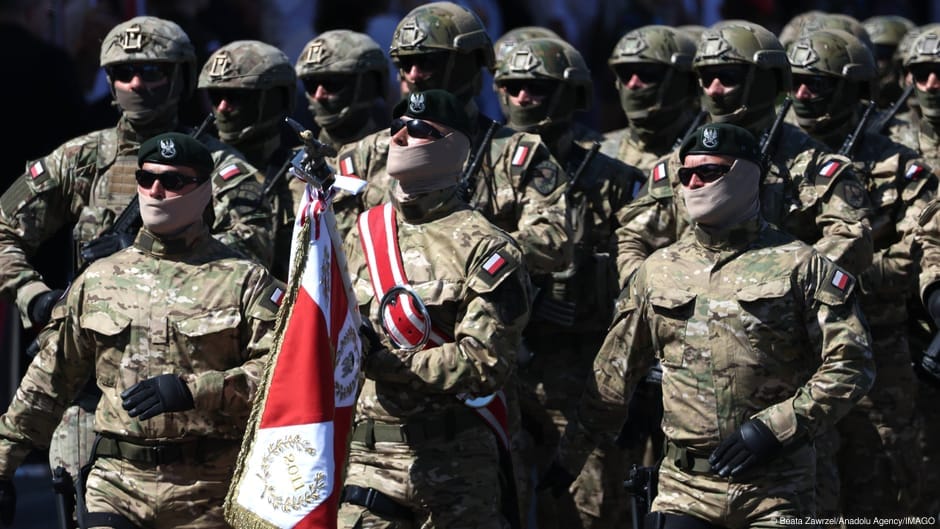
Poland plans to establish a restricted no-fly zone along its eastern border by early 2027, adding another layer to NATO’s defenses as investors assess the financial implications of heightened security risks across Central and Eastern Europe.
Deputy Defense Minister Cezary Tomczyk said on Wednesday, Nov. 25, that the measure would provide “additional support for the military.” The government is already preparing the necessary decision, and Tomczyk said he hoped the restrictions would be introduced “closer to the end of December or the beginning of January.”
The planned zone would not run directly along the frontier. Instead, Tomczyk said it would be positioned at a distance ranging from approximately 12 kilometers to several dozen kilometers from the border.
“It would be a restricted zone located some distance — from about 12 kilometers to several dozen kilometers — from the border,” Tomczyk said.
The measure would allow Poland’s armed forces to identify Russian aircraft entering the country’s airspace more quickly and, if necessary, shoot them down. Tomczyk also said Warsaw would urge other NATO members to introduce similar arrangements along their eastern borders.
Security Policy Adds to the Regional Risk Premium
For capital markets, the proposal reinforces the prominence of geopolitical risk in assessments of Polish and regional assets. Investors in equities, sovereign bonds and currencies must weigh Poland’s expanding security commitments against the country’s strategic position on NATO’s eastern flank.
The restrictions may also keep attention on European defense companies and businesses connected to radar, air surveillance, missile interception and border-security infrastructure. The announcement did not include a budget, procurement plan or estimate of the measure’s fiscal cost, limiting the immediate conclusions investors can draw about specific contracts or public borrowing requirements.
Some aviation restrictions are already in force in Poland’s border areas. Flights are almost entirely prohibited after dark, while daytime operations must remain at an altitude of at least three kilometers. The planned zone would therefore extend an existing security framework rather than introduce restrictions into previously unregulated airspace.
The wider policy debate could nevertheless influence how markets price the durability of elevated defense spending in Poland and elsewhere in Eastern Europe. It also underscores the possibility that civil aviation, logistics and other border-region activities may face tighter operating conditions as governments respond to incursions and missile threats.
Warsaw Presses NATO on Missile Defense
Earlier on Wednesday, Bloomberg reported that Polish officials had proposed that NATO allies intercept over Ukraine Russian missiles heading toward alliance territory. The idea was raised at a Nov. 23 meeting of NATO member-state ambassadors in Brussels.
Tomczyk said the proposal had not received unequivocal backing, noting that such a decision would create “many complications.” Polish Defense Minister Wladyslaw Kosiniak-Kamysz told radio station RMF24 that discussions were continuing, although he did not yet see sufficient “readiness and determination” among allies to take that step.
The lack of consensus highlights a central issue for investors: Poland is seeking stronger deterrence while NATO governments remain cautious about measures that could broaden the alliance’s direct involvement in the war. Any change in interception policy would be closely examined for its implications for regional escalation risk, defense budgets and European risk assets.
Warsaw advanced the proposal after three Russian Kh-101 missiles fell in southeastern Poland on Nov. 20. Prime Minister Donald Tusk described the incident that day as an apparent deliberate provocation.
“It appears that we are dealing with a deliberate provocation,” Tusk said. He added that the airspace violations clearly demonstrated why Poland should participate in negotiations aimed at securing peace in Ukraine, which has been resisting Russia’s invasion for almost five years.
What Investors Will Watch Next
The timing and precise boundaries of the no-fly zone will be important for investors monitoring the policy. Markets will also look for details on enforcement, additional military deployments, equipment requirements and whether neighboring NATO states adopt comparable measures.
For Polish government bonds, any eventual fiscal impact will depend on whether the restrictions require significant new spending beyond existing defense plans. For equities, the clearest potential exposure lies in defense and security suppliers, although no beneficiaries or contracts have been identified. Airlines and logistics companies may also examine whether the final rules materially alter routes or operating costs near the eastern frontier.
The near-term market significance therefore lies less in a disclosed financial commitment than in the strategic signal: Poland is moving to tighten control of its airspace while pressing NATO to consider a broader regional response. That combination keeps geopolitical risk, military expenditure and alliance coordination firmly on the agenda for investors in Polish and Eastern European assets.



