Russian Drone Enters Polish Airspace, Raising NATO Market Risk
Poland withheld fire over civilian safety concerns after tracking the Russian drone as it briefly crossed the border and turned east.
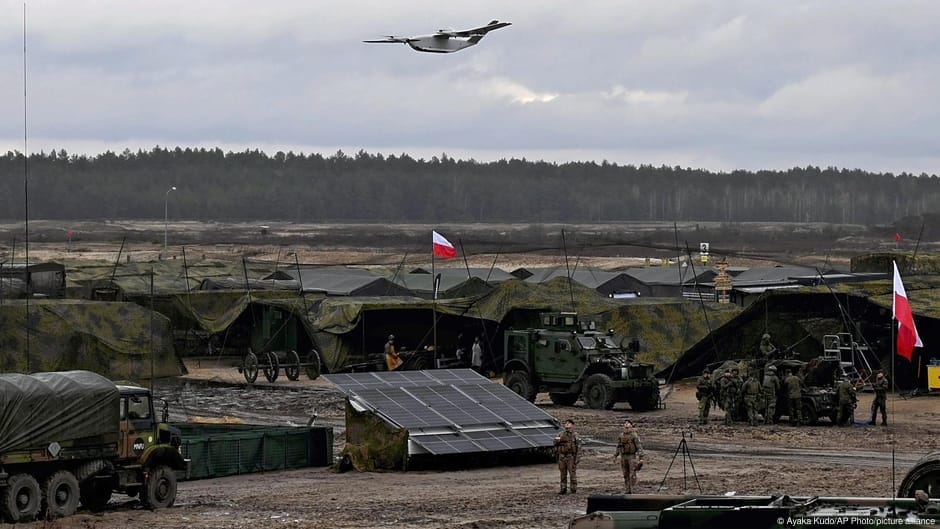
A Russian drone briefly entered Polish airspace during an attack on targets in western Ukraine, adding another cross-border security incident for investors monitoring the war’s potential impact on NATO territory and European markets.
Poland’s armed forces reported the incursion on the social media platform X during the night of Tuesday, November 24. The country’s Operational Command continuously tracked the unmanned aerial vehicle by radar while it was inside Polish airspace.
Polish forces received authorization to destroy the aircraft. They ultimately decided against using weapons after the drone changed course and headed east, citing the danger that an interception and falling debris could pose to civilians. The drone subsequently left Polish airspace in an easterly direction.
Polish forces were authorized to destroy the drone but withheld fire after it turned east, seeking to avoid risks to civilians from a possible interception.
The episode occurred as Russia attacked locations in western Ukraine, according to the Polish military’s account. It follows other incidents that have brought the conflict physically closer to NATO’s eastern frontier, reinforcing geopolitical uncertainty for investors with exposure to Poland and the wider Central and Eastern European region.
Investors assess escalation risk on NATO’s eastern flank
The Polish military’s decision illustrates the balance confronting governments along Ukraine’s western border: responding to unauthorized incursions while limiting the danger to local communities. For markets, the most important question is whether such incidents remain short-lived and contained or lead to a more sustained military response involving NATO members.
The source report did not provide specific moves in Polish equities, government bonds, the zloty or broader European assets following the incursion. Investors would nevertheless be likely to watch those markets for signs of a higher geopolitical risk premium. Polish stocks can be sensitive to shifts in regional security expectations, while sovereign bonds and the currency may reflect changing assessments of fiscal demands, defense spending and capital flows.
European defense companies may also remain in focus as governments strengthen surveillance and air-defense capabilities. However, the incident itself did not include any new procurement announcement or change in defense policy, limiting the basis for attributing a specific equity-market move directly to the drone’s brief entry.
Authorities declared an air alert on the evening of November 23 in Poland’s Lublin Voivodeship, according to the dpa news agency. Residents of southeastern border districts were asked to seek shelter. The region borders Ukraine and has repeatedly faced heightened security concerns during Russian attacks on western Ukrainian targets.
AWACS deployment strengthens surveillance
NATO had previously announced that it was sending an Airborne Warning and Control System aircraft to Poland to improve protection of the country’s airspace. AWACS aircraft provide long-range radar surveillance and can help military commands identify and track airborne threats across a broad area.
The alliance decided to redeploy the reconnaissance aircraft after fragments of three Russian Kh-101 missiles fell in Poland on November 20. The latest drone incursion therefore comes against the backdrop of already elevated monitoring and a recent decision by NATO to reinforce Poland’s ability to detect potential threats.
For bond investors, repeated airspace incidents may sharpen attention on Poland’s defense commitments and their longer-term fiscal implications. Greater spending on radar, aircraft, missile defenses and military readiness can support defense-sector revenues, but it may also influence government borrowing requirements if security expenditures rise materially. No additional fiscal measures were announced in connection with the latest event.
Equity investors will similarly distinguish between a contained violation and evidence of broader escalation. The drone was tracked, authorization to engage was granted, and it departed toward the east without being shot down. Those details may help limit immediate concerns, although the combination of an active Russian attack near the border, an air alert and the earlier missile-debris incident keeps regional risk firmly on the market agenda.
The absence of an interception also reduces the likelihood that this particular episode will trigger disputes over damage from falling wreckage inside Poland. At the same time, Warsaw’s acknowledgment that it had approved the drone’s destruction signals a readiness to act if military commanders determine that an airborne object poses a greater threat than the risks associated with engaging it.
Investors today will be watching for further statements from Polish authorities and NATO, particularly any change in air-defense posture or evidence of additional incursions. They will also monitor Polish assets and European defense shares for any repricing tied to the security outlook. The central market issue remains whether enhanced surveillance can contain recurring spillovers from the war without producing a direct confrontation between Russia and a NATO member.



