Russian Strikes Across Ukraine Renew Infrastructure Risks for Investors
Fatal attacks on several Ukrainian cities underscore persistent risks to transport, industrial and commercial assets amid the continuing war.
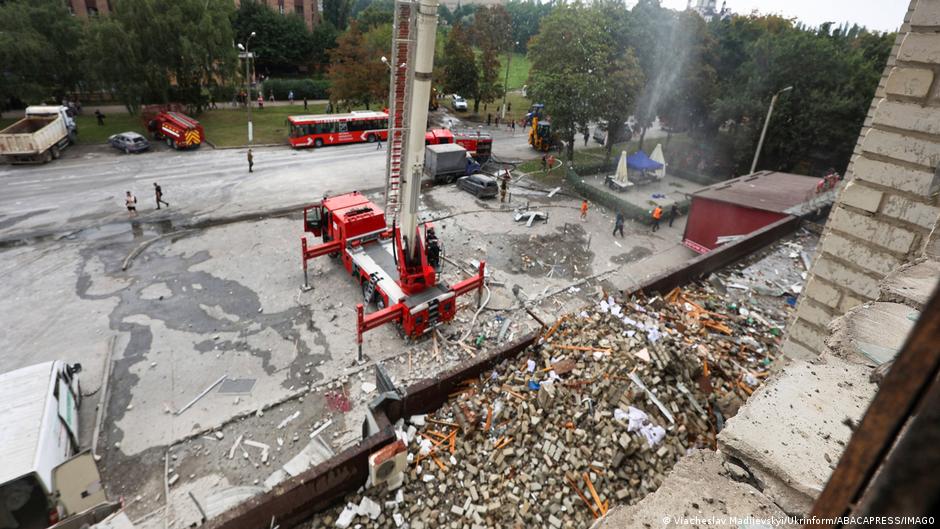
Russian strikes across Ukraine killed civilians and damaged railway, warehouse, industrial and commercial property on Thursday, October 29, highlighting the continuing physical risks facing infrastructure and businesses in the country.
In central Chernihiv, two 15-year-old girls were killed by a “Banderol” (S8000) munition, described as a small hybrid of a cruise missile and a jet-powered attack drone. At least 25 people were injured, including four children: a 10-month-old girl, a 10-year-old girl and boys aged 16 and 17, according to regional military administration head Viacheslav Chaus.
“Two children, a brother and sister, are in serious condition. Eight people in total are currently in hospitals,” Chaus wrote, adding that the others received treatment at the scene or were being treated as outpatients.
Ukraine’s State Emergency Service said homes, shops and cars were damaged on an ordinary street and argued that the strike had no military purpose. Chernihiv declared October 30 a day of mourning.
Transport and commercial assets hit
At least 14 people were killed and another 14 injured when a drone struck the railway station in Dnipro on October 29. The attack is particularly relevant to investors monitoring Ukraine’s transport system, although the source provided no estimate of operational disruption, repair costs or the financial impact on the railway network.
In Kremenchuk, three residents were killed and 25 people were injured in a Russian attack, according to the Ukrainian emergency service. In Zaporizhzhia, two men aged 41 and 66 were injured and received medical assistance. Four passenger cars and an open area caught fire, while a warehouse, four cars and four buses were damaged.
Later on October 29, a Russian missile struck Kharkiv’s Slobidskyi district, the emergency service said. Fires broke out in a production building and on adjacent land, covering a combined area of 400 square metres. At another location, remnants of various materials burned across 80 square metres, and two trucks were damaged.
Authorities did not specify what was stored in the production building or why the explosion caused the fire. Kharkiv Mayor Ihor Terekhov said the district had been hit with a “Banderol” munition.
Kyiv warehouses and residential property damaged
Kyiv was targeted with a Russian ballistic missile on the evening of October 29, according to Mayor Vitali Klitschko. Warehouse buildings were hit in the Darnytskyi district, causing a fire. In the Dniprovskyi district, missile debris burned in the courtyard of a residential complex.
Klitschko said a blast wave shattered windows in one residential building. At another address in the same district, windows and cars parked in a courtyard were damaged. A shop building near the residential complex where missile fragments fell was partially destroyed. The Kyiv City Military Administration said one person was killed in the attack.
The damage adds to the wartime exposure of logistics facilities, manufacturers, retailers, vehicle fleets and residential property. For capital-markets participants, repeated strikes can complicate asset valuation, insurance availability and assumptions about reconstruction needs. The source, however, reported no immediate reaction in Ukrainian or international equities, sovereign bonds, currencies or commodity markets, and provided no quantified estimate of total losses.
Warnings of further ballistic attacks
Earlier on October 29, Ukrainian President Volodymyr Zelenskyy said in his daily address that intelligence indicated Russia was preparing to attack Ukraine again with ballistic missiles. The warning reinforces the prospect of continued volatility in the operating environment for companies and creditors exposed to the country.
Russia’s Defence Ministry said that its forces had carried out drone strikes during the day against Ukrainian port infrastructure and vessels allegedly used in the interests of Ukraine’s armed forces. It also reported striking a temporary Ukrainian troop deployment point in the Kharkiv sector and identifying and destroying control points for Ukrainian FPV drones in the Dnipropetrovsk sector.
The Russian ministry’s claims were presented separately from Ukrainian accounts of civilian casualties and property damage. The source did not provide independent verification of the competing battlefield assertions.
For investors, the attacks keep attention on infrastructure resilience and the fiscal burden associated with emergency response and reconstruction. Damage to stations, warehouses, production sites, buses, trucks, shops and homes can affect supply chains and local economic activity even when nationwide market indicators show no immediate move. Any assessment of bond or equity implications would require verified information on service interruptions, insured losses and repair timelines, none of which was included in the reported disclosures.



