Spain Transport Minister Resigns After Toledo Rail Disaster
Oscar Puente’s departure adds political and infrastructure risk as Spain confronts its seventh passenger rail accident of 2026.
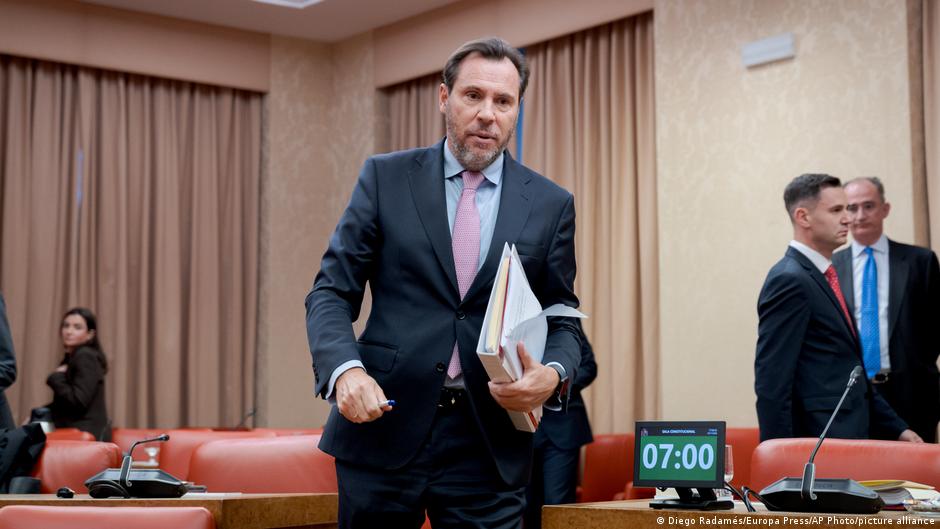
Spanish Transport Minister Oscar Puente has resigned and withdrawn from participation in snap parliamentary elections following a railway disaster near Toledo that killed 69 people, a political shock that places Spain’s transport infrastructure and public spending priorities under renewed investor scrutiny.
Puente announced his decision on Tuesday evening, November 3, while appearing before a parliamentary committee in Madrid. His resignation came almost a week after the October 28 collision near the village of Urda and followed demands from every opposition party that he step down.
“A minister cannot remain in office after two disasters of this magnitude in less than one year. It is a matter of political dignity, responsibility and political sensitivity,” Puente said.
The move was unexpected because Puente and Spanish Prime Minister Pedro Sanchez had repeatedly ruled out his resignation. His decision not to stand in the early parliamentary election adds another element of uncertainty to Spain’s political outlook at a time when investors are already assessing the fiscal and operational consequences of repeated failures across the national rail network.
Infrastructure risk moves higher on the agenda
The Urda accident occurred at 8:53 a.m. on October 28 on the Madrid-Seville high-speed line. Passenger train AVE 2080 struck the final carriage of Iryo 6076, which was stationary on the tracks. Sixty-nine people were killed and more than 50 were injured.
The scale of the disaster, together with the minister’s departure, is likely to intensify examination of rail safety systems, maintenance standards and the division of responsibility among public authorities, infrastructure operators and train companies. The source information does not specify any immediate reaction in Spanish equities or government bonds, nor does it identify listed companies facing direct financial exposure. Investors will therefore need to distinguish confirmed operational facts from potential market implications as the investigation develops.
The crash was the seventh Spanish railway accident involving passenger injuries since the beginning of 2026. Another major collision occurred on January 18 near the village of Adamuz on the Madrid-Malaga high-speed route and involved two trains. That disaster killed 46 people and left another 150 with injuries of varying severity.
The recurrence of serious incidents within one year raises questions relevant to capital markets, including whether Spain will accelerate railway investment, redirect budget resources or impose additional safety and compliance requirements. Such measures could affect public procurement, infrastructure expenditure and operating costs, although no new funding totals or regulatory obligations were disclosed in the source article beyond the measures approved on Tuesday.
Government approves safety measures and aid
Several hours before Puente announced his resignation, the Spanish government approved measures intended to improve railway safety. At its weekly cabinet meeting, it also authorized a €30 million assistance package for people injured in the disaster and for the families of those killed.
The immediate fiscal size of that aid package is clearly defined, but the broader financial implications remain uncertain. For sovereign bond investors, the central issue is less the one-off assistance than whether the accidents lead to a larger multiyear program of inspections, repairs and technology upgrades. For equity investors, attention may turn to companies involved in railway signaling, rolling stock, engineering, maintenance and insurance, but the available information does not name contractors or assign liability.
The investigation into the Urda collision is focusing on the failure of the automatic train protection system and on possible errors in instructions issued by the dispatch center. By contrast, damage to the railway tracks is considered one possible cause of the January accident near Adamuz.
That distinction matters for investors because different findings could produce different spending and legal outcomes. A signaling or control-system failure could prompt technology upgrades and tighter operating protocols, while infrastructure damage could shift attention toward track maintenance and capital renewal. At this stage, however, both investigations remain framed around possible causes, and no final determination has been reported.
Political accountability adds to near-term uncertainty
Puente’s resignation satisfies a central opposition demand but may not end the political dispute. The appointment of a successor, the government’s handling of the investigations and the role of rail safety in the snap election could influence expectations for future transport policy. The withdrawal of a serving minister from the election also underlines the political weight of the crisis.
For investors, the near-term signals to monitor are the government’s timetable for implementing the newly approved safety measures, any additional railway appropriations and the findings on automatic protection systems and dispatch instructions. Evidence of wider network deficiencies could increase expectations for public investment and compliance costs, while a narrowly identified failure might contain the financial impact.
Until investigators establish responsibility and the government provides more detail on its response, the principal market issue is uncertainty rather than a quantified loss to Spanish assets. Puente’s resignation has elevated the accidents from an operational transport crisis into a national political and infrastructure-risk issue, ensuring that railway safety will remain relevant to assessments of Spanish public spending and affected transport-sector businesses.



