Strikes on Kyiv and Crimea Bridges Put Regional Risk Back in Focus
Renewed attacks on strategic crossings highlight infrastructure and logistics risks for investors exposed to Ukraine and Russia.
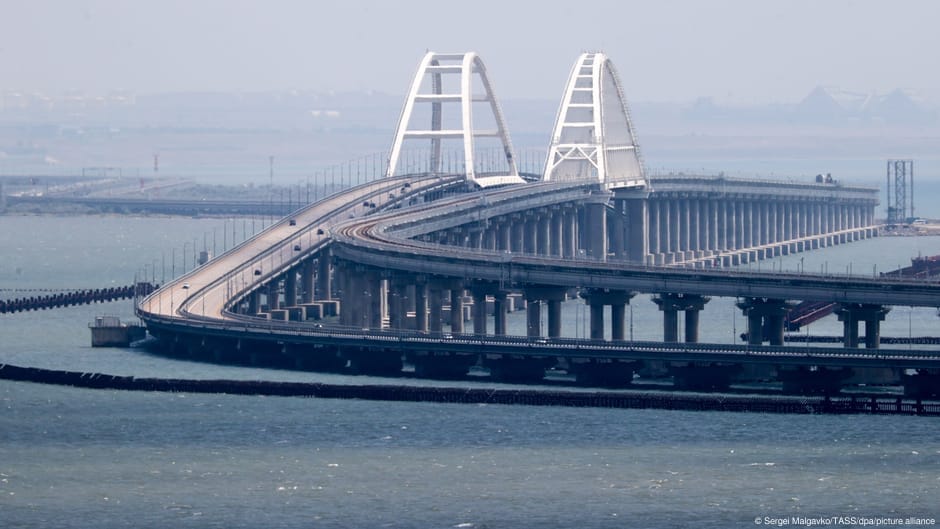
Russian forces struck Ukraine overnight on Tuesday, November 17, with Kyiv among the principal targets and two major bridges across the Dnipro reportedly hit by ballistic missiles. In the Kerch Strait, the bridge connecting Russian-annexed Crimea with Russian territory was also attacked, temporarily halting traffic and renewing questions about the security of critical transport infrastructure.
For capital markets, the immediate significance lies less in confirmed asset losses—which remained unclear—and more in the potential for repeated disruption to transport, municipal services and supply chains. Investors with exposure to Ukrainian sovereign risk, reconstruction-linked companies, regional transport operators and Russian assets will be watching whether the attacks produce sustained interruptions or further escalation.
Kyiv transport links temporarily closed
Social media users published photographs and video showing at least one explosion near Kyiv’s Northern Bridge. Local Telegram channels also reported interruptions to water and heating supplies in districts on the left bank of the Dnipro.
Kyiv Mayor Vitali Klitschko said on a preliminary basis that the Northern and Southern bridges had been hit. He also confirmed disruptions to water and heating in parts of the capital but provided no further details.
Kyiv’s metro operator said on the morning of November 17 that service had stopped on the section of the green line that crosses the Dnipro via the Southern Bridge. Municipal authorities said traffic across both the Northern and Southern bridges had been temporarily suspended.
The extent of the physical damage remained uncertain, but the closure of two crossings and the interruption of metro services underscored the operational vulnerability of Kyiv’s transport network.
Russian forces have repeatedly targeted transport crossings in Kyiv since the beginning of October 2026. The continuing pressure has prompted city authorities to examine alternative ways of maintaining connections across the Dnipro. Alongside pontoon crossings, officials have considered the longer-term construction of a tunnel beneath the river, according to an earlier statement by Ukraine’s minister responsible for restoration, infrastructure and transport, Mykola Kalashnyk.
That search for alternatives carries potential implications for reconstruction financing and public investment. Repeated damage to existing crossings could raise the cost of maintaining urban mobility, while emergency transport solutions and more resilient infrastructure would require additional capital. However, the source reports no new funding commitments, project costs or construction timetable for a tunnel.
Kerch crossing faces renewed disruption
Sergei Aksyonov, the Moscow-appointed head of annexed Crimea, said overnight that the Kerch Strait bridge had come under attack and that movement across the crossing was suspended. He promised updates as the situation developed but had provided no additional information several hours later.
The bridge had also been attacked the previous night, when traffic was closed until the evening of November 16. Telegram channels Astra, Mash and Exilenova+ reported that one of the bridge’s arches had been damaged. That claim had not received official confirmation.
The Kerch crossing has strategic value as a road and rail connection between Crimea and Russia. Any prolonged restriction could affect civilian traffic and logistics, although the available reports did not establish the duration of the latest interruption or confirm significant structural damage.
Since Russia began its full-scale invasion of Ukraine, the bridge has repeatedly been targeted by Ukrainian forces. The first major incident occurred in October 2022 and the second in July 2023, with both causing serious damage. In June 2025, Ukraine’s Security Service said it had conducted an underwater operation to blow up the structure’s supports, though no significant consequences from that operation were reported.
What investors will assess next
The latest attacks add to the event risk surrounding Ukrainian and Russian assets. For holders of Ukrainian bonds, the key questions include whether repeated infrastructure strikes intensify fiscal demands, complicate economic activity or increase future reconstruction needs. Equity investors will similarly assess exposure among transport, utilities, construction, engineering and insurance-related businesses, while distinguishing confirmed damage from unverified social-media reports.
The developments may also reinforce the geopolitical risk premium attached to the wider region. Still, no specific reaction in equities, bonds, currencies or commodities was reported in the source, and the scale of any lasting economic effect cannot be determined from the initial accounts.
Investors will therefore focus on official damage assessments, the duration of bridge and metro closures, the restoration of water and heating services, and whether traffic resumes across the Kerch Strait. Confirmation of structural damage or extended closures would carry greater economic significance than temporary precautionary suspensions. Until authorities provide fuller assessments, the market relevance remains concentrated in heightened infrastructure, logistics and escalation risk rather than a measurable change in asset values.



