Trump Backs Kyiv’s Role in Talks as Markets Weigh Geopolitical Risk
The US president’s comments may temper fears of a Ukraine deal imposed without Kyiv, while leaving major geopolitical risks unresolved.
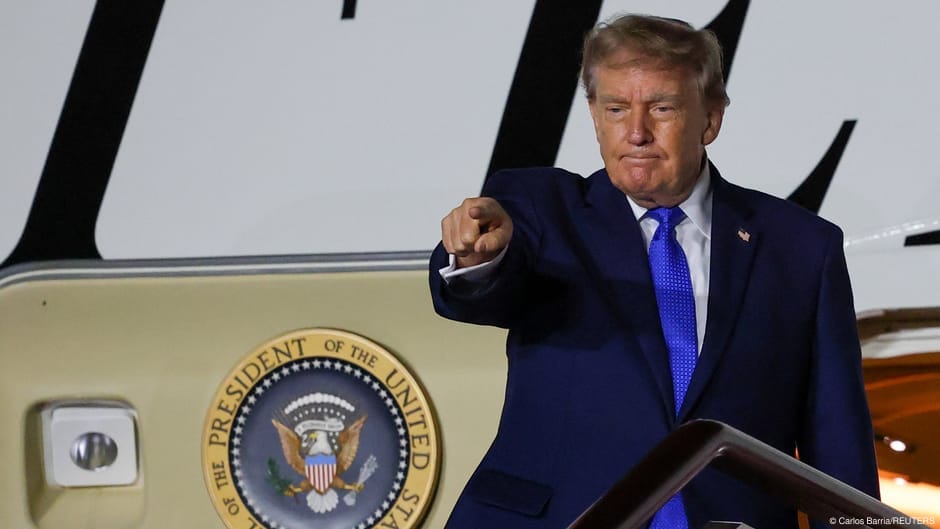
US President Donald Trump said he agreed with Ukrainian President Volodymyr Zelensky that Washington should not make decisions about Russia’s war against Ukraine without Kyiv’s direct participation, a position investors will assess for its implications for geopolitical risk, sanctions and European assets.
Speaking in an NBC interview on Thursday evening, November 19, Trump said he would not take action without Zelensky because the Ukrainian leader heads the country. NBC journalist Gabe Gutierrez relayed the president’s remarks on X.
“I agree with him. I wouldn’t do anything without him—he is the head of that country, so I wouldn’t do that,” Trump said, according to Gutierrez.
The statement offers a measure of procedural reassurance for markets sensitive to abrupt shifts in US policy. Direct Ukrainian involvement could reduce the immediate risk of an agreement that Kyiv rejects, but it does not resolve the larger uncertainties surrounding the war, including its duration, Western sanctions on Russia, military escalation and the future cost of Ukraine’s reconstruction.
No specific reaction in equities, government bonds, currencies or commodities was reported in the source account. For investors, the significance therefore lies in the policy signal rather than an identified price move. European defense companies, energy markets and sovereign debt across the region remain among the assets most exposed to changes in expectations about the conflict.
Three-Way Summit Produces Broad Declaration
Trump’s comments followed the first trilateral meeting of the leaders of the United States, China and Russia. The talks with Chinese President Xi Jinping and Russian President Vladimir Putin took place earlier the same day in Shenzhen, China, on the sidelines of the Asia-Pacific Economic Cooperation summit.
Gutierrez said he also discussed the meeting with Trump by telephone. The US president rated it “12” on a scale of zero to 10, saying it had gone extremely well and that the participants had built an outstanding relationship.
According to Trump, Ukraine was the central subject of the Shenzhen talks, although the leaders also discussed what he called the conflict surrounding Iran. Trump said the leaders wanted the Iranian situation resolved and were communicating that position to Iran in the strongest terms.
Before the meeting, Trump said the gathering would “go down in history.” Xi described it as having historic significance, while Putin said the three countries shared many interests concerning the settlement of regional conflicts, including the conflict in Ukraine.
The meeting lasted only about an hour and a half. The participants departed without issuing a joint statement to the press. Xi called the discussions positive and constructive, while Russian presidential aide Yuri Ushakov described the atmosphere as good.
A joint “Declaration of Peace” was subsequently published by the leaders of the United States, Russia and China. Its principal points included support for reforming the United Nations, agreement that the International Criminal Court should not abuse its authority, and continued dialogue on reducing nuclear risks and preventing nuclear proliferation. The declaration did not mention the war in Ukraine.
Investors Face Mixed Diplomatic Signals
The combination of Trump’s support for Kyiv’s participation and Ukraine’s omission from the joint declaration leaves markets with mixed signals. The former suggests that the United States does not intend to exclude the Ukrainian government from decisions affecting the war. The latter provides no concrete framework, timetable or commitment that investors could use to reprice the prospect of a ceasefire or settlement.
That distinction matters across capital markets. A durable de-escalation could eventually affect European fiscal expectations, defense spending assumptions, regional risk premiums and the outlook for energy supplies. Continued uncertainty, by contrast, can sustain demand for defensive assets and keep geopolitical premiums embedded in exposed securities and commodities. The reported discussions produced no detailed measures on sanctions, security guarantees, territorial issues or reconstruction financing.
In the NBC interview, Trump also said Putin had been upset by Ukrainian strikes on the Crimean Bridge that caused parts of its structure to collapse. Trump characterized the Russian president’s reaction as understandable. The observation highlights the continuing military risks that coexist with high-level diplomatic engagement.
For investors, the immediate takeaway is that dialogue among Washington, Beijing and Moscow has intensified, while Kyiv’s formal role has received explicit backing from Trump. Yet the short summit, lack of a joint press appearance and absence of Ukraine from the peace declaration limit the strength of any de-escalation signal. Until diplomacy produces specific commitments, markets are likely to treat the developments as politically significant but insufficient to remove the geopolitical uncertainty surrounding European equities, bonds and energy-linked assets.



