U.S. Terror-Financing Charges Against Russians Add to Geopolitical Risk
The New York indictment adds another legal and diplomatic flashpoint for investors already tracking Russia-related sanctions and security risks.
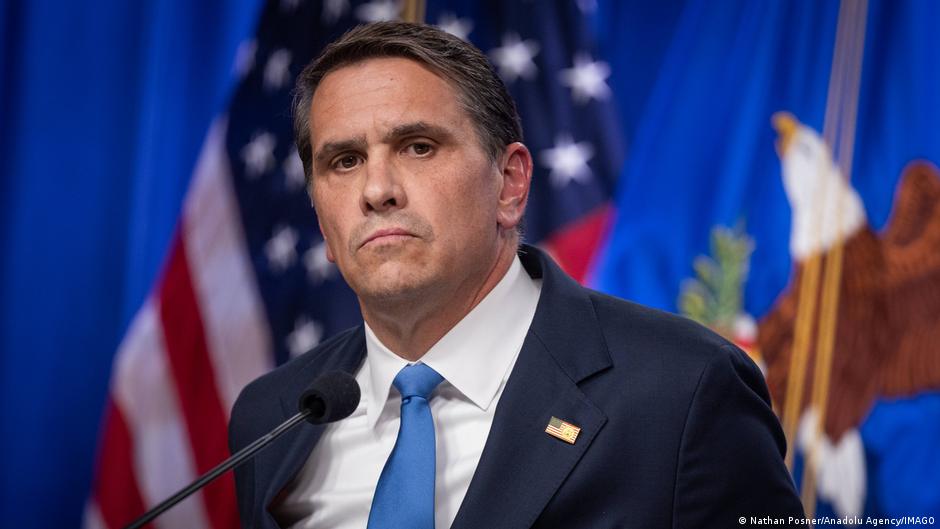
U.S. prosecutors in the Southern District of New York have charged several Russian nationals and others with terrorism financing and conspiracy to commit contract killings around the world, including on U.S. soil, according to a Justice Department press release made public on Tuesday, September 15.
The case centers on RIS Network, which U.S. authorities describe as a global assassination network operating on behalf of Russian security services. Prosecutors allege that the network financed terrorist attacks against countries allied with Ukraine and prepared killings of Russian dissidents and defectors. For investors, the indictment adds a fresh geopolitical risk marker at a time when Russia-related sanctions, defense spending, energy security and sovereign-risk pricing remain central variables across global markets.
The defendants include Yuri Khrameev, also known as “Colonel Yuri,” and his son Kirill Khrameev. U.S. authorities say Yuri Khrameev is a former colonel in Russian security services who took part in recruiting people to carry out killings of Russian dissidents. Kirill Khrameev, according to the U.S. Attorney’s Office, is an officer of Russia’s Federal Security Service, or FSB.
Three of the defendants hold senior positions within RIS Network, according to U.S. officials. Another accused individual is Oemis Romagoza Durruti, a Cuban national living in Russia, who is suspected of coordinating attacks by the network. Also named are Yaider Delgado Suarez, a Cuban national known as “Viking,” and Venezuelan citizen Angel Eduardo Castro, both described as suspects in recruiting people to perform tasks for the network.
Market Sensitivity to Security Escalation
The charges are primarily a criminal and national-security matter, but they arrive in a market environment where legal actions tied to Russia can still ripple through investor positioning. The indictment does not announce new sanctions or direct financial restrictions. Even so, allegations that a Russian-linked network targeted Ukraine-allied countries and operated inside the United States may reinforce the risk premium attached to sectors exposed to defense, energy, European infrastructure and cross-border compliance.
According to the Justice Department account summarized in the indictment, the accused paid people in the United States and other countries to conduct preliminary reconnaissance and carry out targeted killings. Prosecutors also allege that the defendants instructed associates to commit and attempt terrorist attacks against civilian and military infrastructure in European countries that support Ukraine or are perceived as supporting it. The FBI participated in the investigation.
U.S. prosecutors allege the defendants sought to recruit U.S. citizens and foreign nationals to carry out killings on behalf of the Kremlin.
That allegation was attributed in the Justice Department release to Assistant Attorney General for National Security John Eisenberg, who said the defendants attempted to recruit Americans and foreign nationals for murders ordered by the Kremlin. ABC News, citing U.S. Attorney General Todd Blanche, reported that the charges also concern attempts to kill an unidentified Russian dissident whom the defendants believed to be in Washington, D.C.
For capital markets, the most immediate read-through is not a single-company earnings issue but a broader geopolitical signal. Investors have spent recent years evaluating the consequences of the war in Ukraine through sanctions enforcement, European defense budgets, energy supply chains and elevated cyber and physical-security risks. Allegations of attempted attacks on civilian and military infrastructure in Ukraine-supporting countries fit directly into that risk matrix.
Equity investors may view the case as another data point supporting persistent demand for defense, surveillance, cybersecurity and critical-infrastructure protection. At the same time, broader market risk appetite can be pressured when legal or security developments point to a widening operational theater. European equities with infrastructure, transport, energy or defense exposure could be watched closely if investors conclude that security risks are becoming more acute.
Bond markets may also treat the indictment as part of the wider geopolitical backdrop rather than as a discrete pricing event. In periods of heightened international tension, investors often monitor safe-haven demand, defense-related fiscal commitments and the implications for European sovereign borrowing. The charges themselves do not alter debt fundamentals, but they add to the catalogue of risks that can influence spreads, duration appetite and cross-border capital flows.
Charges and Potential Sentences
The Justice Department describes RIS Network as a unit of the Russian state apparatus involved in attacks abroad, including killings. U.S. authorities say the network has focused on Russian dissidents and defectors and, more recently, on countries considered allies of Ukraine. The statement says the organization also operated in the United States.
The five named defendants face up to 20 years in prison on terrorism-financing charges, according to U.S. authorities. Yuri Khrameev, Suarez and Castro are also charged with conspiracy to commit murder for hire, which carries a potential sentence of up to 10 years. The defendants are currently wanted.
The allegations remain unproven unless established in court, but the indictment adds another layer to the financial community’s assessment of Russia-linked risk. For portfolio managers, the key questions are whether the case leads to additional policy measures, whether it influences allied coordination on sanctions or security spending, and whether it affects sentiment toward assets exposed to the Ukraine war’s second-order consequences.
In practical terms, investors today are likely to treat the case as incremental rather than transformative. It does not, based on the information released, create a new direct market restriction. But it sharpens the narrative around transnational security threats, reinforces scrutiny of Russian state-linked networks and keeps geopolitical risk near the front of the market agenda.