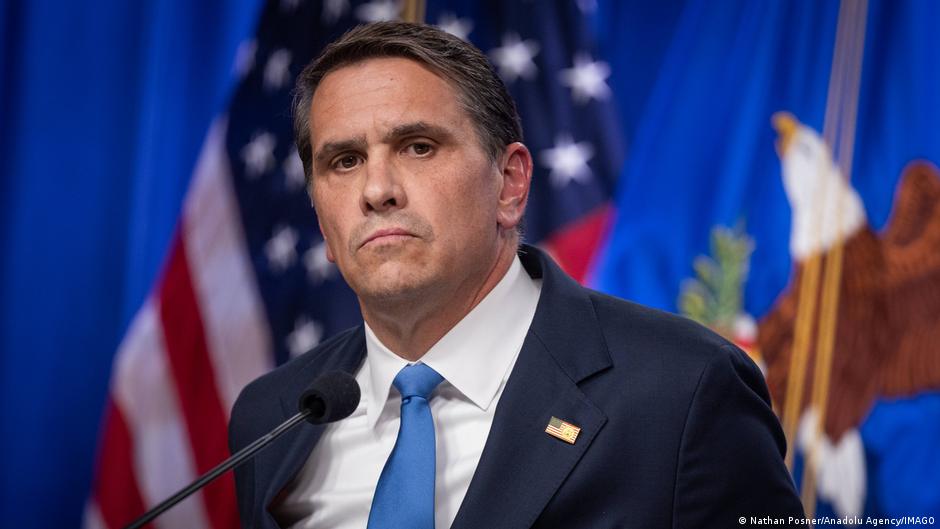
House Vote Advances Graham Sanctions Bill, Raising Tariff Risk for Markets
The House cleared a procedural hurdle for legislation that could authorize 100% tariffs on major buyers of Russian energy.
The U.S. House of Representatives on Tuesday, September 15, approved the start of consideration of legislation linked to Lindsey Graham that would give President Donald Trump authority to impose steep tariffs on countries buying Russian energy resources, while also extending existing U.S. sanctions against Iran. The vote opens the way for lawmakers to debate the measure on its substance, a step investors are likely to read as a sign that geopolitical risk is moving back into the pricing of energy, trade and inflation-sensitive assets.
The bill, described by media outlets as the “Graham bill” in memory of the late Senator Lindsey Graham, who helped develop and actively promote it, has been framed by supporters as a sanctions measure aimed at Russia and as a broader signal of U.S. resolve. For markets, however, the central question is how tariff authority of this scale could affect oil and gas flows, import costs, corporate margins and bond-market inflation expectations if the legislation advances further.
According to the online publication The Hill, the procedural rule prepared by the relevant House committee passed because two Democrats broke with their party’s position. The resolution was approved by 214 lawmakers, while 211 voted against it. That narrow margin matters for investors: it suggests the bill is moving forward, but not with overwhelming bipartisan consensus, leaving room for volatility as the full House vote approaches.
Tariff Authority Moves Into Market Focus
The measure would allow Trump to impose tariffs of 100% on the five largest purchasers of Russian oil and gas, as well as on five countries that help Russia bypass energy sanctions. Such authority, if used, could ripple through global energy markets by raising the cost of trade with major economies exposed to Russian supply. Equity investors would be watching sectors with direct sensitivity to energy prices, including airlines, transport, chemicals, manufacturing and consumer discretionary companies whose margins can be pressured by higher input costs.
Bond investors would likely focus on the inflation channel. Tariffs can operate like a tax on imports, raising prices for consumers and businesses. If markets conclude that the measure increases the risk of higher U.S. consumer prices, Treasury yields could face upward pressure, particularly at maturities sensitive to inflation expectations and Federal Reserve policy assumptions. Conversely, if the legislation is viewed primarily as a geopolitical escalation that threatens global growth, demand for safer assets could support government bonds.
Republican Representative Michael McCaul of Texas, speaking on September 14 during hearings on the document in the House Rules Committee, described the planned next-day vote as exceptionally important. He framed it as a message to Russian President Vladimir Putin regarding U.S. support for Ukraine and as a warning to Chinese President Xi Jinping against attempting aggression toward Taiwan.
McCaul called the vote “exceptionally important” as a message on American support for Ukraine and a warning over Taiwan.
That geopolitical framing is important for capital markets because the bill is not just about Russia. Investors are likely to evaluate it alongside wider U.S. policy toward China, Taiwan and sanctions enforcement. Any measure that connects Russian energy purchases with potential tariffs on third countries can broaden the market impact beyond commodities into currencies, emerging-market equities, global trade stocks and multinational companies with supply chains exposed to affected jurisdictions.
Democratic Critics Warn of Price Pressure
Democratic critics argue that the legislation would sharply expand Trump’s powers in the area of customs tariffs without providing for mandatory sanctions against Russia. Representatives Don Beyer, Gregory Meeks and Richard Neal warned that the bill would lead to higher prices for Americans and, over the long term, undermine support for Ukraine.
That criticism goes directly to the investor debate. A sanctions bill that increases tariffs without guaranteeing specific Russia-focused penalties could be seen by markets as creating broad discretionary power rather than a predictable sanctions framework. Businesses generally prefer clarity on tariff exposure, supply-chain costs and compliance obligations. Uncertainty over which countries might be targeted, and when, can weigh on corporate planning and risk premiums.
For U.S. equities, the immediate implications would depend on whether investors treat the bill as a political signal or as a credible path toward implementation. Energy producers could benefit if the market anticipates tighter global oil and gas supply or higher benchmark prices. At the same time, companies exposed to fuel costs, imported goods or consumer spending could face pressure if tariff risks feed into inflation expectations or reduce real household purchasing power.
The legislation also intersects with the broader sanctions architecture around Iran. The bill would extend existing U.S. sanctions against Iran, adding another layer of geopolitical risk for commodity traders and investors already tracking supply constraints, shipping routes and diplomatic tensions. While the source article does not specify new Iran-related measures beyond the extension of current sanctions, the combination of Russia and Iran provisions could reinforce market sensitivity to energy security headlines.
A full House vote on the bill is expected before the end of the current week. If the so-called “hellish” sanctions receive support in that procedure as well, the legislation would be sent to Trump for signature. Trump has previously said he supports the initiative.
For investors today, the procedural vote is not the same as final enactment, but it narrows the path between political proposal and market-relevant policy. The 214-211 result shows a bill with enough support to advance, yet enough opposition to keep uncertainty elevated. Until the full House vote and any subsequent presidential action are resolved, markets may treat the proposal as a live tariff risk tied to Russian energy, Ukraine policy and the wider geopolitical premium embedded in global assets.