Berlin Ukraine Summit Puts European Defense Spending in Market Focus
Investors are watching military aid, EU financing and security commitments as 37 nations coordinate their next steps on Ukraine.
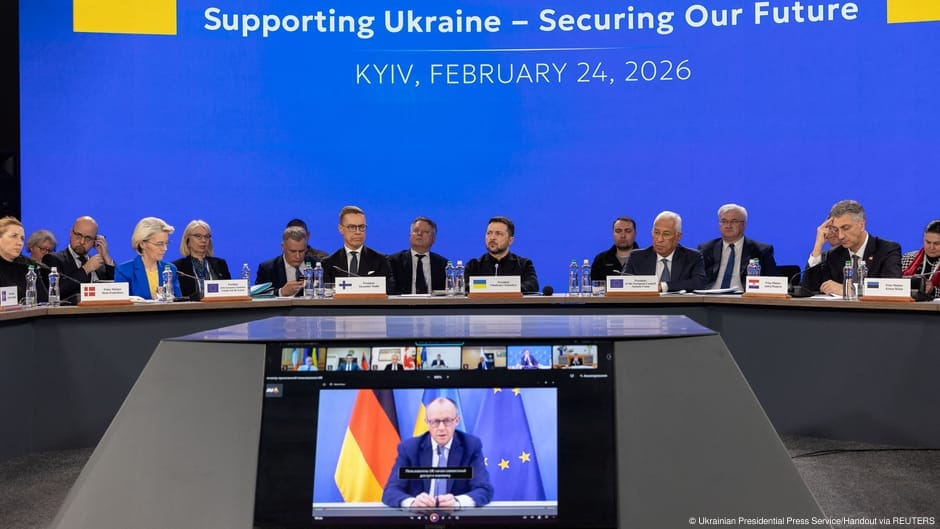
European defense spending and sovereign financing are moving into sharper focus as leaders from 37 countries prepare to meet in Berlin on November 19 for talks on Ukraine and European security.
The meeting of the so-called coalition of the willing is expected to bring together mainly heads of state and government, alongside leaders from the European Union and NATO. For capital markets, the central questions concern the durability of military assistance, the financing of new commitments and the potential implications for European defense companies and government borrowing.
The agenda includes support for Kyiv’s air defenses and coordination following a recent meeting between negotiators in Abu Dhabi. A key financial foundation is NATO members’ commitment to provide €140 billion in military aid during 2026 and 2027, together with a €90 billion EU loan to support Ukraine over the same period.
Security Commitments Carry Fiscal and Equity Implications
Thomas Röwekamp, chairman of the German Bundestag’s defense committee, said Ukraine must be able to negotiate from a position of strength. Speaking to the Rheinische Post ahead of the Berlin gathering, he argued that Kyiv should not be pushed into territorial concessions while Russia achieves at least part of its military objectives.
“A peace that rewards Putin for his war of aggression would not be peace, but an invitation to the next aggression,” Röwekamp said.
He said continued military support and reliable security guarantees were necessary to strengthen Ukraine’s negotiating position, adding that Europe must act confidently and in unity.
For investors, that stance reinforces expectations that European defense expenditure will remain elevated even if direct negotiations between Russia and Ukraine advance. The scale and structure of procurement will matter for listed defense contractors and their suppliers, while the allocation of costs among governments and European institutions will remain relevant to sovereign bond markets.
The Berlin format is intended to ensure close coordination among Ukraine’s partners and support further direct talks between Moscow and Kyiv, with active participation from the United States and European countries. Markets will therefore be attentive to whether leaders provide greater clarity on the timing of aid, the mechanisms behind the EU loan and the division of financial responsibilities.
Berlin Seeks a Unified European Signal
Marie-Agnes Strack-Zimmermann, chair of the European Parliament’s defense committee, welcomed the initiative to hold the negotiations in Berlin. She told the Rheinische Post that she strongly supported the federal chancellor’s decision to convene the meeting at the Chancellery.
She described the gathering as an important signal to Russia and China that Germany and Europe would not stand by while others claimed the right to make decisions concerning European territory.
The summit is being held at the invitation of German Chancellor Friedrich Merz, French President Emmanuel Macron and Prime Minister Andy Burnham. Its theme is “United for Peace in Ukraine and European Security.” France, the United Kingdom and Germany serve as co-chairs of the coalition.
The group has existed since spring 2025. Its most recent in-person meeting took place in Paris on July 13, followed by a hybrid meeting on August 24.
Regular participants include European Council President António Costa, European Commission President Ursula von der Leyen, EU foreign policy chief Kaja Kallas and NATO Secretary General Mark Rutte. Their presence places EU-level financing and NATO military coordination within the same political framework.
Investors Await Details on Funding and Implementation
No specific market reaction was cited ahead of the summit, but the meeting brings together several issues with direct relevance for investors. Defense shares are sensitive to the duration and scale of procurement commitments, while bond investors must assess how national governments and EU institutions will fund security and reconstruction-related obligations.
The €140 billion military-aid commitment and €90 billion EU loan cover the same two-year period, making implementation schedules particularly important. Faster disbursement could support defense-sector order books and industrial capacity, while also increasing near-term financing requirements. A slower timetable could spread the fiscal impact but delay the operational support sought by Kyiv.
The talks also carry broader risk implications. Progress toward credible negotiations could affect geopolitical risk assessments, energy expectations and sentiment toward European assets. At the same time, officials’ insistence on negotiating from strength suggests that political support for continued military expenditure remains central to the coalition’s approach.
Berlin police have announced unprecedented security measures in the German capital’s government quarter, reflecting the senior level of the attendees. Investors will look beyond the symbolism for concrete language on air-defense support, financing arrangements and the next diplomatic steps after Abu Dhabi.
Any additional commitments could sharpen the market distinction between defense-sector beneficiaries and governments facing greater borrowing needs. Conversely, a coordinated framework with clearly distributed costs could reduce uncertainty over Europe’s medium-term security financing. The immediate focus will be on whether the coalition converts its message of unity into detailed, fundable measures.



