Bundeswehr Alters Lithuania Tank Route to Avoid Tensions With Russia
German tanks will travel by rail rather than driving through Poland as investors monitor geopolitical risks around NATO’s eastern flank.
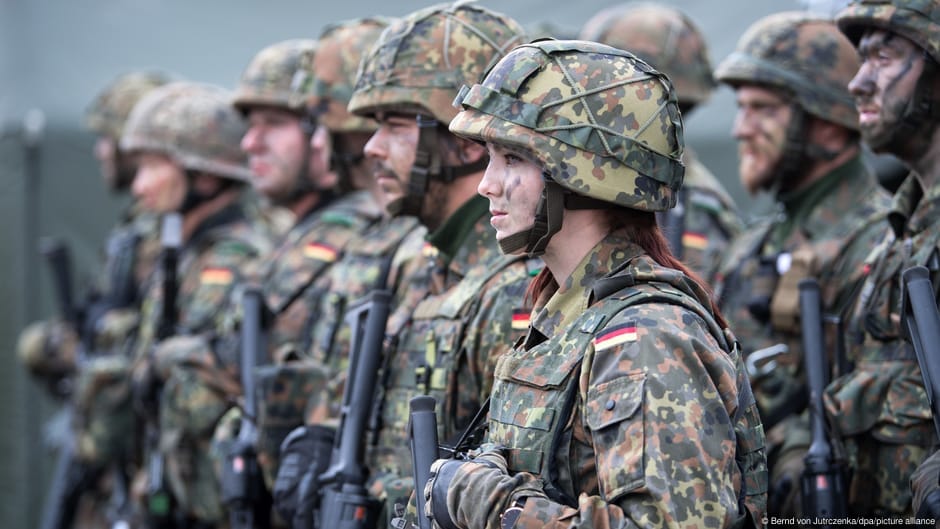
Germany’s Bundeswehr has changed how it will move tanks to military exercises in Lithuania, opting for rail transportation instead of driving the vehicles through Poland in an effort to avoid provoking Russia, according to the German tabloid Bild.
The equipment is being deployed for the “Grand Eagle 26” exercises. Bild, citing sources in the security services, reported during the night of Sunday, November 22, that the tanks would no longer travel under their own power across Polish territory. The revised logistics plan will instead place them on trains for the journey to Lithuania.
For capital-markets investors, the decision highlights the sensitivity surrounding military movements near NATO’s eastern frontier. The report did not identify any immediate reaction in European equities, government bonds, currencies or defense stocks. Even so, changes in the visibility and presentation of troop deployments can matter to markets because investors closely watch developments that could either intensify or contain geopolitical tensions involving Russia, Belarus and NATO members.
Berlin Frames Rail Transfer as Routine Readiness
According to Bild’s sources, the transportation change was intended to avoid provoking Moscow. They argued that images of German tanks moving toward the Baltic region near the Belarusian border could provide a propaganda opportunity for Russian President Vladimir Putin.
“Images of German tanks moving toward the Baltics near the border with Belarus would be a propaganda gift for Putin,” Bild’s sources said.
Germany’s Defense Ministry offered a more operational explanation when responding to journalists. It said that changing the mode of transportation was not unusual and needed to be practiced because such flexibility must also be available in the event of a real threat.
That distinction is relevant for investors assessing whether the move represents a reduction in military commitment or simply a less conspicuous method of executing the same deployment. Based on the ministry’s explanation, the tanks are still being sent to Lithuania and the exercise is proceeding. The alteration concerns transportation rather than the announced scale or purpose of the maneuvers.
Rail transport also forms part of the broader logistical capacity required to move heavy equipment across Europe. In market terms, the episode underscores that European security planning involves not only defense budgets and military procurement but also transport networks capable of supporting large deployments. The source report, however, provided no information about contracts, spending changes or financial beneficiaries connected with the revised route.
Large Exercises Keep Eastern Europe in Investor Focus
Reuters previously reported that the Bundeswehr had moved more than 2,000 military personnel through Poland as part of the exercises, together with about 50 tracked vehicles and 650 wheeled vehicles. Bild gave somewhat different figures, reporting that approximately 1,800 troops and more than 750 pieces of equipment were participating.
At the same time, the Bundeswehr’s 45th Armored Brigade is conducting the “Freedom Shield 26 II” exercise. More than 6,000 service members are involved across the two maneuvers in Lithuania, according to the source article.
The scale of the activity keeps NATO’s Baltic posture relevant for investors with exposure to European markets. Geopolitical developments can influence demand for perceived safe assets, expectations for public spending and valuations across the defense sector. They can also affect risk premiums applied to businesses operating in countries close to Russia or Belarus. No such price movements were specified in the report, and the transportation decision alone does not establish a change in the underlying security outlook.
Instead, the episode presents a mixed signal. Germany is continuing a substantial military exercise and practicing the movement of heavy equipment, demonstrating operational commitment in Lithuania. At the same time, officials are avoiding imagery that could be used to escalate rhetoric or shape public perceptions of the deployment.
Investors will therefore be watching for evidence that the logistical adjustment remains a routine military decision, as the German Defense Ministry indicated, rather than the beginning of a broader change in NATO activity. Any subsequent official statements from Berlin, Warsaw, Vilnius or Moscow could prove more consequential for European risk sentiment than the method used to transport the tanks.



