Central Bank Holds Key Rate at 14% Amid Persistent Inflation and External Risks
Despite declining inflation, the Central Bank maintains its key interest rate at 14% due to rising food prices and external economic uncertainties.
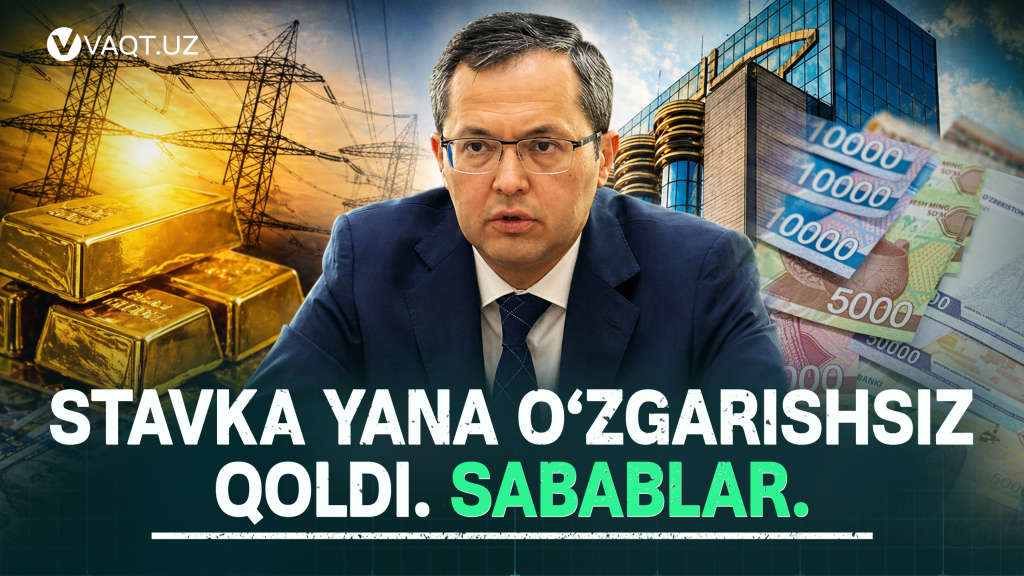
On April 29, the Central Bank's board decided to keep the key interest rate steady at an annual rate of 14%. This decision reflects a careful assessment of current economic conditions, inflation trends, and external risks facing the economy.
Inflation Dynamics and Monetary Policy Implications
According to official data, overall inflation is trending downward, with annual inflation at 7.1% as of March 2024. Inflation expectations are also easing, signaling a positive outlook for price stability. However, the Central Bank remains cautious due to the rapid increase in food prices. Essential consumer goods continue to experience above-average price growth, posing risks to overall inflation.
Central Bank Governor Temur Ishmetov emphasized that the board considered only one option during the meeting—the retention of the current rate. Although inflation is declining, the process has slowed and is not uniform across all sectors, particularly in food prices.
"While inflation is on a downward trajectory, its deceleration and uneven impact on key sectors like food necessitate a cautious approach," Governor Ishmetov stated.
Energy tariffs and utility costs are crucial factors in inflation calculations. Although tariff indexation of up to 10% was announced at the beginning of the year, exact adjustments have yet to be confirmed, leaving uncertainty in inflation forecasts.
External economic conditions continue to exert pressure. The International Monetary Fund has downgraded global growth forecasts and highlighted ongoing inflation risks, especially in energy and food prices. These external shocks could impact domestic markets and inflationary pressures.
Notably, the economy grew by 8.7% in the first quarter, exceeding expectations. This robust growth may stimulate domestic demand, potentially increasing inflationary pressures, which factored into the Central Bank's decision-making.
Market and Currency Policy Considerations
The Central Bank is also overseeing the ongoing privatization of state-owned banks such as Sanoatqurilishbank, Aloqabank, and Asakabank. While the Bank does not directly participate, it is involved in evaluation and analysis processes, signalling reforms in the financial sector.
Regarding foreign exchange policy, the regulator remains committed to a free-floating exchange rate regime, maintaining a strict stance against artificial intervention in the currency market.
The Central Bank indicated that future monetary policy adjustments will depend significantly on inflation and risk developments. Should inflationary pressures ease, a rate reduction could be possible. Conversely, if inflation risks persist, further tightening of monetary policy is likely.
For investors, the decision to maintain the key rate at 14% suggests continued caution by the Central Bank amid inflation volatility and external uncertainties. Equities and bond markets may face pressure from sustained high borrowing costs, while currency stability is prioritized to reduce additional market risks.