German Youth Protests Turn Violent, Adding to Investor Risk Watch
Unrest across major German cities puts public spending, retail disruption and political stability under closer investor scrutiny.
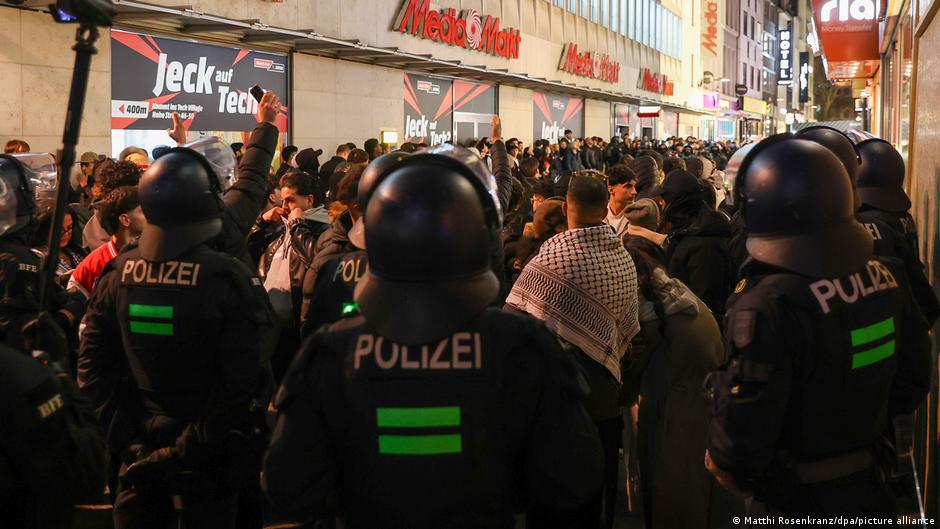
Youth demonstrations across Germany descended into disorder on Saturday, October 31, as clashes with police, vandalism and looting disrupted several major urban centers. For capital-markets investors, the unrest adds a new political and operational risk to monitor in Europe’s largest economy, particularly as protesters challenge government policies on living costs, social spending, climate action and military service.
The demonstrations were organized by the Gen-Z regelt movement, whose name translates as “Generation Z Decides.” Events took place in more than 30 German cities and attracted more than 100,000 participants, according to organizers. Protesters called for better education, action against the rising cost of living, stronger climate protections and easier access to psychotherapy and addiction treatment. Organizers also opposed compulsory military service and reductions in social expenditure.
Those demands touch several areas closely watched by investors, including public finances, consumer purchasing power, labor conditions and the policy outlook for Germany’s energy transition. The source reported no specific reaction in equities or bonds, but the scale and geographic reach of the demonstrations may increase scrutiny of fiscal choices and domestic political stability.
Frankfurt Disorder Creates a Financial-Center Flashpoint
In Frankfurt, Germany’s principal financial hub, a demonstration that began peacefully with between 8,000 and 9,000 participants developed into looting and attacks on police. Some protesters smashed shop windows and threw Molotov cocktails at officers. An aggressive group entered a gun shop as well as a Snipes clothing and sneaker store. Police recovered two weapons from those who attacked the gun retailer.
Hesse Interior Minister Roman Poseck said approximately 100 violence-prone left-wing extremists embedded among the demonstrators were responsible for the disorder. Police checked the identity documents of roughly the same number of people and detained more than 30.
Authorities brought the unrest under control closer to nightfall after deploying water cannon, armored police vehicles, a helicopter and drones. Police also closed part of Frankfurt’s city center, creating direct disruption to retail activity and movement in one of Germany’s most economically important urban districts.
“Those who behave like the perpetrators in central Frankfurt place themselves outside our society,” Hesse Premier Boris Rhein said.
Rhein said authorities would thoroughly analyze the aggressors’ actions, the composition of the offending groups and the sequence of events before drawing conclusions. For businesses and investors, that review may help determine whether the incidents remain a short-lived public-order problem or lead to a broader security and policy response.
Arrests and Police Injuries Reported in Berlin
In Berlin, one of two large demonstrations also turned into disorder. The event attracted about 3,500 people, predominantly members of far-left groups. Some participants threw firecrackers and bottles toward police and set off fireworks. Authorities also reported property damage and violations of weapons legislation.
Police detained 56 people, while 27 officers sustained minor injuries. Although no financial-market response was cited, repeated unrest in the German capital could sharpen attention on political fragmentation and the government’s ability to reconcile demands for additional social support with competing budget priorities.
Cologne authorities prohibited protesters from holding a march and allowed only a stationary gathering after some demonstrators wore face coverings and used pyrotechnics, including devices thrown at police. Officers deployed water cannon toward the end of the event.
In Hamburg, some protesters built and set fire to barricades during the evening and threw bottles and stones at police. Demonstrations ended in similar fashion in Stuttgart and Bremen, extending the disturbances beyond Germany’s two largest political and financial centers.
European Protest Wave Broadens the Risk Picture
The October 31 German protests formed part of a wider wave of youth demonstrations that had spread across other European countries in recent weeks. In France, protests in multiple cities developed into riots and confrontations with police. Belgium was also affected.
Italy faced a similarly difficult situation. Organizers said more than one million people participated in protests there on October 30. Earlier, following severe rioting in Milan, Italian authorities ordered the deployment of 500 military personnel to maintain public order.
The cross-border nature of the unrest makes it more relevant for investors with exposure to European equities, sovereign bonds, consumer companies and urban retail assets. The demonstrations combine immediate operational risks—such as store damage, restricted access and higher security requirements—with political demands that could influence government expenditure and fiscal debate.
Still, the events alone do not establish a lasting market trend. Investors will be watching whether participation continues at comparable levels, whether violence remains concentrated among relatively small groups, and whether governments respond through new social commitments, tighter security measures or both. Those choices could shape perceptions of fiscal flexibility and political risk across Europe.



