Kyiv Power Crisis Raises Infrastructure Risks for Ukraine Investors
A public dispute between President Volodymyr Zelensky and Kyiv Mayor Vitali Klitschko highlights the economic risks from energy disruption.
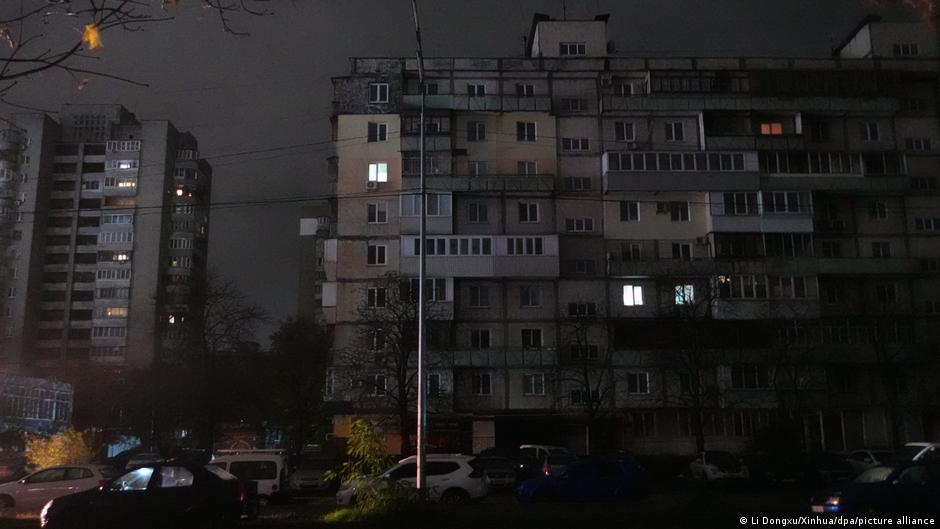
Ukraine’s worsening electricity crisis has exposed a dispute between the national government and Kyiv’s municipal leadership, adding political and infrastructure uncertainty to the risks confronting investors with exposure to the country.
President Volodymyr Zelensky on Friday, November 6, criticized Kyiv Mayor Vitali Klitschko over prolonged interruptions to electricity and water supplies following Russian attacks. Zelensky said preparations had failed at the municipal level and linked the disruption to decisions that were not implemented before the heating season.
“At the city level, preparations failed,” Zelensky said in his evening address.
The president said the outages were effectively the result of failures to carry out city-level preparations for the heating season and for Russia’s operation against Ukrainian energy infrastructure. He added that the government had discussed with energy companies the need to deploy additional repair crews and accelerate infrastructure restoration.
Klitschko responded several hours later, rejecting the suggestion that Kyiv’s authorities could have prevented a Russian campaign targeting the energy system. In a post on Telegram, the mayor asked how the capital was supposed to have stopped what Zelensky described as a Russian special operation against Ukrainian energy infrastructure. He also questioned why Kyiv representatives had not been invited to meetings at which the capital’s preparedness and response were discussed.
Energy Damage Deepens the Investment Risk
For capital markets, the dispute underscores that Ukraine’s economic outlook depends not only on generating enough electricity but also on maintaining the networks, transformers and distribution equipment required to deliver it. Damage to those assets can constrain industrial activity, commercial operations and household consumption even where generation remains sufficient.
Zelensky said Russia’s tactics involved destroying electricity networks, transformers and switchgear. As a result, he said, some regions continued to face shortages despite adequate generation. Repairs, and particularly the speed at which they can be completed, were therefore critical.
The source account did not identify specific moves in Ukrainian equities, sovereign bonds or foreign exchange following the political exchange. Nevertheless, persistent outages represent a material issue for investors assessing corporate earnings, government financing requirements and the durability of essential infrastructure. Companies operating in affected regions may face interrupted production, higher backup-power costs and weaker demand, while the state may need to devote additional resources to repairs and emergency support.
The confrontation may also draw attention to coordination between central and municipal authorities. Investors evaluating reconstruction-related opportunities typically need clarity over responsibility for procurement, financing and execution. Public disagreement over who failed to prepare Kyiv could complicate perceptions of administrative capacity at a time when rapid deployment of repair teams is essential.
Klitschko Challenges Central Government Narrative
Klitschko emphasized that Ukraine operates a single interconnected energy system. When that system is being damaged across the country, he argued, it is not possible for one area to remain fully illuminated while Kyiv alone is responsible for darkness elsewhere.
The mayor described the central government’s repeated portrayal of Kyiv as the country’s worst-performing city, along with what he called manipulation and lies, as a damaging pattern. He accused the national authorities of effectively destroying Kyiv by trying to remove him while failing to help the capital.
The exchange places domestic political tensions alongside the direct physical risks created by Russian attacks. It also highlights the challenge of assigning responsibility for outages within an integrated national grid, where damage outside the capital can affect supplies inside it.
In his November 6 evening address, Zelensky said Ukraine’s response to the intensified Russian attacks would include bringing in more repair crews and obtaining assistance from the country’s armed forces in dealing with the consequences. That emphasis on repair capacity suggests that the near-term economic effect will depend heavily on how quickly damaged transmission and distribution assets can return to service.
In recent weeks, the Russian military has intensified missile and drone strikes against Ukraine’s energy infrastructure. Millions of Ukrainians have been forced to endure autumn cold without heating and have also experienced disruptions to electricity and water supplies.
For investors, the immediate issue is the duration and geographic reach of those interruptions. Longer outages can increase operating costs, weaken business continuity and add pressure to public finances. Faster repairs could limit those effects, but the public clash between Zelensky and Klitschko shows that the response is unfolding amid disagreement over preparedness, authority and government support for the capital.



