North Korea Missile Launch Adds Geopolitical Risk for Asia Market Open
South Korea said Pyongyang fired at least one ballistic missile toward the Sea of Japan after a border blast raised tensions.
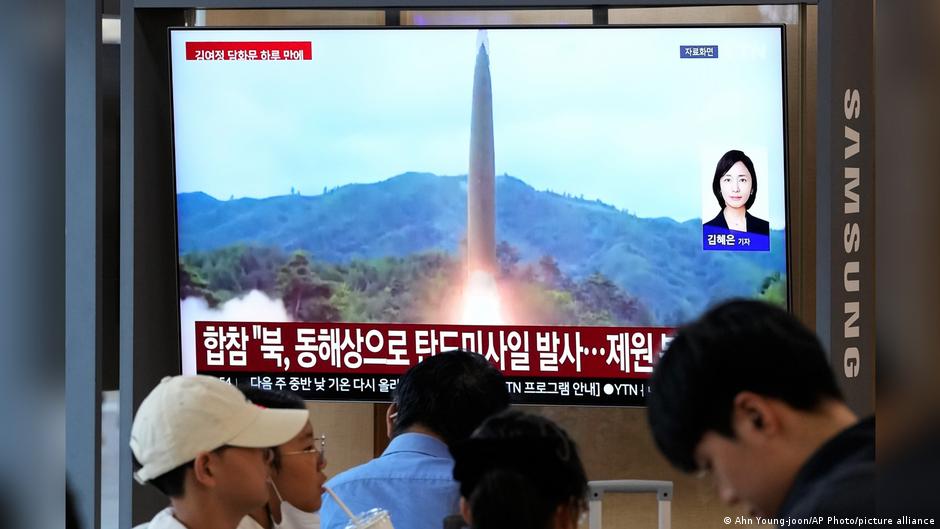
North Korea fired at least one ballistic missile toward the Sea of Japan, South Korea’s military said on Saturday, adding a fresh geopolitical risk point for investors already monitoring security tensions on the Korean Peninsula.
The statement from South Korea’s Joint Chiefs of Staff said Seoul, Washington and Tokyo were maintaining a high level of readiness while closely sharing information on North Korean ballistic missiles. The launch followed a separate incident in the inter-Korean border area on September 21, when an explosion injured three South Korean soldiers.
For capital markets, the immediate significance is not only the launch itself but the sequence of events around it. Seoul has accused Pyongyang of violating the armistice after the border blast, while North Korea has rejected the allegation. The dispute returns military risk to the foreground for investors exposed to South Korean equities, regional currencies, government bonds and Asia-Pacific risk assets.
“South Korea, the United States and Japan maintain a high level of combat readiness, while maintaining close information exchange on North Korean ballistic missiles,” Seoul said.
Market Focus Turns to Korean Assets
South Korean assets often trade with an embedded geopolitical discount because the country remains technically at war with North Korea. The Korean War ended in 1953 with an armistice agreement, not a formal peace treaty, and the two states are separated by the demilitarized zone, one of the world’s most fortified and heavily mined borders.
That background matters for investors because missile launches can quickly shift attention toward defense risk, currency hedging and safe-haven positioning. Equity investors tend to watch exporters, banks, technology groups and travel-related names for signs of risk aversion. Bond investors monitor whether geopolitical stress encourages demand for high-quality government debt, while currency traders assess whether regional tensions weigh on the won or push capital toward perceived havens.
The latest launch came after South Korea’s military said the September 21 blast in the border area was believed to have resulted from the detonation of North Korean anti-personnel mines, according to AFP, citing South Korean military sources. Three South Korean servicemen were injured in that incident.
South Korean Defense Minister Kang Shin-chul accused Pyongyang of violating the armistice and said Seoul intended to take responsive measures. The Joint Chiefs of Staff demanded that North Korea apologize.
North Korea denied the accusations. Kim Yo Jong, the sister of North Korean leader Kim Jong Un, described the South Korean claim as “extremely low and dirty,” according to North Korea’s state news agency KCNA.
Why Investors Are Watching the Escalation Path
For investors, the key question is whether the missile launch remains a contained military signal or becomes part of a broader cycle of retaliation and countermeasures. The article’s factual record points to a compressed series of events: a September 21 border explosion, South Korea’s accusation that the blast involved North Korean mines, Seoul’s allegation of an armistice violation, North Korea’s rejection of that claim, and now a ballistic missile launch toward the Sea of Japan.
That sequence can affect market psychology even before there is a measurable change in economic fundamentals. South Korea is deeply integrated into global supply chains, including technology and manufacturing. Any renewed security concern can therefore ripple through investor assumptions about regional production continuity, foreign capital flows and risk premiums on Korean assets.
At the same time, markets have historically distinguished between North Korean weapons tests that remain limited and developments that suggest a higher probability of direct conflict. The information available from Seoul’s statement identifies at least one ballistic missile launch and a heightened readiness posture by South Korea, the United States and Japan. It does not provide details on market moves, launch range, impact zone or damage.
That absence of additional data may keep investor reaction tied to subsequent official statements. Traders will be looking for updates from Seoul, Washington and Tokyo, including any clarification on the missile trajectory, defense response and whether further military measures are planned.
The geography of the launch also matters. The Sea of Japan has often been a focal area for North Korean missile activity, and any event in that direction draws attention from both South Korea and Japan. For investors in Japanese equities and bonds, the reaction can depend on whether the episode is seen as a routine escalation or a more serious shift in regional security risk.
In fixed income, geopolitical headlines can support demand for lower-risk assets if investors move defensively. In equities, defense-related shares may attract attention, while broader regional indices can face pressure if the situation appears to be worsening. Currency markets may be especially sensitive because security headlines can overlap with global risk appetite and central-bank expectations.
The structural issue remains unchanged: the Korean Peninsula is still governed by an armistice framework rather than a peace treaty. The demilitarized zone separating the two Koreas includes a demarcation line running through a mined strip. That reality means military incidents can quickly gain political and financial significance, even when immediate economic disruption is not reported.
For today’s investors, the launch is a reminder that geopolitical risk in Northeast Asia remains live and can reprice quickly across equities, bonds and currencies. The next market impact will depend less on the headline of a single missile launch than on whether the latest exchange hardens into a more sustained confrontation.