Putin’s Nuclear Rhetoric Adds Geopolitical Risk for Global Markets
The Russian president’s Valdai remarks sharpened investor focus on geopolitical risk, defense exposure and the fragile backdrop for European assets.
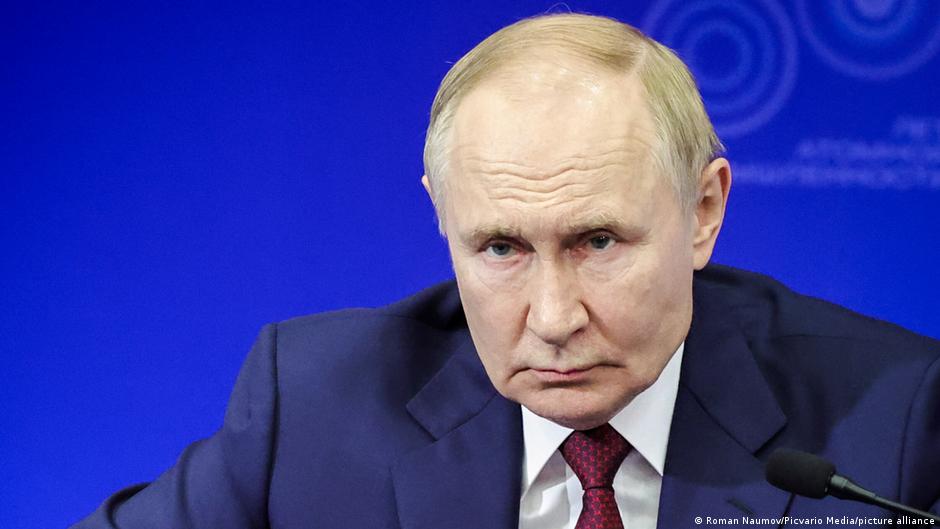
Russian President Vladimir Putin used a high-profile foreign policy forum to accuse the West of provoking the war in Ukraine and to again raise the possibility of a scenario with catastrophic global consequences, adding another layer of geopolitical uncertainty for investors already watching the conflict’s impact on European markets, defense spending and sovereign risk.
Speaking at the plenary session of the Valdai Discussion Club on Thursday evening, October 1, Putin described the situation in Europe and the wider world as “very dangerous” and repeated allegations that Western countries were acting aggressively toward Moscow. This year’s Valdai meeting was moved from Sochi to the Moscow region, where Russia has concentrated more air-defense assets, because of concerns over possible Ukrainian attacks, according to the Russian-language source citing the Financial Times.
For capital markets, the remarks matter less as a single-day trading signal than as another reminder that the war remains a durable source of headline risk. Nuclear language from the Kremlin can affect risk appetite, European equities, energy-sensitive assets, defense stocks and bond markets, particularly when investors are already pricing political uncertainty, higher military budgets and persistent pressure on public finances.
Nuclear Warnings and Market Risk
Putin said a number of countries possess weapons “capable of destroying all living things” and, when posing to himself the question of whether he was confident such weapons would not be used, answered in the negative. He compared nuclear weapons to a gun hanging on a theater stage that, according to dramatic convention, is supposed to fire.
“If we want to live — and everyone wants to live — let us live together peacefully,” Putin said, while warning that further escalation could leave neither school textbooks nor those who would study from them.
The comment amounted to another hint at the possibility of nuclear catastrophe, even as Putin added that the task was to ensure that “this gun” does not fire. For investors, that combination of threat and restraint is familiar: the Kremlin signals escalation risk while leaving room for ambiguity. Such language can weigh on sentiment in European markets and support demand for perceived havens, including high-quality government bonds, depending on the broader market context.
Markets have repeatedly absorbed nuclear warnings since Russia’s full-scale invasion of Ukraine, but investors continue to monitor them because tail risks can reprice quickly. The key issue for portfolio managers is not whether rhetoric alone changes fundamentals, but whether it alters assumptions about the duration of the war, the scale of Western support for Ukraine, and the probability of direct confrontation between Russia and NATO countries.
War Claims and Investor Implications
Addressing the war in Ukraine, now in its fifth year, Putin again claimed that Russia did not start the war and that Moscow’s invasion of Ukrainian territory was a response to the actions of NATO and Ukraine. He asserted that “we did not want and did not start the fighting,” claiming instead that Russia had been attacked first.
Putin alleged that the West had for years encouraged “aggressive nationalism and Russophobia” in Ukraine in order to turn the country into an “instrument” against Russia. He also claimed that “radicals in Kyiv” had been pushed toward a “state coup” and that NATO had intended to place bases on what he called Russia’s “historical territories.” He renewed accusations of aggressive Western intentions.
Those claims form part of Moscow’s longstanding justification for the invasion, but for investors the material question is how such statements affect prospects for negotiation. A speech that frames the war as defensive and existential may reduce confidence in a near-term diplomatic breakthrough. That can keep geopolitical risk premia embedded in European assets and sustain pressure for higher defense outlays across the region.
Putin also commented on the battlefield, saying Russian forces had allegedly captured 3.5 times more territory over the past month than in the previous month. He claimed Russia now controls 89% of Donetsk region. The source article notes that, according to the Institute for the Study of War, Russia currently controls 81% of Donbas.
Several days earlier, Kyiv said that during three seasons of its counteroffensive operation “Vivaldi,” Ukrainian forces had retaken 176 square kilometers of Ukrainian territory. Putin, however, again expressed confidence at Valdai that Russia would capture all of those territories and said there was no point in Ukraine holding on to them.
Defense, Technology and European Assets
The speech also touched on artificial intelligence and military command. Putin called for a new convention on the conduct of hostilities, citing the rapid development of AI technologies. He referred to the case of Soviet officer Stanislav Petrov, who in 1983 did not give an order to launch a nuclear strike even though, according to protocol, he was obliged to do so. Putin suggested artificial intelligence would have acted differently.
That argument connects battlefield technology to strategic risk, a theme increasingly relevant for defense contractors, cybersecurity firms and investors in military technology. The war has accelerated attention to drones, electronic warfare, AI-enabled targeting and air defense, all areas that can shape procurement decisions and equity valuations in the defense sector.
Putin also said Russia would “not necessarily” strike military enterprises in Europe, but would “track threats.” He said Moscow considers the participation of Western countries in strikes on Russian territory to be a direct threat. Such remarks keep European defense and infrastructure risk in focus, particularly for companies linked to arms production, logistics, aerospace and energy security.
The relocation of the Valdai meeting itself underscored the security backdrop. The event was moved from Sochi to the Moscow region because Russia has more air-defense systems concentrated there. The Financial Times, cited by the source article, reported that the move reflected safety concerns amid intensified Ukrainian attacks, based on four sources. Two of those sources said the relocation happened at the insistence of Putin’s security service.
For investors today, the message is that geopolitical risk remains active rather than theoretical. Putin’s remarks do not provide a clear market timetable, but they reinforce themes already shaping capital allocation: elevated defense spending, fragile European confidence, sensitivity in energy and infrastructure assets, and the possibility that bonds regain haven demand during episodes of escalation fear.