South Korea’s Warning to Ukraine Adds Geopolitical Risk for Investors
Seoul’s threat of further measures against Kyiv puts defense policy, regional diplomacy and investor risk appetite back in focus.
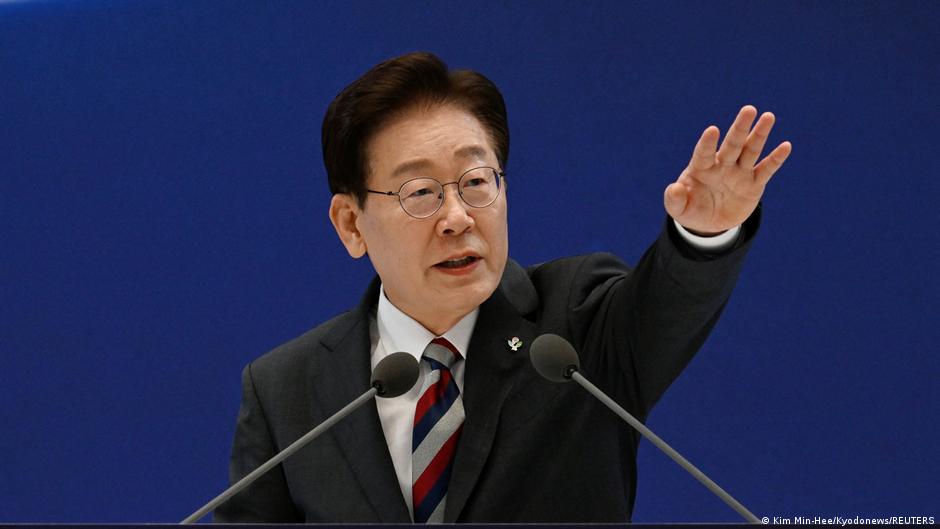
South Korea’s escalating diplomatic dispute with Ukraine has added a fresh geopolitical variable for investors already tracking the war’s impact on defense spending, energy security and Asian market risk. President Lee Jae Myung warned that Seoul would take “further measures” if Kyiv refuses to publicly acknowledge what South Korea says was a confidentiality agreement covering the transfer of two captured North Korean soldiers and does not issue an apology.
Lee did not specify what those measures would be. But the dispute matters for markets because South Korea is a major export economy, a key U.S. ally in Asia and an increasingly important defense manufacturer at a time when NATO countries and Ukraine’s partners are reassessing military supply chains. Any deterioration in Seoul’s relations with Kyiv could complicate expectations around South Korean support for Ukraine, particularly as some Western governments have urged Seoul to consider supplying lethal weapons.
“If recognition of the facts and a public apology continue to be rejected, we will take further measures,” Lee wrote on X, calling the issue “a matter of honor for the Korean people and state.”
The market implications are indirect but meaningful. Investors in South Korean equities, sovereign bonds and defense contractors are sensitive to signs that Seoul’s foreign policy could become more exposed to the Ukraine war or to tensions with North Korea. The won, Korean government bonds and shares of defense-linked companies can all react to changes in perceived geopolitical risk, even when the initial trigger is diplomatic rather than military.
Defense Stocks and Policy Risk
South Korea has so far supplied Ukraine mainly with non-lethal military equipment, including demining gear. Reuters has noted that some Western countries have recently pressed Seoul to provide lethal weapons as well. That debate is closely watched by investors because South Korean defense groups have become central to the global rearmament cycle, with buyers in Europe and elsewhere looking for faster production timelines and large-scale deliveries.
A sharper split with Kyiv could create uncertainty around whether Seoul leans further into Ukraine-related defense cooperation or pulls back to protect its North Korea policy. Either path carries consequences. A more assertive stance could support expectations for defense exports and strategic alignment with the West, while also increasing headline risk tied to Pyongyang. A more cautious approach could limit near-term diplomatic friction with North Korea but disappoint investors expecting deeper South Korean participation in Ukraine’s defense supply network.
The dispute began after Ukrainian President Volodymyr Zelensky said at the United Nations General Assembly in late September that Kyiv had handed over two North Korean prisoners of war to South Korea. Seoul then sharply criticized Kyiv, arguing that public disclosure could endanger the prisoners’ relatives in North Korea and negatively affect relations between Seoul and Pyongyang. First Vice Foreign Minister Park Yoon-joo said Kyiv’s denial of a confidentiality agreement undermined mutual trust and demanded official explanations and an apology.
Ukrainian presidential communications adviser Dmytro Lytvyn said there had been no agreement between Kyiv and Seoul barring disclosure of information about the prisoners’ fate. South Korea’s presidential office expressed “deep regret” over those remarks.
Bonds, Currency and Regional Risk
For fixed-income investors, the dispute is part of a broader risk map rather than a standalone driver. South Korean government bonds are influenced primarily by domestic inflation, Bank of Korea policy expectations and global rates. Still, periods of heightened tension involving North Korea can push investors toward safer assets and weigh on local risk sentiment. A diplomatic clash that touches both Ukraine and North Korea therefore deserves attention, especially if Seoul’s promised “further measures” become concrete.
Currency investors may also watch the won for any signs of pressure if geopolitical headlines intensify. South Korea’s currency is often treated as a liquid proxy for global trade sentiment and Asian risk appetite. While a diplomatic disagreement with Ukraine alone may not move foreign exchange markets materially, the North Korea dimension raises the sensitivity of investors to follow-on statements from Seoul, Kyiv, Washington and Pyongyang.
Political analysts also see domestic complications for Lee’s administration. Shin Yul, a political science professor at Myongji University, told AFP that Seoul’s approach to the dispute with Ukraine could prove problematic in the context of South Korean domestic politics, given the current administration’s restrained position toward its nuclear-armed northern neighbor.
Ukraine’s Foreign Minister Andrii Sybiha has sought to lower the temperature. Speaking to journalists in Kyiv hours before Lee’s post, he said Ukraine is interested in resolving the dispute quickly and continuing cooperation with Seoul. He said he did not want to call it an incident, describing it instead as a “diplomatic misunderstanding.” Sybiha also said he had been speaking daily in recent days with his South Korean counterpart and hoped the matter would be settled soon.
“For us, South Korea is an important country,” Sybiha said, adding that Ukraine wants continued momentum and concrete results in its relationship with Seoul.
The timeline remains important for investors assessing escalation risk. On September 28, South Korea’s Yonhap news agency reported that the Foreign Ministry had summoned Ukraine’s ambassador over Kyiv’s disclosure of information about the North Korean prisoners. On September 30, AFP reported, citing South Korean lawmaker Youn Kun-young, that both prisoners had arrived in South Korea in mid-September. After questioning and security checks, authorities in Seoul are expected to decide whether to grant them protection and begin a resettlement process.
The broader war context continues to shape the market backdrop. Zelensky wrote on social media last week that, according to his information, about 8,000 North Korean troops are currently in Russia and another 10,000 are preparing to be sent there and onward to the war against Ukraine. That claim, if it remains central to diplomatic discussions, reinforces the link between the European battlefield and security risk in Northeast Asia.
For investors today, the immediate signal is not panic but caution. The dispute has not yet produced specific sanctions, trade steps or defense-policy changes from Seoul. But Lee’s warning raises the probability of further announcements, and those could affect sentiment toward South Korean assets, Ukraine-related defense exposure and broader geopolitical risk pricing. Markets will be watching whether Kyiv offers language that Seoul can treat as an apology, or whether the disagreement becomes another pressure point in an already crowded global risk environment.