Russia Extends Strikes on Kyiv as War Risk Remains Central for Markets
Overnight missile and drone attacks followed daytime strikes in central Kyiv, keeping geopolitical risk firmly in view for investors.
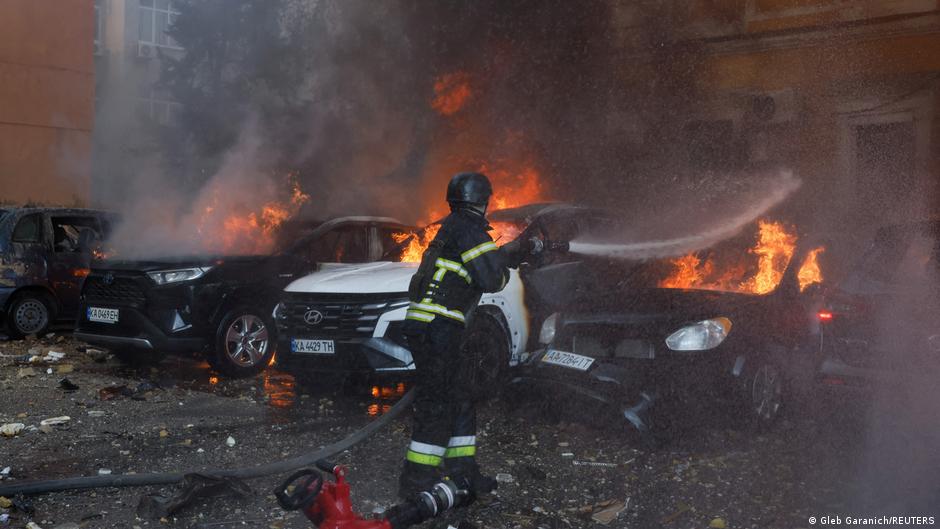
Russia continued its attacks on Kyiv overnight into Tuesday, September 29, extending a day of strikes on the Ukrainian capital that included damage to civilian and institutional sites. For investors, the renewed pressure on Kyiv is another reminder that the war remains a live geopolitical risk for European markets, sovereign debt, energy pricing and broader risk appetite.
Kyiv Mayor Vitali Klitschko said debris from a ballistic missile fell in the courtyard of a residential building in the Solomianskyi district. He said there was no fire at that location. In the Pecherskyi district, he reported a blaze in a three-story non-residential building. Klitschko later clarified that a fire had broken out in one of the buildings of an educational institution in the first district after the strike.
“In the Solomianskyi district, missile debris fell in the courtyard of a house. There is no fire. In the Pecherskyi district, there is a fire in a three-story non-residential building,” Klitschko wrote on Telegram.
No information was reported about deaths or injuries from the overnight strikes. The Kyiv City Military Administration also said a drone had fallen on a roadway. Authorities additionally reported a fire after debris fell on the roof of a five-story building in the Holosiivskyi district.
Investor Focus Stays on Escalation Risk
The overnight attacks followed daytime strikes in central Kyiv on September 28. Since the start of that day, two people were killed and 26 were wounded in the city as a result of strikes, Klitschko said. According to the mayor, eight of the injured required hospitalization, and one was in serious condition.
Both fatalities were caused by a drone strike on the building of Ukraine’s National Academy of Sciences. The attack caused a major fire, leaving people trapped inside and forcing many to escape through windows. Another Russian strike hit the building of the Dobrobut medical center.
For capital markets, the immediate question is not only the human and physical toll of the latest strikes, but whether they point to a sustained escalation around Ukraine’s capital. Investors have repeatedly had to price the war through several channels: European security risk, energy supply concerns, fiscal pressure on governments supporting Ukraine, and the resilience of companies with exposure to the region.
The latest reports from Kyiv do not include market data or official economic assessments. Still, attacks on the capital can quickly become relevant for risk assets when they raise doubts about the trajectory of the conflict or increase expectations of additional military and financial support for Ukraine. Equity investors typically watch for signs that geopolitical shocks could weigh on European cyclicals, banks, transport firms or companies exposed to energy costs. Bond investors focus on safe-haven demand, defense spending expectations and the fiscal path of European governments.
Infrastructure Damage Keeps War Premium in View
The reported targets and damage also matter for investors assessing the durability of Ukraine’s institutions and urban infrastructure. Strikes affecting an academic institution, an educational facility, a medical center, residential areas and roadways reinforce the breadth of risk facing the capital. Even when casualties are limited in a given overnight attack, damage to civilian infrastructure can add to the costs of recovery and increase pressure on municipal and national authorities.
For Ukraine-related assets and for companies involved in reconstruction, insurance, logistics and critical infrastructure, the war’s physical footprint remains central. The reported fires and debris falls underline the operational uncertainty that can persist even outside frontline areas. Investors weighing exposure to Ukraine’s recovery story must balance long-term reconstruction demand against near-term security risk and the possibility of renewed attacks on urban centers.
The absence of reported overnight casualties may limit the immediate political and market shock from the latest phase of attacks. However, the continuation of strikes after deadly daytime attacks keeps attention on the tempo of Russian operations against Kyiv. Markets tend to react most sharply when attacks suggest a widening campaign, threaten key infrastructure, or trigger policy responses from Ukraine’s partners.
For now, the core facts remain stark: Russia struck Kyiv during the day on September 28, killing two people and injuring 26, then attacked again overnight into September 29 with ballistic missile debris and a drone reported in multiple districts. Investors will be watching whether the pattern remains contained to episodic strikes or develops into a broader campaign with larger implications for European risk pricing, government bond flows and energy-sensitive equities.