Swiss Voters Reject Neutrality Curbs That Would Have Limited Sanctions
The referendum result preserves Bern’s ability to align with EU sanctions, reducing policy uncertainty for investors exposed to Swiss assets.
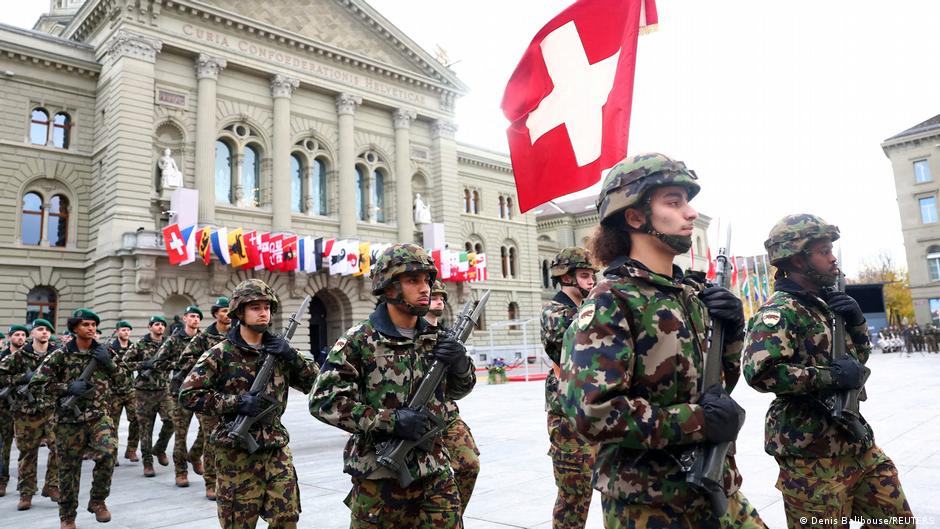
Swiss voters have rejected a proposal that would have imposed a stricter constitutional interpretation of the country’s neutrality, including major limits on the government’s ability to join sanctions against countries at war. For investors, the result keeps Switzerland on its current policy course: neutral in military terms, but still able to respond to violations of international law through economic measures aligned with partners such as the European Union.
According to official results published on the government website on Sunday, September 27, 70.15 percent of voters opposed the initiative. The proposal, titled “Preserving Swiss Neutrality,” was advanced by Pro Schweiz, an association close to the right-conservative Swiss People’s Party. Its backers argued that the Swiss government had weakened the principle of non-interference by joining EU sanctions against Russia over the war in Ukraine.
The vote matters for markets because Switzerland’s neutrality is not only a diplomatic identity but also part of the country’s investment profile. The rejection avoids a sharp legal constraint on sanctions policy that could have complicated the operating environment for banks, commodity traders, exporters and multinational companies headquartered or active in Switzerland.
Continuity For Swiss Market Policy
The initiative sought to write into the constitution the principle of “permanent and armed” neutrality. It also aimed to bar Switzerland from joining military alliances, such as NATO, or cooperating with them except in cases where Switzerland itself was attacked. Most consequential for capital markets, the measure called for a broad sanctions ban: the government would have been allowed to impose economic sanctions only after approval by the United Nations Security Council.
That provision would have marked a significant change in how Switzerland responds to geopolitical shocks. Because the UN Security Council is often divided on major conflicts, the proposed rule could have prevented Bern from joining sanctions regimes adopted by the EU or other Western partners. For companies, banks and investors, that would have raised questions about compliance, cross-border exposure and Switzerland’s relationship with key markets.
By voting down the proposal, the electorate effectively preserved the government’s current room for maneuver. Switzerland may remain outside military alliances while still applying sanctions in certain cases. That outcome is likely to be read by investors as a vote for institutional continuity rather than a turn toward a more rigid neutrality regime.
Swiss neutrality, Foreign Minister Ignazio Cassis argued during televised debates, has always been applied with a degree of “flexibility.”
Cassis also said neutrality should not be equated with “indifference.” In his view, Switzerland should not close its eyes to violations of international law in order to protect its own interests or preserve peace. That argument was supported by all major political forces in the country except the Swiss People’s Party.
Investor Focus: Sanctions, Banks And Safe-Haven Assets
The result is relevant across Swiss financial markets. Swiss equities include globally exposed companies in banking, pharmaceuticals, industrials, luxury goods and commodities-linked sectors. A constitutional bar on most sanctions could have created uncertainty over how these companies should navigate competing legal regimes, especially when dealing with counterparties in the EU, the United States and sanctioned jurisdictions.
For the banking sector, the vote helps maintain a familiar compliance framework. Swiss banks already operate under heavy scrutiny in relation to sanctions, asset freezes and international financial flows. A stricter neutrality clause could have complicated alignment with European sanctions policy and potentially invited questions from foreign regulators and correspondent banking partners.
For bond investors, the referendum result also supports the perception of Switzerland as a highly predictable sovereign issuer. Swiss government debt is prized for institutional stability, low credit risk and the franc’s safe-haven characteristics. The proposal did not directly target fiscal policy or monetary policy, but it would have introduced a constitutional shift in foreign policy with possible second-order effects for investor confidence.
The Swiss franc may also remain sensitive to broader geopolitical tensions, but the vote itself points to continuity rather than disruption. In market terms, investors often reward policy predictability, especially in small, open economies that rely on deep financial links and export access.
Food Security Measure Also Rejected
Swiss voters also rejected a separate food security initiative by more than 70 percent. Supporters of that proposal had sought to raise the share of food produced domestically to at least 70 percent of consumption, increase production of plant-based foods, reduce the use of plant protection products and fertilizers, and strengthen protections for drinking water, soil fertility and biodiversity.
Although separate from the neutrality vote, the food security proposal also carried economic implications. If adopted, it could have affected agriculture, food production, input suppliers and import patterns. Its rejection likewise suggests voters were reluctant to impose sweeping structural mandates through constitutional change.
Taken together, the referendums point to a preference for policy flexibility over rigid constitutional constraints. For capital markets, the central takeaway is that Switzerland’s current approach to sanctions, neutrality and economic regulation remains intact. That reduces near-term uncertainty for investors assessing Swiss equities, bonds and currency exposure at a time when geopolitical risk remains a central factor in portfolio decisions.