Russian Strikes Deepen Ukraine’s Energy and Infrastructure Risks
Fatal attacks in the Kyiv and Odesa regions damaged civilian assets and prompted power restrictions affecting households and industry.
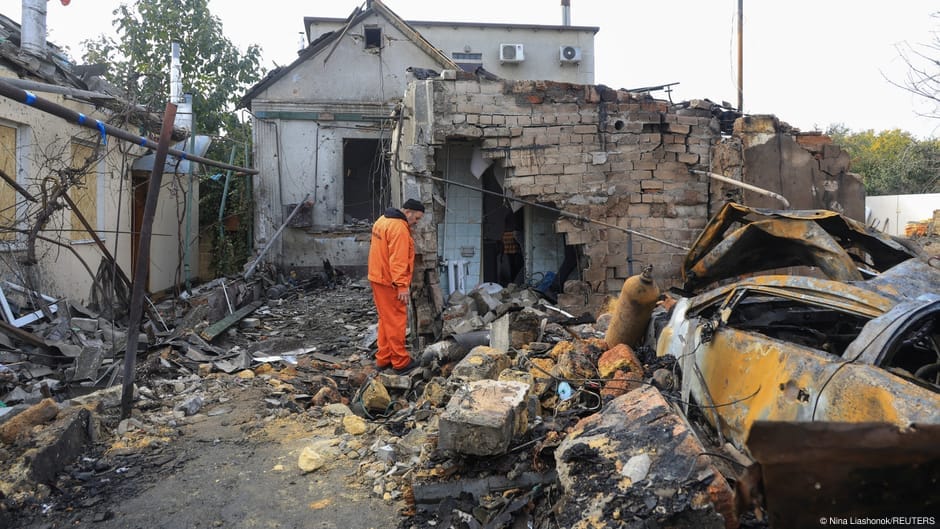
Russian attacks on Ukraine killed three people in the Kyiv and Odesa regions, damaged civilian and commercial property and intensified pressure on the country’s energy system, adding to the operational risks confronting businesses and investors.
One person was killed in Bila Tserkva, a city in the Kyiv region, during a Russian attack overnight into Wednesday, November 25, the city council said. The strikes affected critical infrastructure as well as civilian businesses, including an Epicentr shopping center and a Nova Poshta branch.
Damage to commercial facilities highlights the direct exposure of Ukrainian companies to the war, extending beyond the energy and defense sectors. For investors assessing Ukrainian assets, recurring attacks can translate into interrupted operations, repair expenses, higher insurance costs and weaker visibility over corporate cash flows.
In the Odesa region, Russian shelling on the evening of November 24 killed a 41-year-old man and a 17-year-old youth, according to Oleh Kiper, head of the regional military administration. Three other people were wounded, including a 12-year-old child.
“Civilian infrastructure facilities, a private house, a production building and passenger cars were damaged,” Kiper wrote.
The reported damage to a production building adds another industrial component to the attacks. Odesa and its surrounding region are important to Ukraine’s maritime trade and logistics, making security developments there relevant to companies dependent on transportation links, export routes and regional supply chains.
Power restrictions raise risks for industrial output
Ukraine’s transmission system operator, Ukrenergo, said scheduled electricity cuts would remain in force around the clock in parts of the country on November 25 because of Russian attacks on the power system. Industry will be subject to capacity-restriction schedules, while all categories of consumers will face hourly outage schedules ranging from 0.5 to three groups.
Ukrainian online publication Ekonomicheskaya Pravda explained that one group corresponds to approximately four hours without electricity per day. Restrictions covering three groups could therefore mean about 12 hours without power if that regime remains in effect for the entire day.
For capital markets, the duration and geographical reach of electricity restrictions are central indicators of near-term economic pressure. Lengthy outages can constrain manufacturing, retail activity, warehousing and communications while forcing companies to rely on backup generation. The consequences may include lower output, higher operating costs and delayed deliveries, all of which can affect corporate performance and government revenue.
The strain on the grid may also matter to holders of Ukrainian sovereign and corporate debt. The reported attacks do not by themselves establish a market-price move, but they reinforce the importance of energy-system resilience, reconstruction costs and external financing in assessments of Ukraine’s credit outlook. Equity investors with exposure to Ukrainian businesses likewise face a widening gap between companies able to maintain operations during outages and those more dependent on uninterrupted grid supply.
Emergency outages were introduced on the evening of November 24 on Ukrenergo’s instructions in Dnipro and the Dniprovskyi, Pavlohrad, Synelnykove and Samar districts of Ukraine’s Dnipropetrovsk region, according to the Ukrainian publication. The shift from emergency measures in some locations to scheduled nationwide restrictions illustrates the challenge of balancing damaged infrastructure with demand from households and industry.
Energy and maritime assets remain in focus
Russia’s Defense Ministry said on Telegram on the morning of November 24 that drones had struck energy and fuel infrastructure, as well as vessels allegedly being used in the interests of the Ukrainian armed forces. It said one target was a dry bulk vessel sailing southwest of Odesa that was carrying what the ministry described as military cargo.
The competing accounts underscore the broad range of assets exposed to continued attacks, from energy facilities and factories to commercial premises and maritime transport. The human toll remains immediate: three people were killed across the Kyiv and Odesa regions, and three were wounded in Odesa, including a child.
Investors will now be watching whether electricity limitations remain temporary or become a persistent constraint on industrial activity. They will also focus on further damage to logistics infrastructure around Odesa, the ability of retailers and delivery operators to restore affected facilities, and the potential fiscal burden of repeated repairs.
With no market reaction detailed in the reports, the clearest immediate financial signal is the expansion of operational disruption. Scheduled outages of up to an estimated 12 hours a day under the most restrictive cited scenario would test corporate contingency plans and could weigh on production if sustained. For Ukraine-linked equities and bonds, infrastructure resilience and access to reliable power remain key variables in determining near-term risk.



